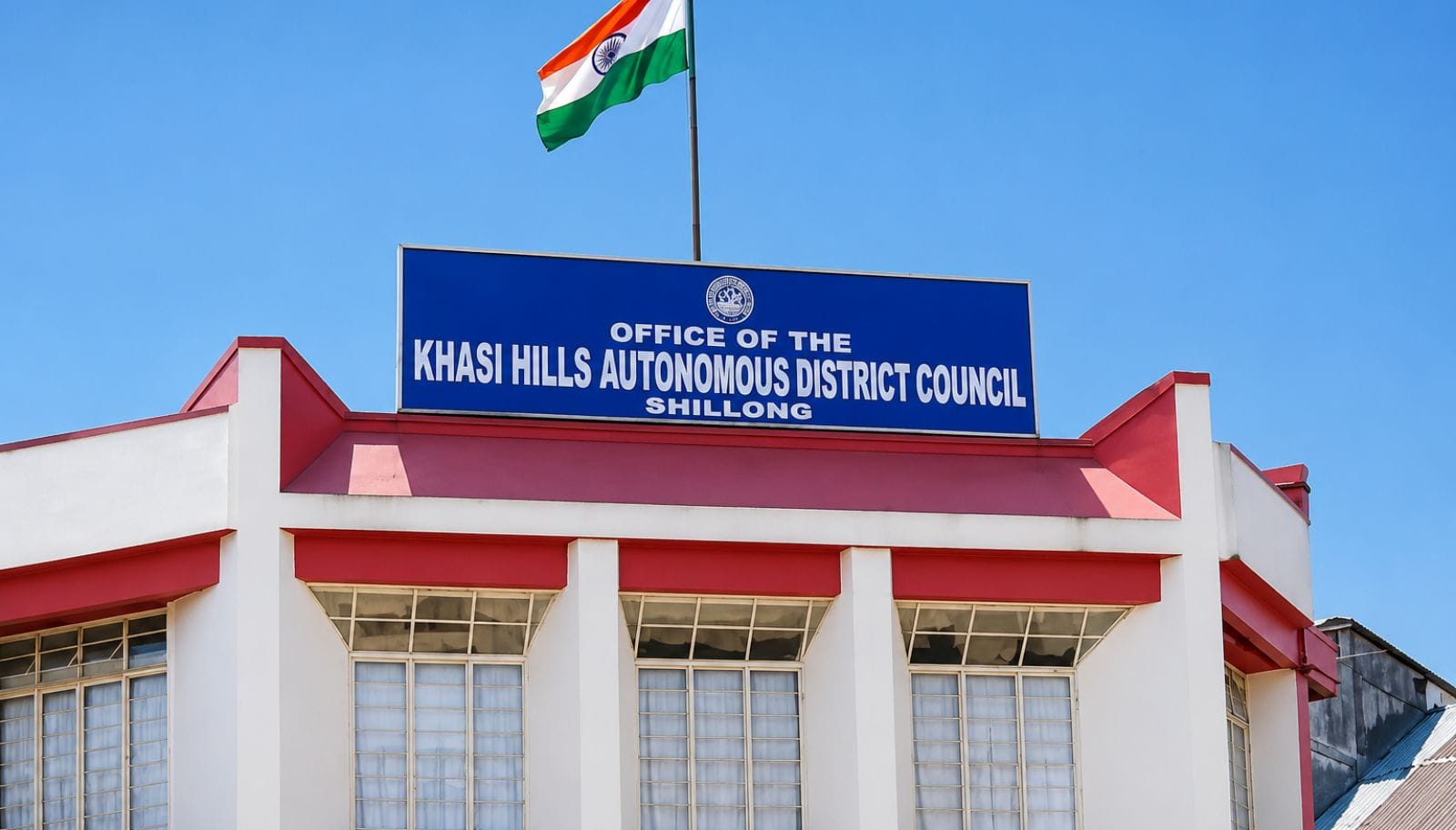
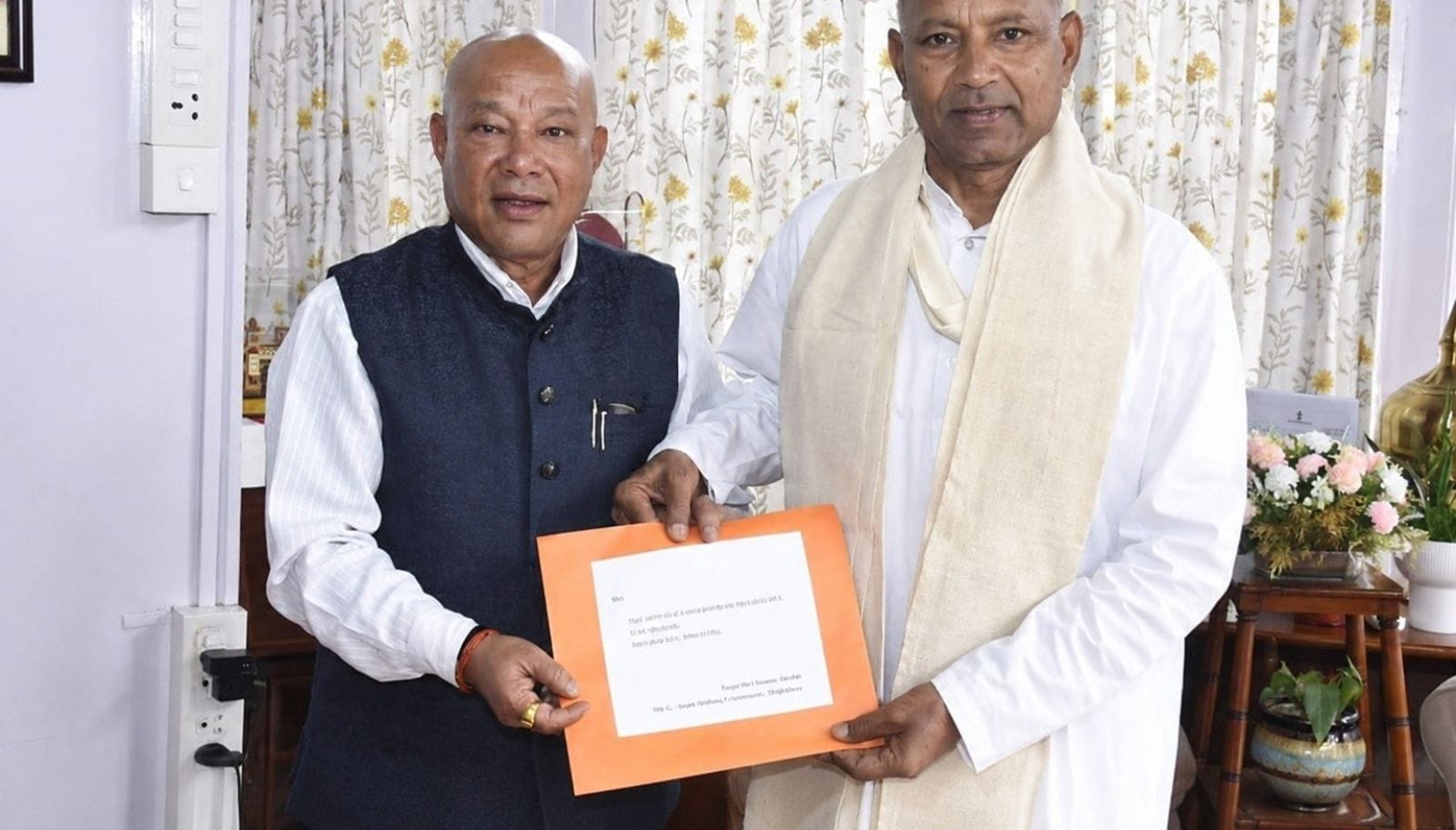
SHILLONG : A fresh legal and political battle has erupted over the Khasi Hills Autonomous District Council’s (KHADC) controversial Bill making service licences mandatory for non-tribal employees, with Cabinet Minister and South Shillong MLA Sanbor Shullai urging Governor C.H. Vijayashankar to withhold assent to the legislation.
In a petition submitted to the Governor, Shullai argued that the Khasi Hills Autonomous District (Trading by Non-Tribals) (Amendment) Bill, 2026 is ultra vires the Constitution and beyond the legislative powers of the KHADC. He urged the Governor not to give assent, saying the proposed law violates constitutional guarantees and could create legal complications if allowed to come into force.
At the centre of the dispute is the Khasi Hills Autonomous District (Trading by Non-Tribals) (Amendment) Bill, 2026, passed by the KHADC during its recent session. If it receives the Governor’s assent, employers will have to obtain a Service Licence for every non-tribal employee or agent engaged in trade and business. According to the petition, Shullai contended that the amendment infringes Articles 14, 19(1)(g) and 21 of the Constitution. These provisions guarantee equality before the law, the freedom to practise any profession or carry on any occupation, trade or business, and the protection of life and personal liberty. He further argued that the Bill falls outside the constitutional jurisdiction of the KHADC and could adversely affect thousands of permanent non-tribal residents who have been living and working in the Khasi Hills for decades. According to Shullai, these constitutional and legal concerns are the reason he has requested the Governor to withhold assent until the legislation is examined more closely.
The amendment Bill, however, goes much further than the existing law. If it receives the Governor’s assent, every employer engaging a non-tribal employee or agent will be required to obtain a Service Licence within 30 days of employment. The application must be accompanied by prescribed documents, including proof of residence, voter identity details, photographs and a recommendation from the concerned Rangbah Shnong. Under the proposed law, the licensing authority will scrutinise applications and decide whether to grant or reject licences within a stipulated time. The licence will remain valid for one year and must be renewed annually. Failure to renew it within the prescribed period could result in automatic cancellation. The Bill also empowers authorised KHADC officials to inspect business establishments to verify whether non-tribal employees possess valid service licences. It further provides an appeal mechanism for applicants whose licences are rejected.
Read Also : KHADC defends Blinkit licence denial, says move aimed at protecting local grocery businesses
While the amendment has drawn criticism from some quarters, the KHADC has defended it as a measure aimed at improving regulation rather than imposing a blanket restriction on employment. During the Council session, Executive Member in charge of Trade Winston Tony Lyngdoh maintained that the amendment was introduced to strengthen monitoring of non-tribal employees engaged in trade and business across Khasi Hills. He said the objective is to ensure better regulation, accountability and proper documentation of workers employed by commercial establishments. The Council also argued that the amendment removes overlapping provisions with the Labour Department’s Labour Clearance Certificate (LCC) system while introducing a separate mechanism specifically dealing with service licences under the KHADC Act.
The dispute ultimately comes down to two competing views. The KHADC says the amendment is necessary to regulate non-tribal employment and protect indigenous interests. Shullai, however, argues that those objectives cannot override constitutional limits and has therefore asked the Governor to stop the Bill from becoming law.
The Governor is expected to examine the legislation, along with the constitutional objections raised in the petition, before taking a final decision. Until assent is granted, the amendment will not become operational. The outcome is likely to shape not only the future of the proposed service licence regime but also the broader debate over the legislative powers of Autonomous District Councils under the Sixth Schedule and the balance between indigenous protection and constitutional rights.