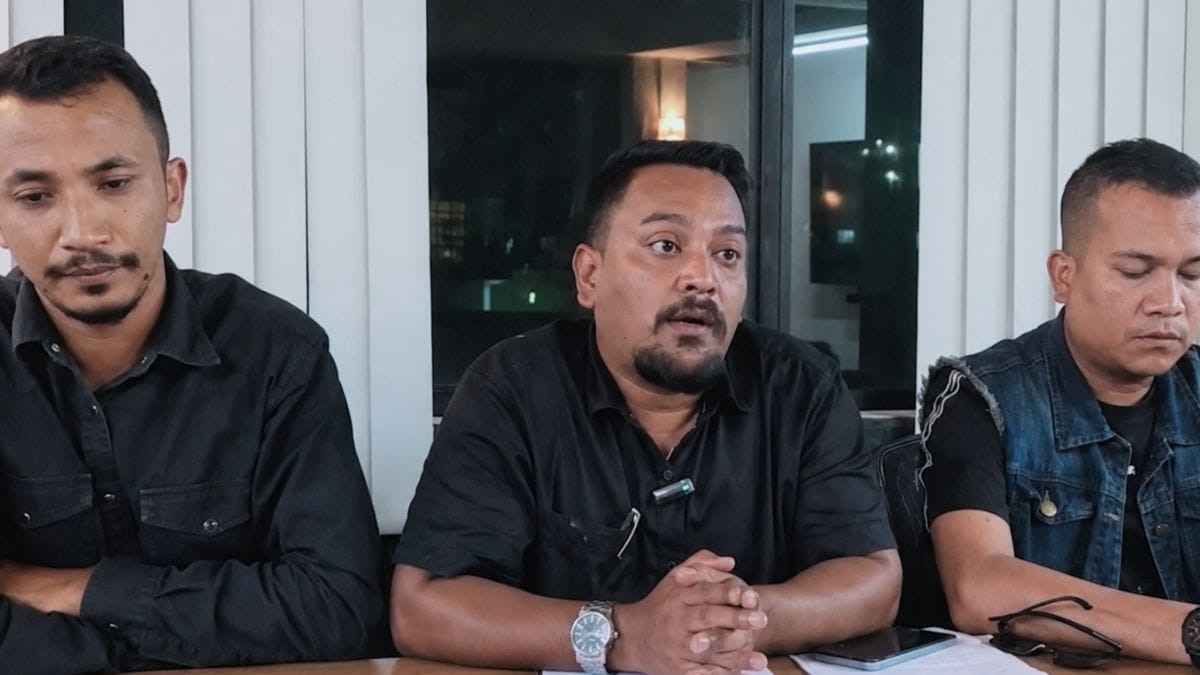
SHILLONG : East Khasi Hills Superintendent of Police Vivek Syiem confirmed Thursday that three senior Khasi Students’ Union leaders, arrested a day earlier in connection with violence during a black-flag bike rally, have been remanded to 14 days’ judicial custody after being produced in court.
KSU president Raymond Kharjana, general secretary Reuben Najiar, and vice president Pynkmenlang Sanmiet were taken into custody late Wednesday night from Earle Holiday Home.
Police have booked them under multiple sections of the Bharatiya Nyaya Sanhita, alongside the Prevention of Damage to Public Property Act and other provisions covering unlawful assembly, assault and violence. Syiem said several police personnel were among those assaulted during Wednesday’s rally, with multiple vehicles damaged across the city.
Explaining the police operation near the KSU office at Jaiaw that followed the arrests, Syiem said his team had headed to the area specifically to arrest individuals suspected of vandalising vehicles.
What they met instead was heavy resistance, with petrol bombs allegedly hurled at officers, forcing police to deploy tear gas to disperse the crowd. Once the situation calmed, Syiem said residents themselves asked the police to leave, and the team withdrew to avoid escalating things further.
He added that security for the rally had only been posted at select strategic points, based on the terms under which organisers were granted permission, and said the trust placed in the organisation had ultimately been broken. The investigation into others involved remains ongoing.
Meanwhile , former KSU president Lambokstarwell Marngar responded sharply to the arrests, though he made clear the union wouldn’t turn their release into a demand.
“Whether the government releases them or does not release them is for the government to decide. But the agitation will continue,” he said, insisting the organisation’s real focus stays fixed on getting its five-point charter implemented by the NPP-led MDA government.
Marngar reserved his harshest criticism for the early-morning police operation itself, alleging that the KSU office and nearby homes were vandalised well after the three leaders had already been arrested and taken away. He accused police of resorting to intimidation, threats and abusive language during the raid, calling it outright harassment.
“The manner in which they came was like conducting a raid against terrorists,” he said, arguing that any operation entering residential areas should have first coordinated with the local Dorbar Shnong and Youth Organisation. He demanded compensation for families whose property was damaged in the process.
Far from weakening the union, Marngar said the arrests and the force used would only harden KSU’s resolve going forward. He stressed that the five-point charter isn’t a fresh list of grievances, it’s a set of long-pending issues already submitted to the government in writing.
He also questioned the police’s selective show of force, asking pointedly why the same assertiveness wasn’t visible during violence at Lapangap along the Assam-Meghalaya border.
He credited the KSU leadership for showing restraint by converting the planned bike rally into a sit-in specifically to avoid further tension, only for the government, in his telling, to take advantage of that de-escalation.
Marngar was careful to clarify that the agitation was never aimed at the people of Assam, but squarely at what he called the state government’s inaction, and appealed to district-level leaders to stay focused on the core issues still on the table, including the Shree Cement public hearing and the MRSSA.