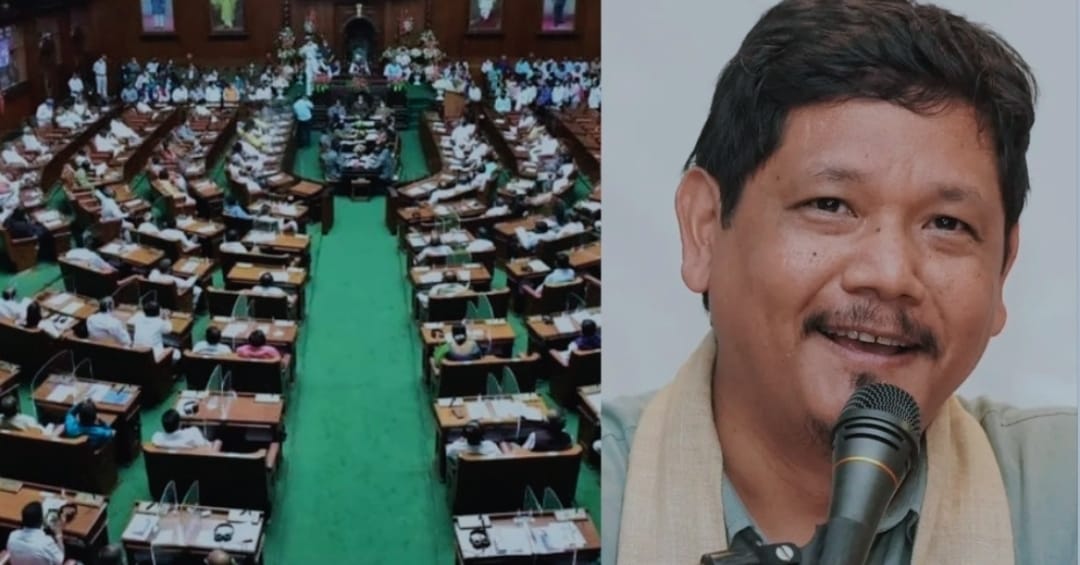
Shillong, April 17 : Just days after expressing support for the women’s reservation push and hoping for increased representation for Meghalaya, Chief Minister Conrad K. Sangma now finds the political landscape shifting.
Earlier, Sangma had welcomed the proposed amendment linked to women’s reservation and delimitation, expressing optimism that Meghalaya could benefit from an increase in parliamentary seats in the future.
However, the Constitution (131st Amendment) Bill, 2026 — seen as a key step toward implementing the reservation framework — failed to pass in the Lok Sabha after falling short of the required two-thirds majority.
The bill secured 298 votes in favour and 230 against, but the numbers were not enough to clear the constitutional threshold, effectively stalling immediate progress on the proposal.
Read Also : Why Women’s Reservation Amendment Bill Failed in Lok Sabha Despite 298 Votes
The development has now raised fresh questions about the timeline and feasibility of both women’s reservation implementation and the broader delimitation process, which was expected to shape representation across states, including Meghalaya.
For Meghalaya, which currently has just two Lok Sabha seats, the Chief Minister’s earlier optimism highlighted a larger aspiration — increasing the state’s voice at the national level. However, with the amendment failing to pass, that possibility now remains uncertain.
The contrast between political expectation and legislative outcome underscores the complexity of electoral reforms in India, where ambition often meets procedural and political hurdles.