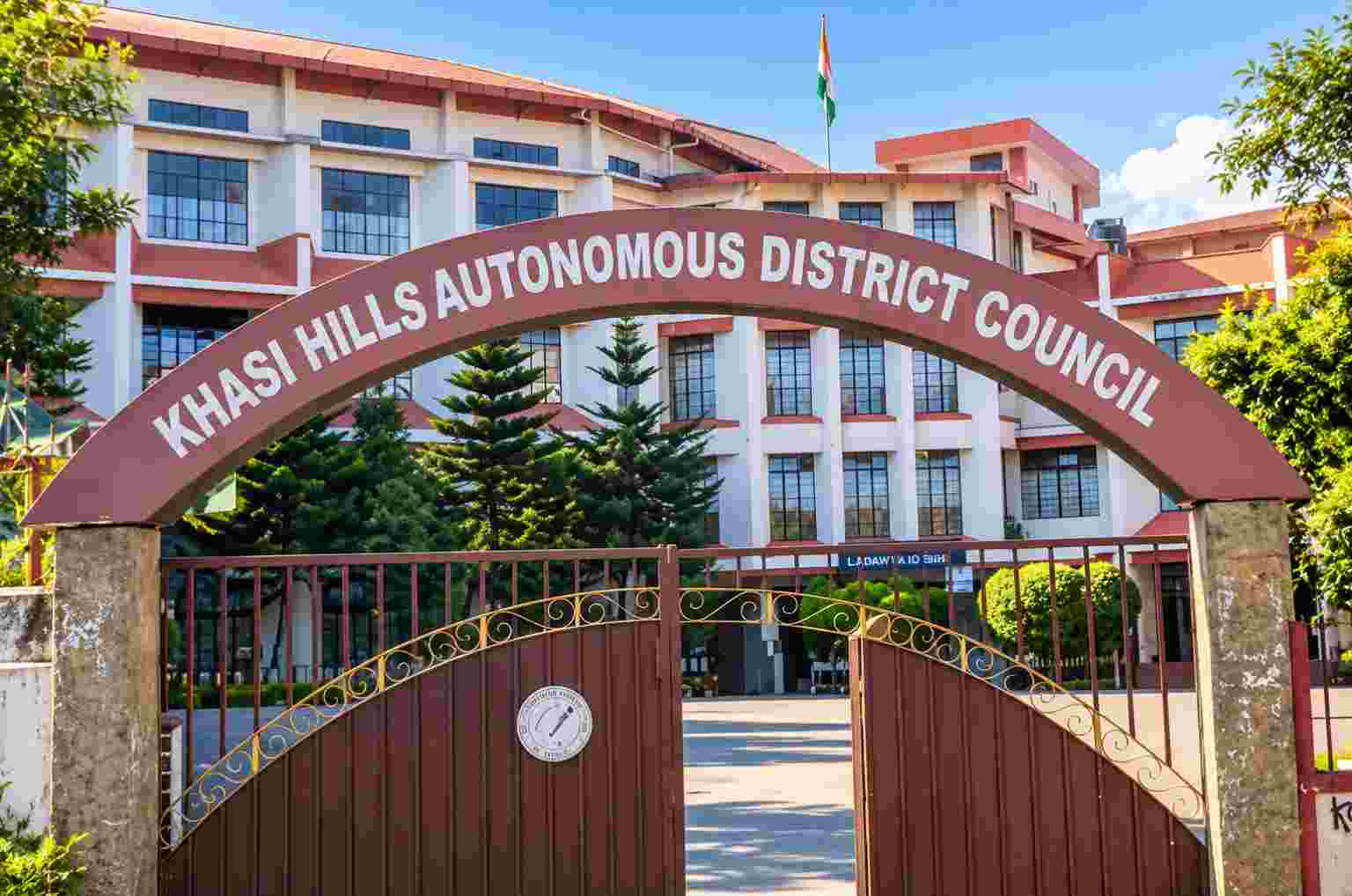
SHILLONG — The VPP-led Executive Committee of the Khasi Hills Autonomous District Council has introduced biometric attendance for employees, along with departmental examinations for recruitment, staff training and other measures aimed at changing how the Council operates.
KHADC Chief Executive Member Winston Tony Lyngdoh said the biometric system was introduced this month to ensure employees report for duty on time and leave office according to working hours.
Looking back at the EC’s one-and-a-half years in office, he said the changes had started producing results despite several pending liabilities inherited from previous Executive Committees. “Things have started to improve,” Lyngdoh said, adding that employees had also cooperated with the new measures.
The Council has also changed the way vacancies are being handled. Lyngdoh said recruitment is now being conducted through departmental examinations according to prescribed rules and guidelines. Vacant posts of magistrates and additional judges were filled after advertisements, while vacancies in the Accounts Department were addressed through internal examinations. Engineering posts were also filled, he said.
Lyngdoh said the EC was also focusing on employees’ capacity and workplace grievances. Staff have been given in-house training and deputed to the Meghalaya Administrative Training Institute, while the employees’ association has been revived to provide a channel for staff to raise their concerns before the EC.
The CEM also highlighted the situation of casual employees, some of whom had worked with KHADC for eight to 12 years while receiving only ₹5,000 to ₹8,000 a month. Their pay has now been raised to ₹10,000.
“If our revenue position improves, we will try to bring their salaries in line with the minimum wages prescribed by the State Government,” Lyngdoh said.
He also had a message for employees dealing directly with the public. “KHADC is a public institution. People who come here should not have to say that their work has not been completed on time,” Lyngdoh said, while pointing to efforts to remove administrative bottlenecks. On building bye-laws, he said people facing difficulties could approach him directly, with some cases being resolved within a day or two.
With KHADC completing 75 years, Lyngdoh said the present EC had been in office for only around one-and-a-half years and credited employees for cooperating with its efforts. The changes now underway cover something very basic inside the Council: when employees report, how recruitment is handled, how staff are trained, how grievances are heard and how quickly public work gets done.