A government notification that initially appeared to be a routine administrative order on vehicle stickers has now escalated into a much wider debate involving religion, identity, constitutional protections and the visible presence of churches in Nagaland’s public life.
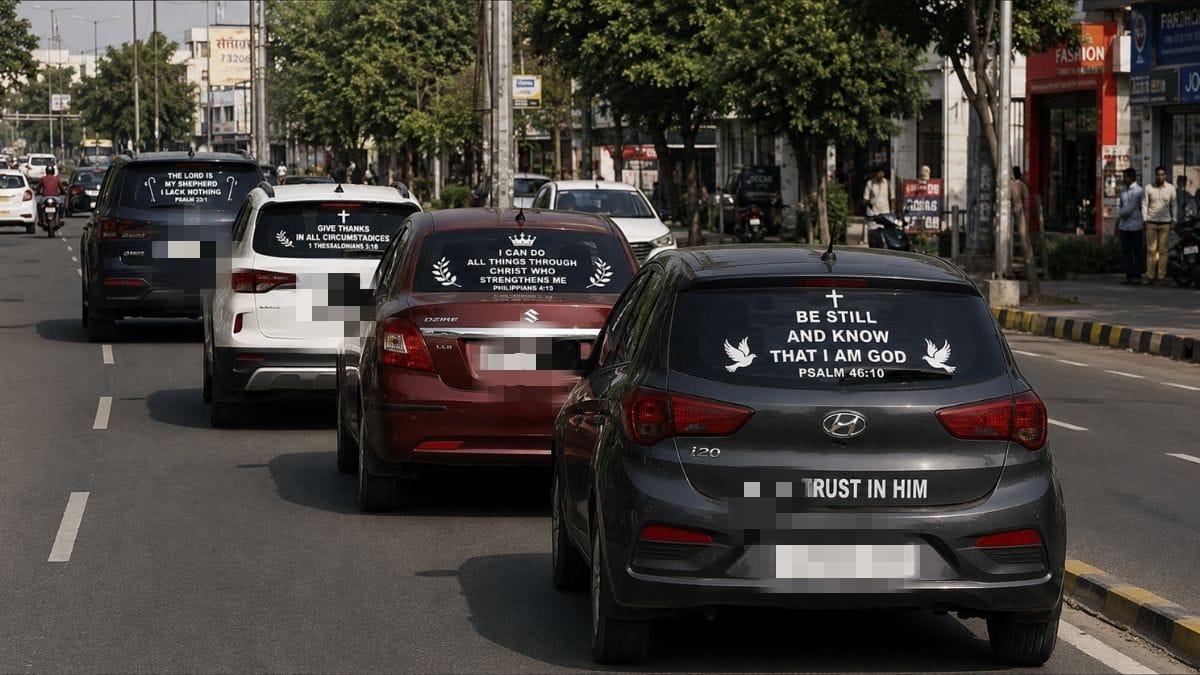
Dimapur, May 10 :The debate over Nagaland government’s crackdown on unauthorised vehicle stickers has intensified after NSCN/GPRN issued a strongly worded statement accusing the state of targeting Christian identity and church visibility in public spaces.
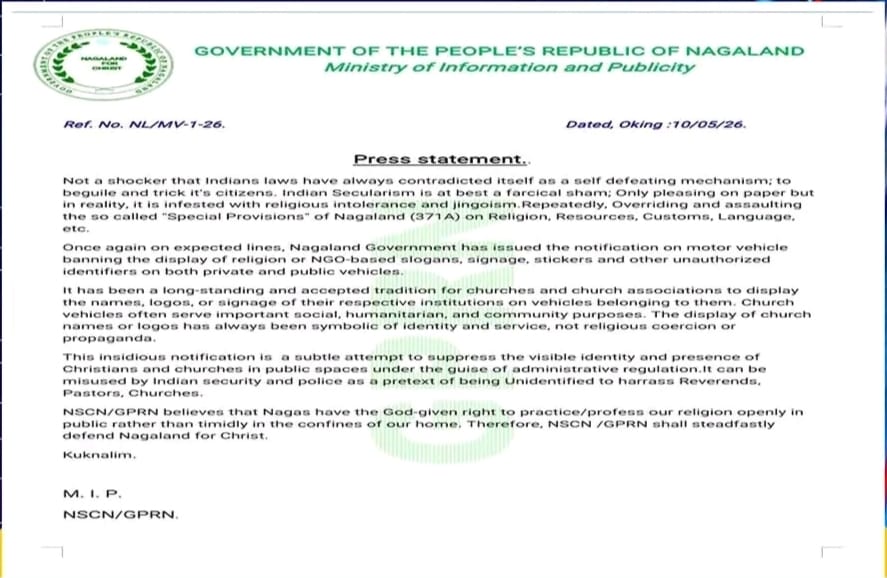
In a press statement dated May 10, the group criticised the government notification banning religion-based and NGO-related slogans, stickers and signages on vehicles, calling the move “an assault” on the special protections guaranteed under Article 371(A).
The organisation argued that displaying church names, logos and institutional signages on vehicles has long been an accepted practice in Nagaland, particularly for churches and faith-based organisations involved in social, humanitarian and community work.
According to the statement, church vehicles are not merely modes of transport but also represent identity, service and community outreach.
The group claimed the government’s order could create fear among Christian institutions and even lead to harassment by enforcement agencies under the pretext of regulating “unidentified” vehicles.
Related : Why Nagaland Govt wants Religious and NGO stickers removed from Vehicles
The statement further alleged that the notification reflects a wider contradiction between constitutional secularism and religious freedom, while asserting that Nagas have the right to openly practice and express their faith in public life.
The latest reaction has added a sharper political and emotional dimension to a notification that had already triggered debate across Nagaland.
Some of government supporters argue the move is primarily linked to vehicle regulation, public identification and law enforcement concerns, especially amid increasing use of unauthorised stickers and insignia on private and public vehicles, meanwhile those who against, however, believe the issue goes beyond traffic regulation and touches deeper questions involving religion, identity and constitutional protections unique to Nagaland.
Must Read : Nagaland’s Rongmei ST decision Explained: Why 1,313 families matter and Why the issue remains sensitive
The controversy continues to grow as different groups interpret the notification in sharply different ways some viewing it as an administrative measure, while others see it as an intrusion into visible expressions of faith and community identity.
The official Press Statement