Assam’s proposed Uniform Civil Code (UCC) has triggered fresh debate across Northeast India, with growing questions over whether tribal customary laws and constitutional protections could eventually face pressure under future legal reforms.
While the Assam government has repeatedly assured that tribal communities will remain outside the scope of the proposed legislation, the issue has already drawn attention in states like Meghalaya, Nagaland and Mizoram, where traditional systems remain deeply tied to identity, inheritance, land rights and self-governance.
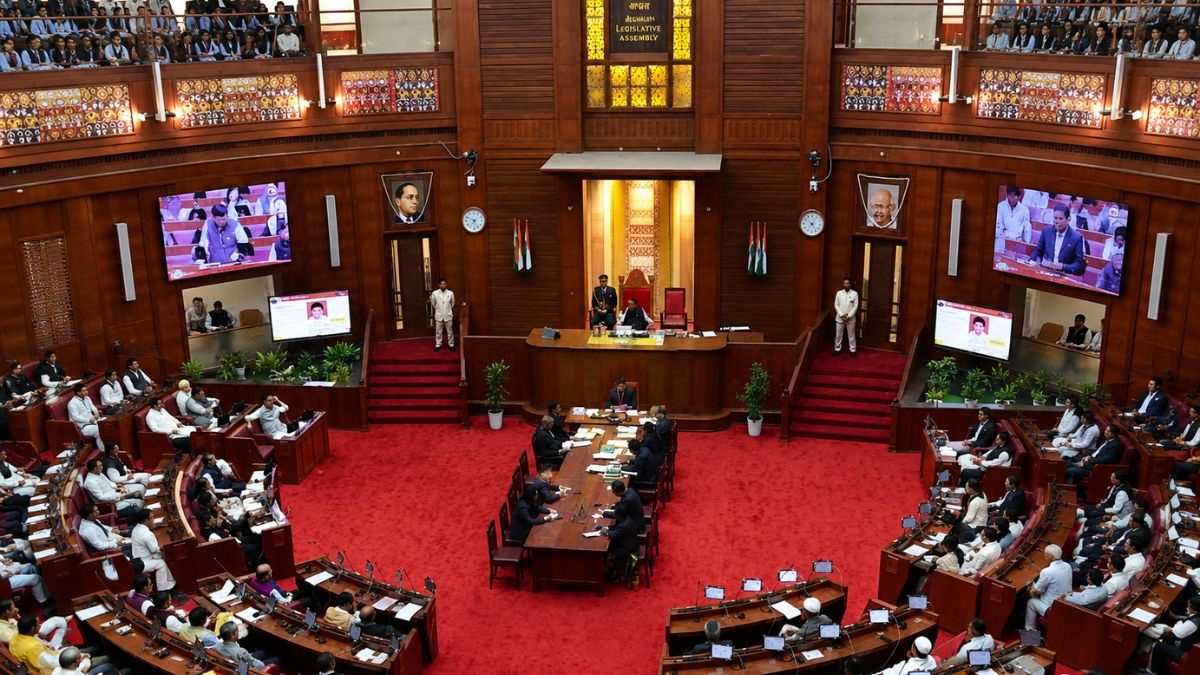
The discussion intensified this week after the Assam Cabinet approved the draft UCC Bill, which Chief Minister Himanta Biswa Sarma said would be introduced in the Assembly on May 26.
Soon after, BJP MLA Rupali Langthasa stated that tribal communities would not be affected by the proposed law, saying tribal life would continue “as it has for centuries”.
The reassurance itself reflected how politically sensitive the issue has become in the Northeast, where constitutional protections and customary systems continue to shape everyday social and community life.
What Is the Uniform Civil Code?
The Uniform Civil Code refers to the idea of a common set of civil laws governing matters such as:
- marriage
- divorce
- inheritance
- adoption
- succession
- maintenance
Currently, different religious and community groups in India follow separate personal laws based on religion, customs and traditions.
The concept of the UCC is mentioned under Article 44 of the Directive Principles of State Policy in the Constitution of India, which states that the State should endeavour to secure a uniform civil code for citizens across the country.
However, Directive Principles are not legally enforceable in court like Fundamental Rights.
Supporters of the UCC argue that a common legal framework promotes equality, legal uniformity and gender justice. Critics, however, fear that such laws could weaken minority customs, tribal systems and traditional forms of self-governance.
The Assam government has indicated that its proposed version of the UCC would include provisions related to:
- compulsory registration of marriages
- divorceslegal age of marriage
- inheritance matters
- regulation of live-in relationships
- restrictions on polygamy.
The proposal comes amid a wider national debate over whether India should eventually move toward a single civil framework or continue recognising distinct customary and personal law systems.
Read Also : Nagaland’s Rongmei ST decision Explained: Why 1,313 families matter and Why the issue remains sensitive
Why Assam’s UCC Debate Matters in the Northeast
Unlike many mainland states, large parts of the Northeast operate under constitutional protections designed specifically to preserve tribal identity, customary systems and local autonomy.
That is why discussions around the UCC immediately generate concern in the region. Assam itself contains several tribal-majority autonomous areas and multiple indigenous communities with distinct customary practices. Regions such as:
- Karbi Anglong
- Dima Hasao
- Bodoland
Already function through varying degrees of autonomous administration and traditional systems. The Northeast also differs socially from many other parts of India because customary laws often extend beyond religion into questions involving:
- land ownership
- clan systemsinheritance
- traditional governance
- village administration
For many tribal communities, these systems are viewed not simply as customs, but as part of their collective identity and historical continuity.
That is why even discussions about legal “uniformity” often trigger political sensitivity across the region.
The Sixth Schedule and Constitutional Protections
At the centre of the debate lies a larger constitutional question: can legal uniformity coexist with tribal autonomy?
The Sixth Schedule was introduced precisely to protect distinct customary systems in the Northeast, recognising that communities in the region governed social life differently from mainland legal frameworks. Critics fear that even discussions around a Uniform Civil Code could gradually reopen debates over those protections in the future.
One of the strongest safeguards protecting tribal autonomy in the Northeast is the Sixth Schedule of the Indian Constitution. The Sixth Schedule currently applies to tribal areas in:
- Assam
- Tripura
- Mizoram
- Meghalaya
and allows autonomous district councils to exercise powers over:
- land management
- local governance
- customary practice
- social administration
- traditional institutions
The system was introduced after Independence following recommendations by the Bordoloi Committee, which argued that tribal-majority hill areas required special administrative protection because of their distinct social systems and political history.
Today, Meghalaya alone has three autonomous district councils:
- Khasi Hills Autonomous District Council (KHADC)
- Jaintia Hills Autonomous District Council (JHADC)
- Garo Hills Autonomous District Council (GHADC)
According to Census data, Scheduled Tribes constitute over 86 percent of Meghalaya’s population.
These councils continue to play important roles in matters involving tribal customs and local governance.
In Nagaland and Mizoram, protections are even stronger under Articles 371A and 371G of the Constitution, which safeguard Naga and Mizo customary laws and social practices from parliamentary interference without approval from the state assemblies.
Because of these protections, many people in the Northeast view the UCC debate through the larger lens of constitutional autonomy rather than only civil law reform.
Why Meghalaya Is Closely Watching the Debate
Although the proposed UCC Bill currently applies only to Assam, the discussion has naturally drawn attention in Meghalaya because many traditional systems in the state are closely tied to customary law.
Among Khasi and Jaintia communities, inheritance traditionally follows a matrilineal system in which ancestral property is passed down through the youngest daughter, commonly known as the “Ka Khadduh.”
Clan identity, lineage and traditional institutions also continue to shape many aspects of community life.
For many people in Meghalaya, the concern is not necessarily about immediate legal change, but whether future legal reforms elsewhere could eventually influence debates around customary protections in other tribal state.
The issue also carries political sensitivity because tribal identity and constitutional safeguards remain deeply connected to public sentiment in the state.
“People fear losing control over customary systems that define who we are,” said Mr Damebaker Nongrum, a Shillong-based law student, adding that many tribal communities view customary laws as central to identity and self-governance.
Several legal experts and scholars have previously argued that Sixth Schedule protections cannot simply be overridden through ordinary legislation, although constitutional debates over uniformity versus autonomy may continue in the future.
Must Read : What Delimitation Means for Meghalaya: Seats, Influence and Future Representation
Why BJP Leaders Are Reassuring Tribal Communities
Assam BJP MLA Rupali Langthasa stated that the proposed UCC “will not affect tribal communities” and said tribal traditions would continue to remain protected.
Any perception that tribal customs or constitutional protections are under threat could therefore create political resistance in sensitive regions. This helps explain why leaders such as Rupali Langthasa and Chief Minister Himanta Biswa Sarma have repeatedly stressed that tribal communities would remain outside the scope of the proposed law.
Langthasa, who represents a tribal-majority constituency in Dima Hasao district, specifically stated that tribal life and traditions would continue “as it has for centuries.”
Political observers note that issues involving:
- identity
- autonomy
- customary law
- land rights
often carry strong emotional and electoral significance in the Northeast.That political reality partly explains the cautious language currently being used by the Assam government while discussing the UCC proposal.
The Debate Beyond Politics
The UCC debate in the Northeast is ultimately about more than legal reform alone. For many tribal communities, customary systems represent:
- identity
- cultural continuity
- self-governance
- historical survival
In several hill states, traditional laws continue to regulate social life alongside modern constitutional institutions.
At the same time, supporters of legal reform argue that questions involving women’s rights, equality before law and legal consistency also deserve attention. This creates a difficult balancing act between preserving tribal autonomy and addressing demands for broader legal uniformity.
The Northeast’s unique constitutional structure makes that balance even more sensitive than in many other parts of India.
Conclusion
Assam’s proposed Uniform Civil Code has already become more than a state-level legislative discussion.
For many in the Northeast, the debate is not merely about civil law reform. It revives an older question that has shaped the region’s political history for decades – how to balance national uniformity with tribal autonomy in one of India’s most constitutionally distinct regions.
You May Also Like : Mamata Banerjee’s TMC loses Bengal after 15 years as voter shift and ground reality change 2026 outcome