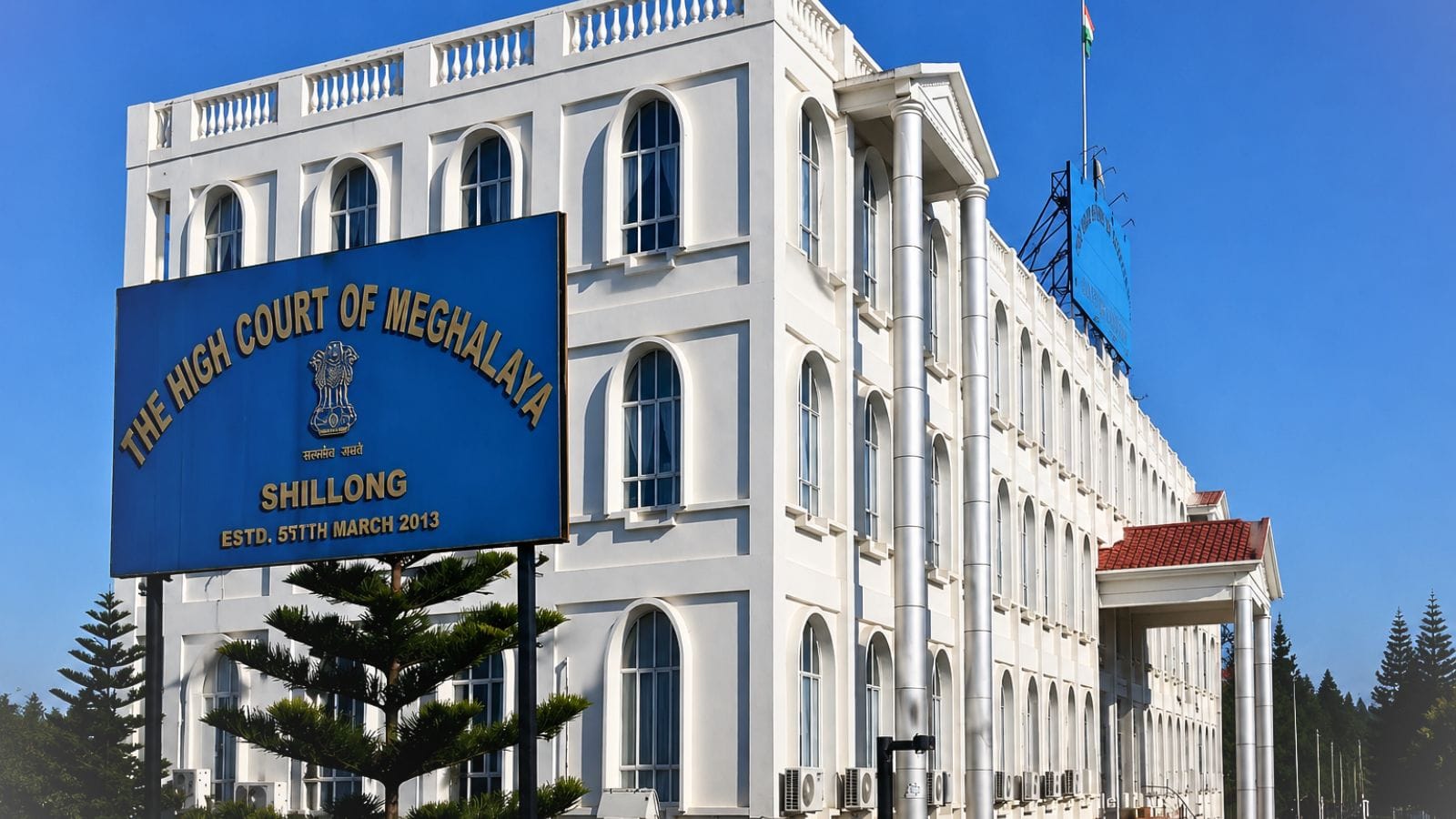
SHILLONG : The Meghalaya government has formally opposed a Public Interest Litigation (PIL) filed by North Shillong MLA Mr Adelbert Nongrum challenging the state’s decades-old practice of applying the Meghalaya Job Reservation Policy, 1972, to state quota seats in professional courses.
The government filed its affidavit before the High Court of Meghalaya on Friday raising preliminary objections and questioning whether the PIL itself is maintainable. The matter came up before a Division Bench comprising Chief Justice Revati Mohite Dere and Justice Wanlura Diengdoh.
After the petitioner’s counsel sought additional time, the court fixed July 7 for the next hearing, according to a report by The Shillong Times.
The case revolves around a system that has been followed in Meghalaya for years while allocating state quota seats in MBBS, engineering, paramedical, architecture, agriculture and veterinary courses.
Every year, the Centre allots a limited number of professional course seats to Meghalaya. The state government then distributes these seats among different categories using the percentages prescribed under the Meghalaya Job Reservation Policy. The seats are allocated among Khasi-Jaintia, Garo, other indigenous tribal communities and the unreserved category.
Mr Nongrum has questioned whether the government can legally continue doing so. According to the PIL, the 1972 Job Reservation Policy was framed for government employment and public services, not for admissions to educational institutions. The petition argues that while Meghalaya has been applying reservation while distributing professional course seats, it has never enacted a separate law or policy specifically governing reservation in higher educational admissions.
Mr Nongrum has contended that reservation is a constitutionally recognised exception to the principle of equality and therefore requires a clear legal framework. His petition seeks the court’s intervention to determine whether an employment reservation policy can automatically be extended to educational admissions.
The dispute is not over whether reservation should exist, but whether Meghalaya has the legal authority to apply a job reservation policy to professional course admissions without a separate framework specifically governing educational admissions.
While the government keep sayings that the existing system protects indigenous representation, the petitioner has questioned whether such a practice can continue without a dedicated legal basis.
The challenge goes beyond a single batch of students.
If the court eventually accepts the petitioner’s argument, it could force a review of how professional course seats are distributed in Meghalaya and whether a separate reservation policy for educational admissions needs to be framed. But, the state government, has strongly defended the existing arrangement.
Appearing for the government, Advocate General Amit Kumar did not immediately enter into the constitutional questions raised in the PIL. Instead, he focused on preliminary objections and argued that the petition itself was not maintainable. The government’s stand is that the allocation of state quota seats is an executive policy decision aimed at ensuring social equity and safeguarding the interests of indigenous communities.
Related : Nongrum moves Meghalaya High Court over State quota seat Reservation
For the state, the issue is closely tied to Meghalaya’s reservation framework and long-standing efforts to protect tribal representation in education. But for Mr Nongrum, the question is whether that objective can be pursued without a separate legal framework governing educational admissions.
The High Court is now expected to first decide whether the PIL can proceed before examining the larger constitutional issues raised in the petition. With admissions to professional courses affecting thousands of students and families across the state, the outcome of the case could have implications far beyond the present admission cycle.
Source : The Shillong Times