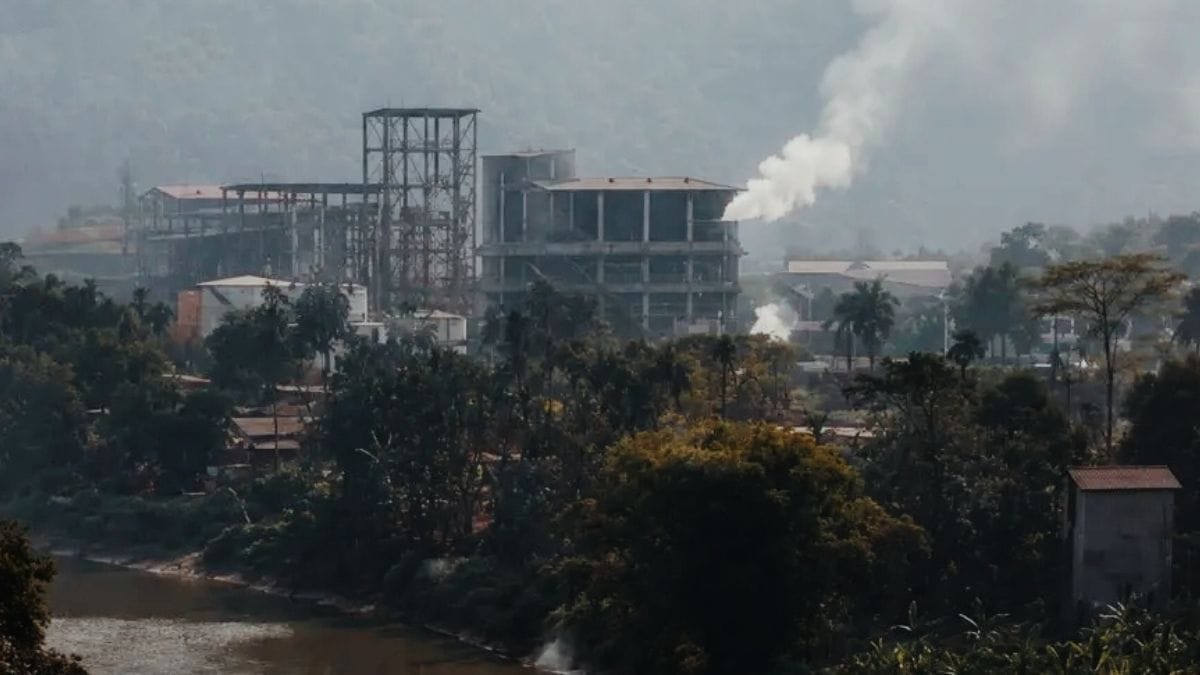
SHILLONG : The Meghalaya High Court has taken serious note of the sharp rise in Acute Respiratory Infection (ARI) cases in Byrnihat, with figures placed before the Court showing cases increasing from around 1,800 in 2021 to 7,284 in 2025, as concerns over air pollution, road dust, industrial emissions and inadequate healthcare facilities continue to mount in the industrial belt.
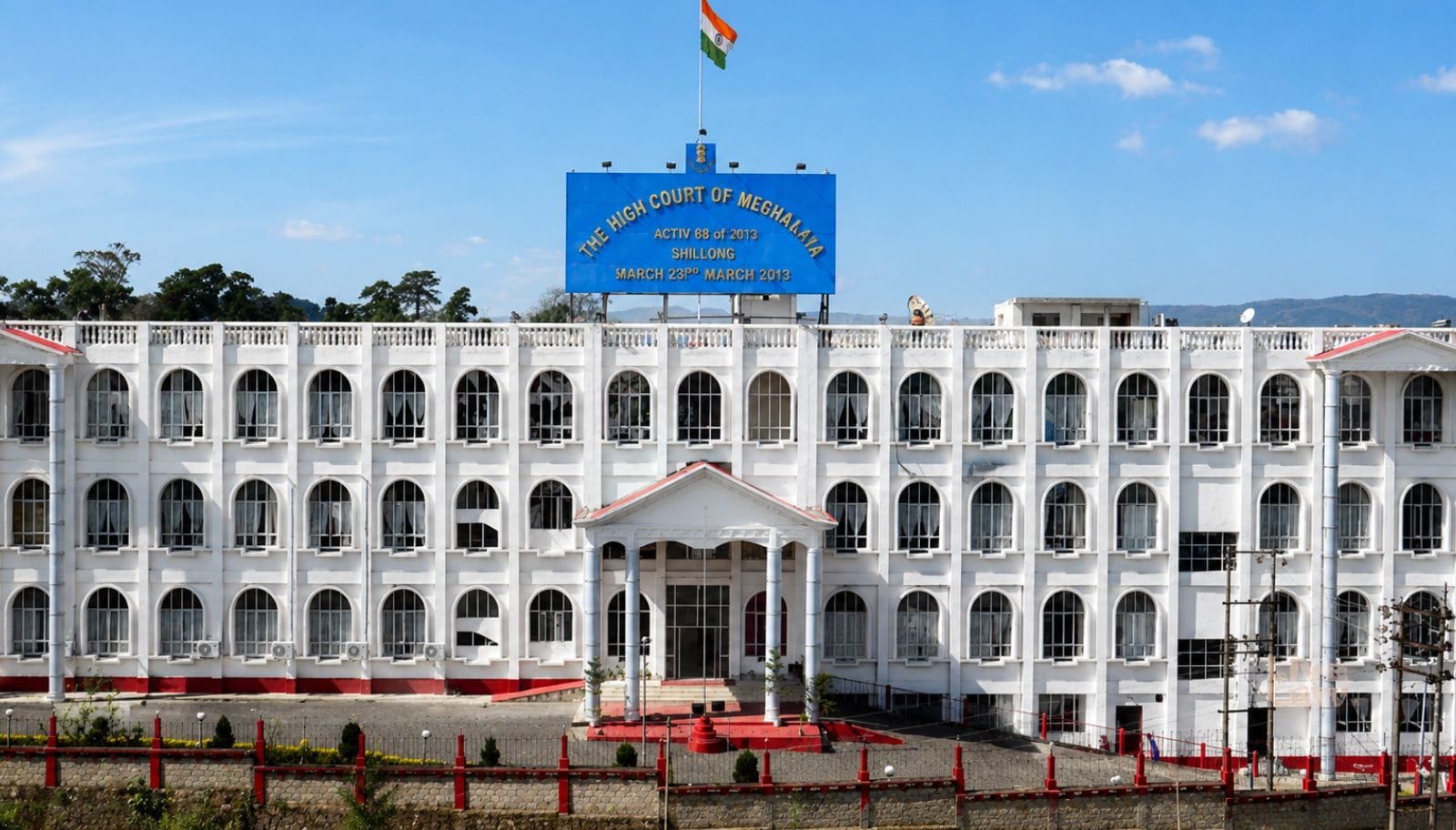
The issue came up before a Division Bench comprising Chief Justice Revati Mohite Dere and Justice Wanlura Diengdoh in PIL No. 13/2026, after Amicus Curiae Philemon Nongbri submitted a report following a joint site inspection conducted on August 4, 2026. The inspection covered air pollution around the Byrnihat industrial area, pollution of the Umtrew River and the condition and capacity of the Byrnihat Primary Health Centre.
The Court’s latest directions cover several departments and agencies, reflecting the range of problems identified during the inspection. The Court has directed the Meghalaya government to constitute a committee headed by the Ri-Bhoi Deputy Commissioner, with representatives from the Khasi Hills Autonomous District Council, the Syiem of Mylliem, the Meghalaya State Pollution Control Board and local headmen, to coordinate action on sewage, solid waste and pollution around the Umtrew River.
The inspection report found that while industries in the Export Promotion Industrial Park were monitoring emissions within permissible limits, the Amicus Curiae reported a sense of heaviness in the air and a peculiar burning smell from a hill overlooking the industrial zone. The report also identified heavy vehicular movement and road dust as another source of concern in an area where respiratory illness has risen sharply.
The primary road connecting the main highway to the EPIP and industrial areas, covering roughly 3.5 to 4 kilometres, was found to be in a severely dilapidated condition and largely unpaved. Heavy trucks using the road were generating large amounts of dust, with the report linking the movement to increased PM10 levels around the area.
The Court has directed the Public Works Department and Meghalaya Industrial Development Corporation to blacktop and resurface the entire road stretch leading to the EPIP and industrial areas. The direction is significant because pollution control in Byrnihat is not limited to factory emissions, with road conditions and heavy truck movement also contributing to particulate pollution.
The inspection also found serious problems along the Umtrew River. At the sampling point beneath the Byrnihat highway bridge, the Amicus Curiae described the condition as “shockingly deplorable”, with plastic and household waste dumped around the river, cattle feeding on the garbage and people continuing to dispose of waste beside the water.
The report also noted the presence of a large ethanol plant on the river bank. The Court has directed the newly constituted committee to address sewage discharge into the Umtrew, implement the Solid Waste Management Rules, 2026 and clear the large waste dump beneath the highway bridge.
The pollution problem also crosses the Meghalaya-Assam boundary. During the inspection, factories with tall chimneys were observed on the Assam side releasing smoke, with the report noting that the emissions were carried towards residential areas in Meghalaya. The cross-border nature of the industrial belt has previously prompted the Court to seek coordination between the Meghalaya and Assam pollution control authorities.
The Meghalaya State Pollution Control Board has meanwhile reported action against several industries. It informed the Court that a closure notice was issued on August 11 to M/s Umiam Distillation Private Limited after the company failed to respond to a show-cause notice.
M/s Shyam Century Ferrous Limited had earlier been directed to close and clear an unauthorised clinker depot, while the Consent to Operate issued to M/s Bodhi Premier LLP was suspended. M/s CMJ Breweries was also issued a compliance notice.
Six industries were identified in connection with pollution of the Umtrew River after treated effluent from the units was found not to meet prescribed standards. Four of the identified units fall under the red category and two under the orange category, with show-cause notices issued by the pollution control authorities.
The Court’s concern is not limited to pollution levels. The condition of the Byrnihat Primary Health Centre has also come under scrutiny because the facility is serving a population exposed to industrial and traffic-related pollution while operating from an old and congested tin-roofed building.
The PHC currently has four doctors sharing three small outpatient rooms. Its inpatient ward has only six beds, including three general and three maternity beds, with the beds placed close together. There is no separate isolation facility for patients suffering from tuberculosis or acute respiratory infections.
The under-construction Community Health Centre, which is expected to improve healthcare capacity in the area, is around 60 per cent complete. The High Court has directed that construction be completed at the earliest.
The health data placed before the Court gives another indication of the pressure on the facility.
Around 410 chest X-rays conducted between April 2025 and June 2026 showed abnormalities in 273 patients. A radiologist has now been appointed to attend the PHC once a week, while an existing agreement with a Pune-based teleradiology company allows X-ray images to be sent for reporting, with reports expected within about an hour.
The Court has also asked the Health Department to provide data on cancer patients from Byrnihat during the last one year.
A separate research project with a budget of ₹12 lakh has been approved to examine the association between ambient air pollution and respiratory symptoms in Meghalaya, with Byrnihat identified as the priority area for the first phase.
The PHC has also been designated as a Rural Training Centre of the P.A. Sangma International Medical College, potentially adding another institutional link to the healthcare system in the area.
The Court has further asked the National Highways Authority of India to take measures to reduce dust along the highway near Byrnihat and has impleaded NHAI, the Khasi Hills Autonomous District Council and the Ri-Bhoi Deputy Commissioner as respondents in the proceedings.
The latest directions build on the High Court’s continuing scrutiny of Byrnihat’s pollution situation. In July, the Court had already directed the MSPCB to submit an industry-wise report on action taken against polluting units after finding that an earlier affidavit lacked important details.
The Court had also sought information on measures to control emissions from heavy vehicles and asked the Central Pollution Control Board to explain coordination with the Assam Pollution Control Board.
The rising ARI figures now add a direct public-health dimension to the environmental concerns surrounding Byrnihat. The increase from around 1,800 cases in 2021 to 7,284 in 2025 represents more than a fourfold rise over four years, although the figures by themselves do not establish that air pollution is the cause of the increase.
That distinction is important because the Court has also backed a dedicated research study to examine the relationship between ambient air pollution and respiratory symptoms. The study could provide stronger evidence about the health impact of the area’s air quality rather than relying only on the presence of pollution and the rise in respiratory cases occurring at the same time.
The Court’s intervention therefore brings several problems into the same frame: industrial emissions, cross-border pollution, road dust, untreated sewage, solid waste, river contamination and pressure on the local health infrastructure.
The authorities have now been given responsibilities covering each of these areas rather than treating Byrnihat’s pollution as an issue limited to individual factories.
The matter has been posted for September 10, 2026, when the Court is expected to consider the fresh reports and the progress made on the directions issued to the state government, pollution control authorities, PWD, MIDC, NHAI and the health authorities.
The significance of the case extends beyond the action against individual industrial units. The Court is now examining whether the wider environment in which people live, travel and seek medical treatment is contributing to a public-health problem that has grown substantially in recent years.