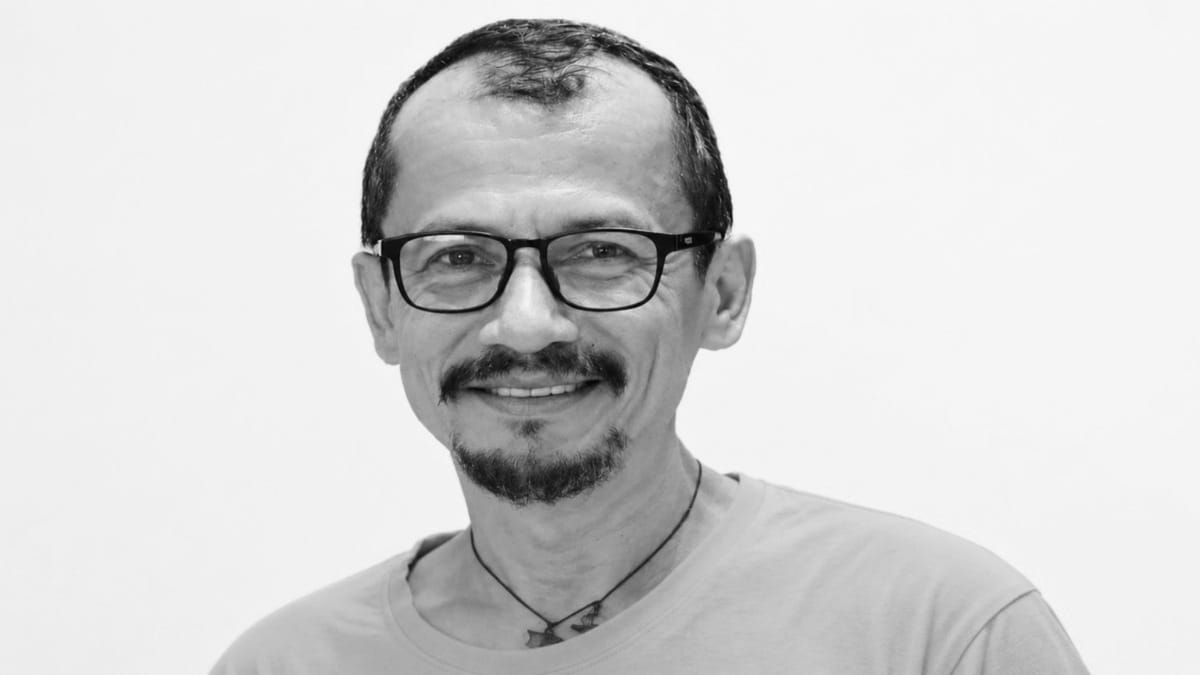
SHILLONG – Long before Imphal had a rock scene worth naming, Chongtham Vikram Singh was already building one, string by string, in a state where Western music barely had a foothold and almost no infrastructure to support it.
He came from a household steeped in classical tradition, his mother, Chongtham Kamala, built her own reputation performing Hindustani classical and Rabindra Sangeet.
Vikram’s own path started differently, with the accordion, before he found his way to Hawaiian and Spanish guitar, an unusual entry point that already set him apart from the musicians around him. He was young enough to still be finding his sound when he began performing for All India Radio, and young enough still when Manipur’s music scene became too small to hold him.
In the early 1990s, he left for Calcutta for two years, immersing himself among classical and jazz musicians at the Calcutta School of Music, an experience that stretched his musical vocabulary well past anything Imphal’s scene had exposed him to at the time. He came back changed, and he came back into a Manipur that was itself changing, a generation of young musicians was pushing Western music into spaces it had never occupied in the state’s cultural life, and Vikram became one of the guitarists carrying that push forward.
He played through bands including Ultra Vires, Phoenix and Eastern Dark, years when rock music was putting down its first real roots across the city. Phoenix, in particular, became one of the defining names of that early movement, and Vikram’s guitar work became inseparable from what the band represented.
This is the part of his story that matters most, and the part easiest to flatten into sentiment: Vikram wasn’t a musician who simply happened to be born in Manipur. He was one of the people who built the stage itself, the one later generations of Manipuri rock musicians would eventually walk onto without having to fight for it the way his generation did.
His career then shifted to Delhi, where performing and teaching became two sides of the same life. He spent close to 17 years working as a private music teacher in the capital, associated for much of that time with the Delhi School of Music, patiently building a second career in a city with none of the personal history his first one carried. In 2010, he stepped back into performance with Fubar Ghetto, a modern-jazz project alongside bassist Raju Rajkumar and drummer Aditya Singh, a trio that fused jazz, blues, rock and improvisation into something entirely removed from the sound of his earlier Manipuri bands.
Fubar Ghetto played the National School of Drama, Jamia Millia Islamia, Jawaharlal Nehru University, Delhi University and the Czech Embassy, and a 2013 profile of the group described Vikram plainly as a session musician with extensive performance experience, alongside his ongoing work as an instructor.
His range kept widening from there. He worked on the Rock’n’Roots project and collaborated with Rajasthani folk singer Mame Khan, planting his guitar in a musical tradition worlds apart from either Manipuri rock or Delhi jazz. His influences told the same story of range without borders, guitarists like Eric Clapton, Jeff Beck and John Scofield sat alongside jazz figures including Jaco Pastorius and Herbie Hancock in shaping how he played.
For Vikram, the guitar was never just a performing instrument, it was the throughline of an entire working life that moved across generations and two cities: from Imphal’s earliest Western-music scene, through Delhi’s jazz and fusion circuit, into decades spent teaching the instrument to others. Much of that life unfolded far from any national spotlight. But within the Northeast’s music community, his name stayed attached to a specific, formative period, when musicians built the region’s Western music scene the hard way, through bands, live shows, teaching, and sheer persistence, with almost none of the institutional support that exists today.
His death leaves behind a story that cannot be contained by the violence of his final hours. Long before that night in Delhi, Vikram had spent a lifetime with a guitar in his hands, growing alongside a Western music scene in Manipur that was still finding its voice.
He left Manipur, but the music travelled with him. Delhi brought different stages, different musicians and different sounds. He kept playing, kept teaching, and kept learning. The guitar remained the one constant through all of it.
Perhaps that is the quieter part of Vikram’s legacy. He did not simply belong to a musical scene that already existed. He was there while it was being made.