The defeat of the All India Trinamool Congress in the 2026 West Bengal Assembly elections is not a routine political loss. It marks the end of a 15-year dominance under Mamata Banerjee and reflects a deeper structural shift in voter behaviour.
The result did not emerge overnight. It was built gradually through changing voter priorities, erosion of trust, and a more organized opposition led by the Bharatiya Janata Party. The outcome shows how quickly a dominant regional force can lose ground when multiple factors align in a single election cycle.
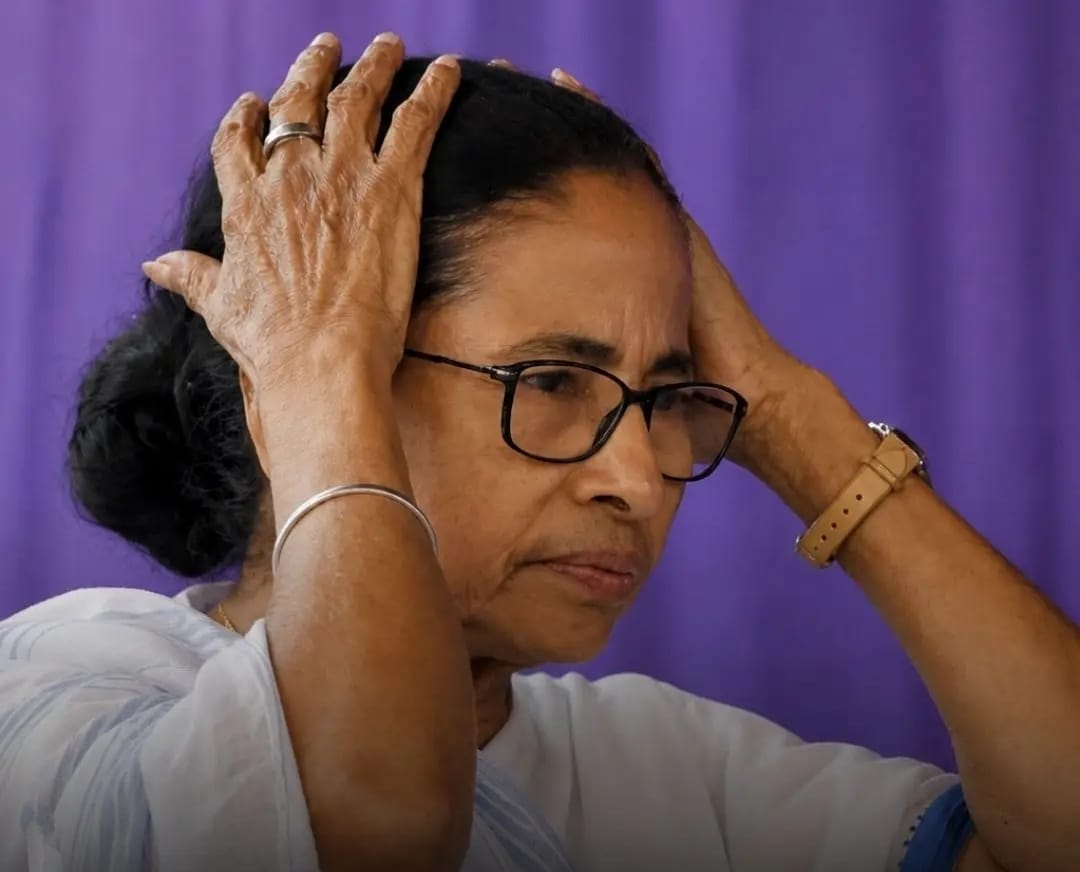
Kolkata, May 8 : TMC entered the 2026 election after completing three consecutive terms since 2011. In Indian electoral patterns, crossing the 10–15 year mark often brings strong anti-incumbency, and West Bengal followed that trend.
Voters who had supported the party for stability and welfare gradually shifted toward change. This shift was not uniform, but it was consistent enough across districts to affect outcomes in closely contested seats.
The emotional connect that powered TMC’s 2011 victory had weakened, especially among younger voters who had no direct memory of the pre-2011 political environment.
Corruption allegations played a critical role in accelerating this shift. Issues related to recruitment, municipal governance, and local-level financial irregularities moved beyond headlines and became part of everyday voter conversations. When corruption becomes a lived experience rather than a distant accusation, it directly impacts electoral behaviour.
This was particularly visible among educated youth and lower middle-class families who saw limited returns despite expectations from the system. Even without precise figures, perception alone was enough to damage credibility.
At the same time, the opposition landscape changed significantly. In earlier elections, anti-TMC votes were divided among multiple parties. In 2026, that fragmentation reduced sharply. The Bharatiya Janata Party managed to consolidate a large share of the opposition vote, turning multi-corner contests into direct fights. This had a measurable electoral effect. In first-past-the-post systems like India’s, even a 3–5 percent swing can flip dozens of seats.
The consolidation meant that TMC’s vote share did not collapse dramatically, but its seat conversion efficiency weakened.
Organizational strength at the ground level also shifted. Elections in India are decided as much by booth management as by campaign messaging. BJP expanded its booth-level presence across districts, ensuring higher voter contact, mobilization, and turnout. In contrast, TMC’s local structure showed signs of fatigue. Reports of internal competition, factionalism, and lack of coordination affected campaign execution. In close contests, even small organizational gaps can change outcomes, and this pattern was visible in several constituencies.
Another major factor was the shift in voter priorities. TMC’s governance model relied heavily on welfare schemes, which helped maintain a loyal support base.
However, by 2026, a significant section of voters, especially youth, began prioritizing employment, industrial growth, and long-term economic opportunities. Welfare ensured retention but did not guarantee expansion. As expectations moved from immediate benefits to future prospects, the ruling party’s messaging began to lose effectiveness.
Identity-based voting patterns also influenced the results. Electoral data over recent cycles showed increasing polarization in certain regions, particularly border districts and semi-urban belts. Consolidation of specific voter groups altered traditional equations at the constituency level.
While TMC retained strong support in some segments, it struggled to counterbalance broader shifts across multiple regions. This led to uneven vote distribution, which is often more damaging than a simple decline in vote share.
The narrative of the election further worked against the incumbent. The BJP framed the election around change, governance, and expansion, while TMC emphasized continuity and welfare delivery. In a high anti-incumbency environment, “change” becomes a stronger political message than “continuity.” Once that narrative gains traction, it influences undecided voters and amplifies existing dissatisfaction.
By the final phase of the campaign, the perception that Bengal was moving toward a political shift had already taken hold. Youth voters played a silent but decisive role. A large number of first-time voters participated in 2026, and their choices were shaped less by past political loyalty and more by current aspirations. Exposure to national narratives, digital media, and employment concerns influenced their decision-making. Unlike traditional vote banks, this group is less predictable but highly impactful, especially in tight races.
Also Read : Amit Shah Vows to Seal Eastern Borders, Targets Infiltration in Bengal
The cumulative effect of these factors created a situation where TMC was not just losing votes but losing control over key electoral levers. Anti-incumbency created the base condition, corruption allegations weakened trust, opposition unity altered vote mathematics, organizational gaps affected mobilization, and changing aspirations shifted voter expectations.
None of these factors alone would have guaranteed defeat, but together they formed a decisive pattern. The 2026 result ultimately reflects a broader political reality. Long-term dominance in state politics is sustainable only when governance, credibility, and organization remain aligned with evolving voter expectations.