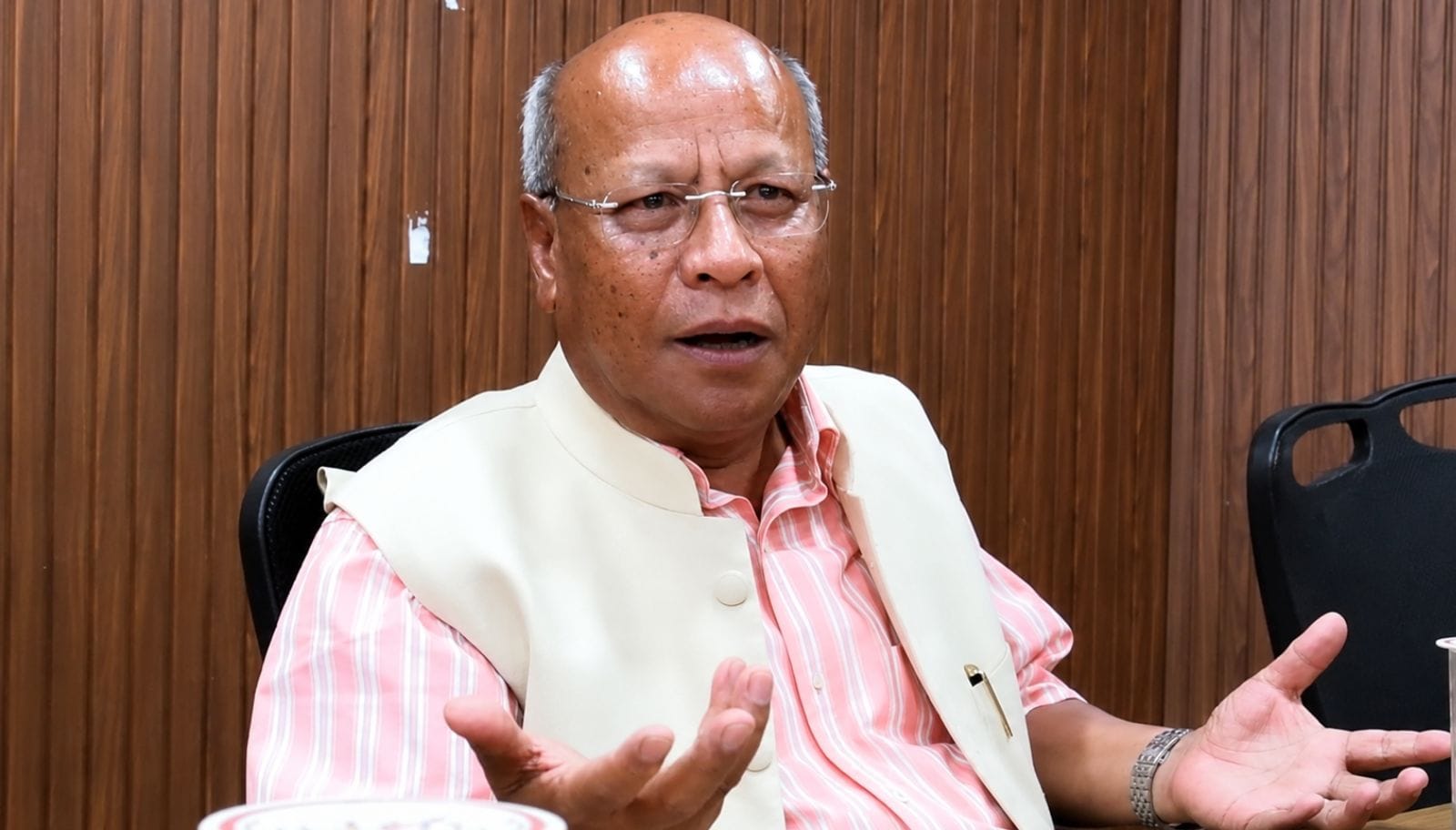
SHILLONG : Meghalaya Deputy Chief Minister Prestone Tynsong has rejected suggestions that his state should be held solely responsible for the recurring floods and waterlogging in Assam’s capital, Guwahati, saying both neighbouring states must work together to address the issue.
His remarks come days after Assam Chief Minister Himanta Biswa Sarma, on July 24, linked Guwahati’s recurring flash floods to rapid development in Meghalaya’s Jorabat hills.
Citing findings of a Supreme Court-appointed empowered committee, Sarma had urged the Meghalaya government to regulate construction around USTM and nearby areas, warning that unchecked development on the hill slopes was increasing rainwater runoff into Guwahati.
Responding to those claims, Tynsong said it would be unfair to blame Meghalaya simply because it is situated at a higher elevation than Assam.
“Meghalaya is time and again blamed for floods just because the state is located at a higher elevation. We cannot be held responsible simply because we are on higher ground while Assam lies in the plains,” he said.
The Deputy Chief Minister also questioned the assumption that the impact of heavy rainfall or extreme weather could be accurately predicted, saying no available technology can precisely determine how such events will affect a particular area. He noted that several localities in and around Guwahati, including Jorabat, Khanapara and the Lokpriya Gopinath Bordoloi International Airport, continue to experience severe waterlogging whenever there is heavy rainfall.
Referring to Assam’s proposed six-lane ring road project near Guwahati, Tynsong said infrastructure development must incorporate proper drainage systems and sufficient culverts to ensure rainwater can flow freely and reduce the risk of flooding.
He stressed that flood mitigation cannot be achieved by one state alone and called for a coordinated approach between Meghalaya and Assam.
According to Tynsong, both governments share the responsibility of finding practical and long-term solutions to recurring floods, rather than placing the blame on one another.
He said cooperation, better planning and improved drainage infrastructure would be more effective in tackling the problem than engaging in a blame game.