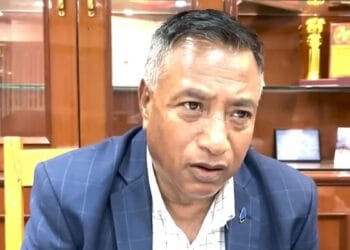
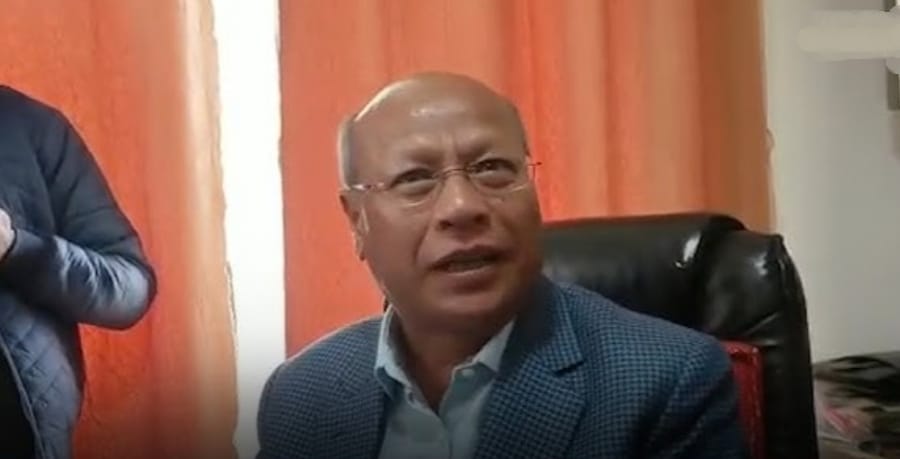
SHILLONG : Deputy Chief Minister Prestone Tynsong on Thursday said the state government cannot single-handedly amend central mining laws to address the demands raised by coal miners, stressing that any changes involving national legislation must go through the Government of India and follow established legal procedures.
His remarks come as coal miners continue to press the government for measures that would make it easier for local landowners to resume mining activities. Several stakeholders have also voiced disappointment over the government’s suggestion that time is needed to examine possible solutions before any decisions can be taken. Responding to the criticism, Tynsong said there appears to be confusion over the legal framework governing mining operations in Meghalaya. He pointed out that some groups have argued that the Mines and Minerals (Development and Regulation) Act, 1957 should not apply to Meghalaya because the state falls under the Sixth Schedule.According to him, such interpretations do not reflect the legal position.
“The state government may review and amend its own laws, but it does not have the authority to independently alter legislation enacted by Parliament,” Tynsong said. He further stated that any attempt to seek exemptions or modifications to provisions of the MMDR Act would require discussions with the Centre and adherence to the prescribed legislative process. The Deputy Chief Minister maintained that the government remains committed to finding solutions, but these solutions must be legally sustainable and capable of withstanding scrutiny.Tynsong also responded to allegations that the government had failed to deliver on its promise of scientific mining. He also clarified that approvals and licences for scientific mining have already been granted to eligible applicants.However, he said the next phase depends on the licence holders themselves. “The government’s responsibility is to create the regulatory framework and facilitate the process,the actual mining operations have to be carried out by the operators and lease holders,” he said.
According to Tynsong, the administration is currently examining concerns raised by stakeholders through a team of experts and technical officials. A detailed presentation is scheduled for June 22, during which stakeholders will be briefed on the legal and technical realities surrounding mining regulations in Meghalaya. The session is expected to assess whether there is any scope for modifications, exemptions or alternative approaches within the existing legal framework.
The latest developments come amid growing opposition from coal miners in Jaintia Hills, who recently rejected the government’s proposal for a Small Scale Mining Policy.Mining stakeholders have argued that the current scientific mining framework places significant hurdles before local landowners, particularly the requirement for a minimum mining lease area of 100 hectares.
Representatives of the Jaintia Coal Owners, Miners, Suppliers and Workers Association (JCOMSWA) have maintained that the requirement is unrealistic in the local context and have urged the government to consider a model similar to limestone mining, where smaller plots can qualify for mining leases under a different regulatory system. The issue was discussed during a recent meeting between the government and JCOMSWA leaders. While the government proposed the formation of a committee headed by the Chief Secretary to examine the matter further, mining representatives expressed dissatisfaction, arguing that the proposal did not provide immediate answers to their concerns.