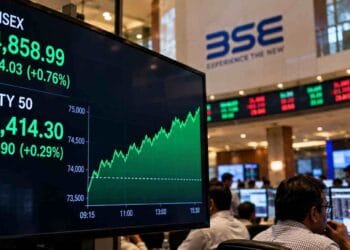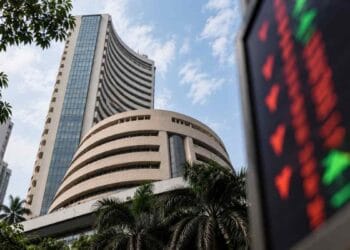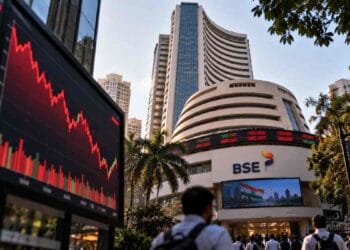
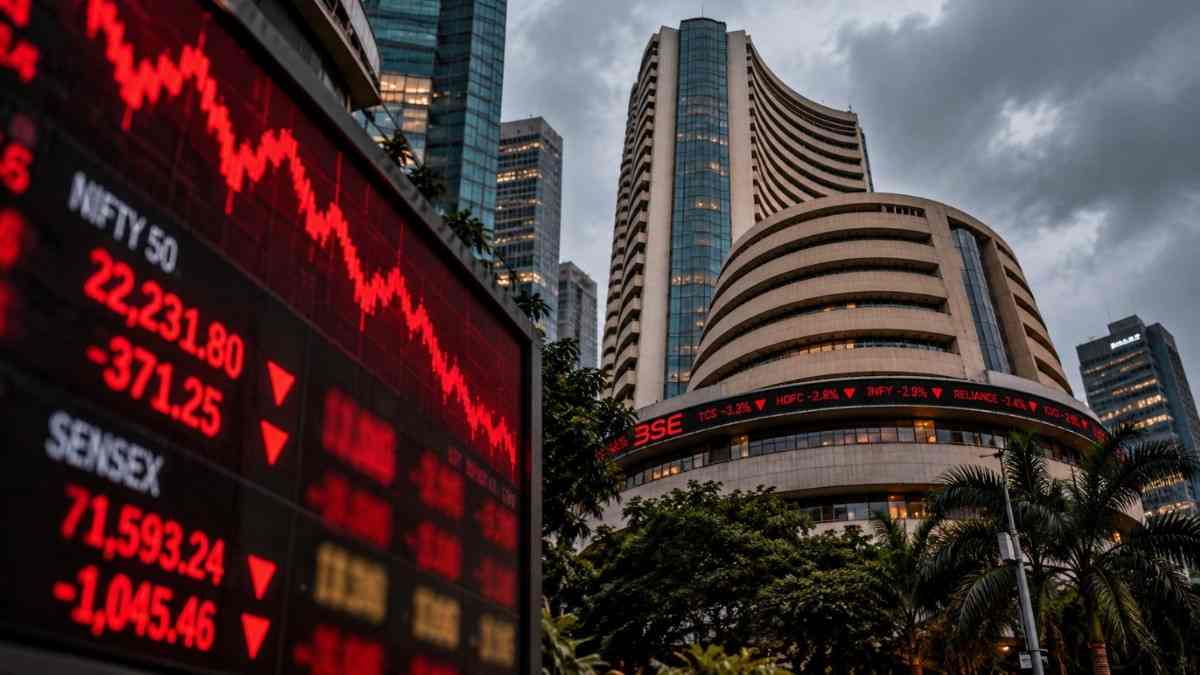
MUMBAI — Thursday left the benchmarks at multi-year lows. The Sensex fell 1,045.46 points, or 1.44%, to 71,593.24 its weakest close in 32 months. The Nifty 50 dropped 371.25 points, or 1.64%, to 22,231.80, the lowest finish in 18 months, after touching an intraday low of 22,179.90.
Selling spread across the board. All 16 major sectoral indices closed lower. Mid-caps and small-caps lost more than 2%. Metal, realty and oil & gas were among the hardest hit as investors cut positions in stocks exposed to higher borrowing costs and input prices.
The session followed the RBI’s 25-basis-point hike that took the repo rate to 5.50% and shifted the stance from neutral to calibrated tightening. Markets spent the day pricing tighter conditions. Brent rose above $104 a barrel on fresh concerns over supplies through the Gulf and the Strait of Hormuz, raising the import bill and adding another layer to an inflation picture the central bank has already flagged.
The rupee closed near ₹96.78 against the dollar after touching a five-month low, lifting the cost of dollar-denominated imports. Governor Sanjay Malhotra said the currency may be undervalued but cautioned that forex markets can move irrationally.
Foreign investors kept selling. Net outflows reached ₹46,990 crore over nine sessions, taking calendar-year equity selling to a record $30.4 billion. Large stocks were not spared. HDFC Bank, ICICI Bank and Reliance Industries all declined. Rate-sensitive names faced heavier pressure.
The September-quarter earnings season opened under this cloud, with TCS due to report. IT was one of the few pockets to show relative resistance, with TCS higher ahead of its numbers.
The combination is now clear on the tape: higher crude, sustained FII outflows, a weaker rupee, rising global yields and a central bank that has begun tightening. The Sensex and Nifty closed at their lowest levels in years.