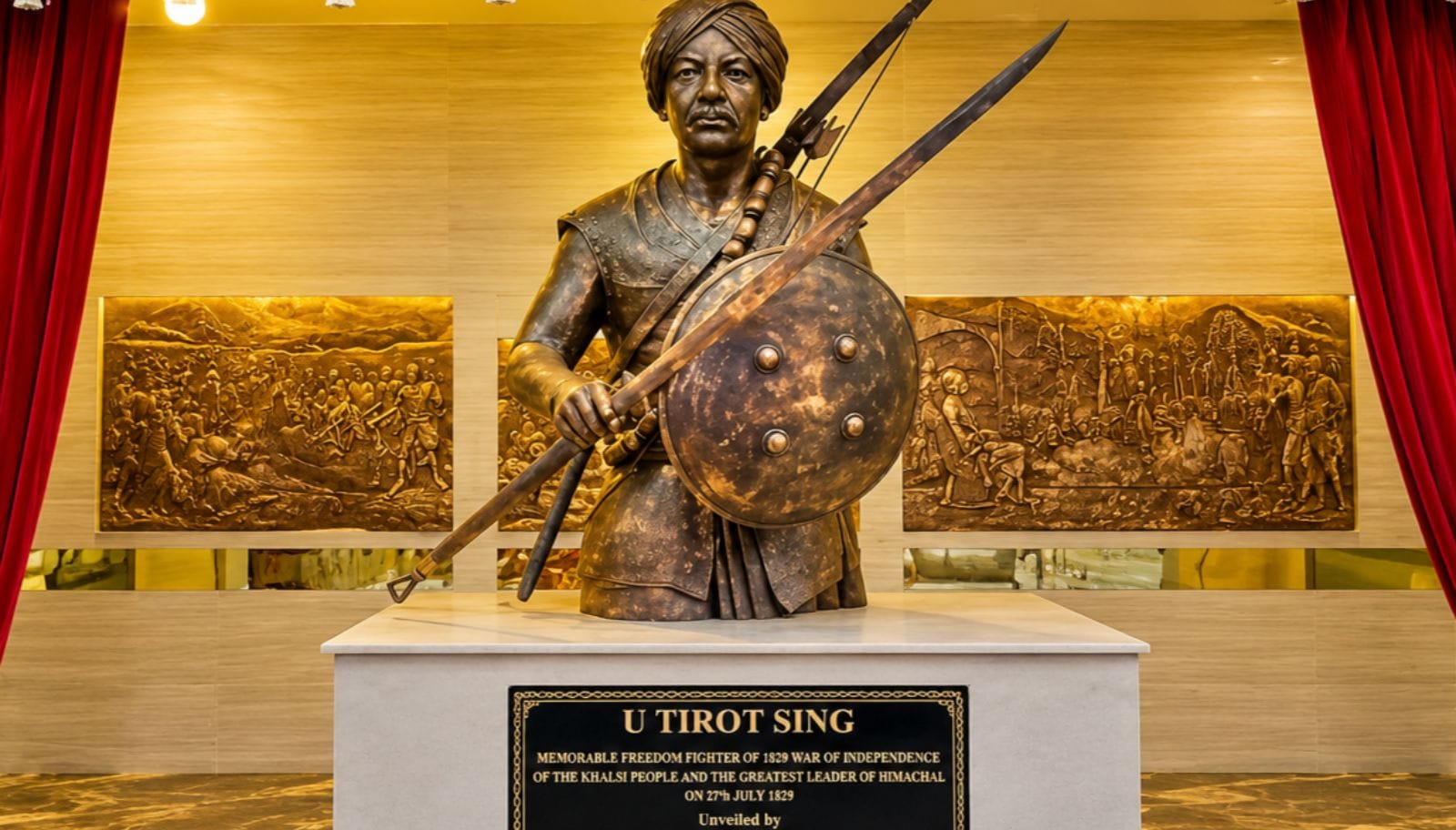
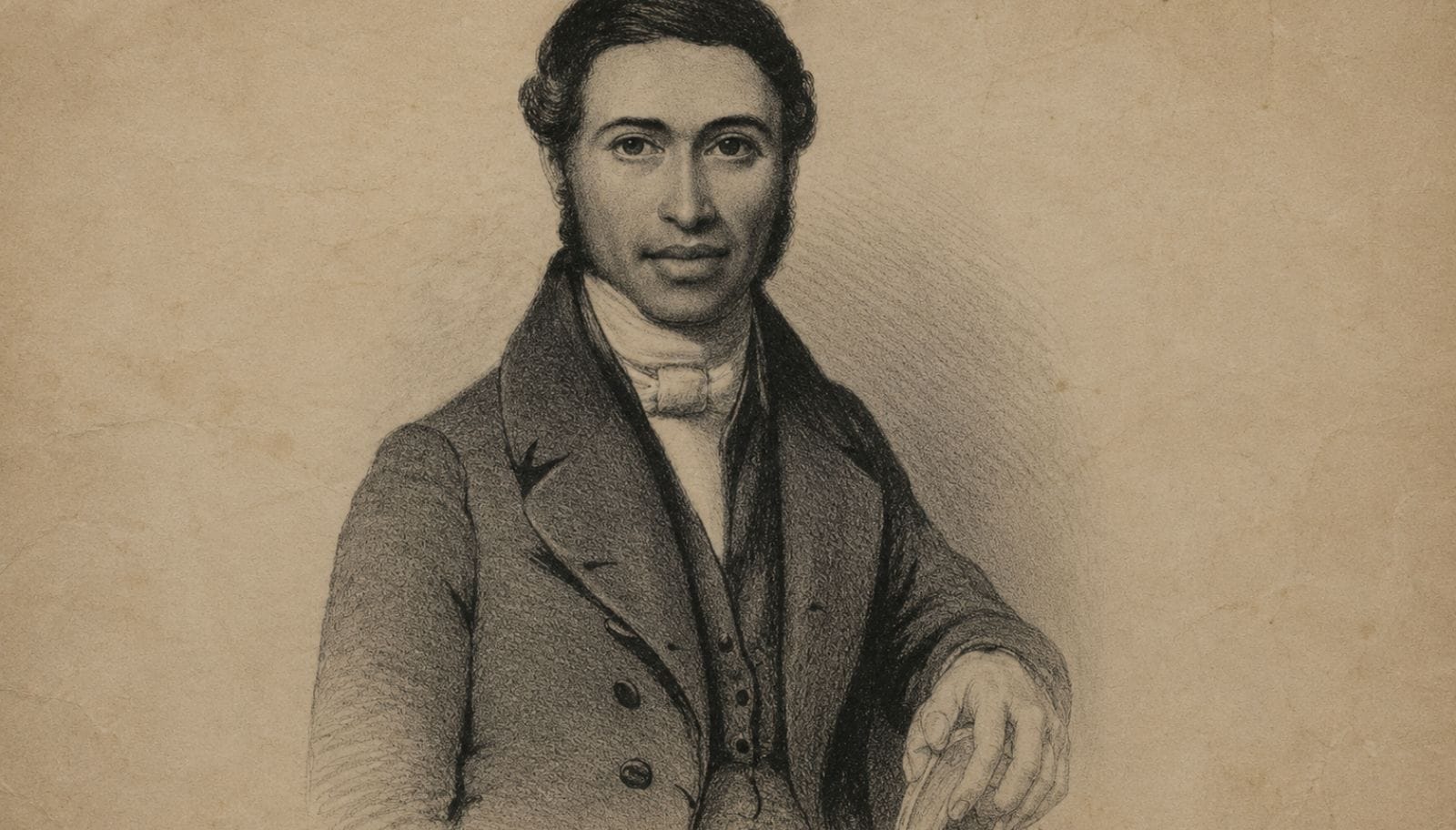
Every year on June 22, Meghalaya observes Thomas Jones Day to commemorate the arrival of Welsh missionary Rev. Thomas Jones in Sohra in 1841. Over the years, Jones has come to be widely remembered as the “Father of the Khasi Alphabet” and a pioneer of Khasi literature. His contribution to the Khasi language is undisputed. The Roman script used by Khasi speakers today owes much to his work. School textbooks, newspapers, books and modern Khasi literature all trace part of their origins to the foundations laid by Jones during the nineteenth century.
Yet a closer look at history raises an interesting question. Did the story of written Khasi really begin with Thomas Jones? Historical records suggest that Khasi was being translated, printed and experimented with long before the Welsh missionary set foot in the Khasi Hills. Decades before Jones arrived in Sohra, other missionaries, local converts and Khasi collaborators were already attempting to put the Khasi language into written form. The story of written Khasi, therefore, may be larger and more complex than the popular narrative often suggests.
The Foundations of Khasi Oral Tradition
Long before the arrival of Christian missionaries, the Khasi people possessed a rich and vibrant oral tradition. Stories, legends, folktales, religious beliefs, customary laws and genealogies were preserved through memory and passed down from one generation to another. Village elders, traditional institutions and cultural practices ensured that knowledge survived without the need for a formal writing system. This is an important point often overlooked in modern discussions. The absence of a widely used script did not mean the Khasi people lacked language, culture or intellectual traditions. Like many indigenous societies around the world, the Khasis maintained a sophisticated oral civilisation. Their language was already fully developed. It had grammar, vocabulary, poetry, songs and a distinct worldview long before any missionary attempted to write it down.
What the Khasi language lacked was not expression, but a standardised written form.The arrival of missionaries in the early nineteenth century would begin changing that reality.
The Serampore Mission and Early Script Experiments
The earliest known efforts to write Khasi did not originate in Sohra. Instead, they began hundreds of kilometres away in Serampore, near present-day Kolkata. During the early nineteenth century, the Serampore Baptist Mission, led by renowned missionary and linguist William Carey, became deeply involved in translating Christian texts into Indian languages. Carey believed that religious texts should be accessible in local languages rather than remaining confined to English or classical languages. His mission translated and printed materials in dozens of languages spoken across the Indian subcontinent.
Around this period, contact was established between Baptist missionaries and Khasi communities living in the Sylhet region. One of the key figures associated with these early efforts was Krishna Chandra Pal, who is often regarded as one of the earliest Indian Christian converts and missionaries connected to outreach among the Khasi people.
These interactions sparked an ambitious idea.If Christian texts could be translated into Khasi, missionary work among Khasi communities might become more effective. The challenge, however, was obvious.Khasi was primarily an oral language. There was no widely accepted writing system.The missionaries therefore had to decide not only what to translate but also how to write the language itself. According to historical accounts, translation work began during the 1810s. William Carey worked with Khasi speakers and local assistants to translate portions of the New Testament into Khasi. These translations did not use the Roman script familiar to Khasi readers today. Instead, they employed the Bengali script, which was already used across much of eastern India and was familiar to educated individuals in the neighbouring plains.
Around 1816, portions of the Gospel of Matthew are believed to have been printed and circulated among Khasi-speaking communities. This is significant because it suggests that Khasi was appearing in written form decades before Thomas Jones reached the Khasi Hills. The process continued over several years.
After nearly a decade of work, a Khasi New Testament was completed and printed in 1824. For many historians, this publication marks one of the earliest substantial attempts to render Khasi into written form. Yet the achievement came with limitations.
The translation relied heavily on the Shella dialect and was printed in Bengali script. While this made sense from the perspective of missionaries working in Bengal, it posed difficulties for Khasi communities living further inside the hills. The result was a text that existed, but one that struggled to gain widespread acceptance.The 1824 publication occupies a curious place in Khasi history. On one hand, it represented a remarkable achievement. Producing a religious text in a language that lacked an established written tradition required enormous effort. Translators had to determine spellings, select vocabulary and make countless linguistic decisions without the benefit of dictionaries or standard grammar books.
On the other hand, the book appears to have had limited practical impact. Historical records indicate that copies remained largely unused for several years. Some accounts suggest that the translation remained effectively inaccessible to much of its intended audience because opportunities for distribution were limited and literacy in Bengali script was uncommon among Khasi communities in the hills. As a result, the book became something of a historical curiosity. It existed.It was printed. But it did not transform Khasi society. At least not yet. Nevertheless, its importance should not be underestimated. The 1824 New Testament demonstrates that written Khasi did not suddenly emerge in 1841 with Thomas Jones. The process had already begun.
One of the most intriguing details connected to the early translations involves a largely forgotten Khasi woman. Some historical accounts indicate that a Khasi woman may have assisted William Carey during the translation process. The woman is believed to have been associated with a local ruling family or chieftainship and reportedly impressed Carey with her intelligence and linguistic abilities.Unfortunately, her identity has been lost to history. No widely accepted record preserves her name. If these accounts are accurate, however, she may have been among the earliest Khasi contributors to the development of written Khasi.
The possibility raises an important question. How many local Khasi collaborators helped shape early written Khasi but disappeared from historical memory while missionaries received most of the recognition? The answer remains uncertain. What is clear is that the story of written Khasi was never the work of a single individual. It involved missionaries, translators, local converts and Khasi speakers working together across different regions and decades.
The effort to produce Khasi texts did not end with the 1824 publication.In 1831, an expanded version known as the “Khasee New Testament” was published. Running to hundreds of pages, it represented one of the largest Khasi-language publications produced up to that time. The book reinforced the Serampore Mission’s commitment to the spread of Christianity through local languages. Yet it also highlighted the limitations of the Bengali-script experiment. Despite the effort invested in translation and printing, the text failed to gain broad acceptance among Khasi speakers.
The reasons were varied. The use of the Shella dialect limited its reach. The Bengali script remained unfamiliar to many Khasi communities. And missionary influence within the hills was still relatively limited. The result was that written Khasi existed, but it lacked a widely accepted form capable of reaching large sections of Khasi society. That situation would soon change. Within a decade, a new missionary would arrive in Sohra carrying a different vision for the future of the Khasi language. His name was Thomas Jones.
The Forgotten Pioneers and Early SchoolsIf
Thomas Jones is one of the most celebrated figures in Khasi linguistic history, Alexander Burgh Lish is perhaps one of the least remembered. Yet long before Jones arrived in Sohra in 1841, Lish had already spent years working among the Khasi people. His name rarely appears in public commemorations. There is no annual observance dedicated to him. Few outside academic circles know much about his life. However, recent discussions among historians and researchers have brought renewed attention to his role in the early history of written Khasi.
The question is simple but significant: Was Alexander Burgh Lish the first person to write Khasi in Roman script? The answer remains debated, but his contribution is becoming increasingly difficult to ignore.
Alexander Burgh Lish was associated with the Serampore Baptist Mission and arrived in the Khasi Hills in 1832, nearly a decade before Thomas Jones. Historical accounts describe him as being of mixed European and Indian ancestry. In colonial records, people of such backgrounds were often referred to as Eurasians.
Lish entered a region where missionary work was still in its infancy. Christianity had not yet gained significant influence in the hills. Written Khasi remained experimental. Educational infrastructure was limited.
Despite these challenges, Lish began establishing schools and attempting to expand educational activities among Khasi communities.
Unlike Thomas Jones, who would later become strongly associated with the Roman script, Lish initially worked within the Bengali-script tradition inherited from the Serampore Mission. One of Lish’s most important contributions was the establishment of schools. He founded educational institutions in places such as Sohra, Mawsmai and Mawmluh. For missionaries, education served two purposes. First, it provided literacy and learning. Second, it created opportunities for religious instruction. Records suggest that dozens of students attended these early schools. Some pupils reportedly learned to read portions of the Bible and other educational materials.
Lish initially taught English but later shifted emphasis toward Bengali. His reasoning was straightforward. The missionary materials available to him were already written in Bengali script, and he believed the script could serve as a practical vehicle for education among Khasi students. History would eventually prove that assumption wrong. Today, the idea of Khasi being written in Bengali script may seem unusual.
Modern Khasi readers are accustomed to Roman letters.Words such as “Khublei,” “Shillong,” “Sohra” and “Meghalaya” are instantly recognisable in Roman script. But during the early nineteenth century, the outcome was far from certain. The Serampore missionaries viewd Bengali as a logical choice because it was already an established literary language with printing presses, books and educational materials. From their perspective, adapting Khasi to Bengali script made practical sense. The problem was acceptance. The script never became widely embraced across the Khasi Hills. Students struggled with it. Literacy remained limited.
The translations failed to generate the broader literary movement that missionaries had hoped for. In hindsight, the Bengali-script phase appears less like a permanent solution and more like an experiment that ultimately failed to take root.
Local Collaborators and the Roman Script Debate
The history of written Khasi is often told through the lives of missionaries.Yet missionaries did not work alone. One of the most important figures associated with Lish was U Duwan. Historical records identify him as one of the earliest Khasi converts to Christianity. He assisted missionary activities and acted as a bridge between foreign missionaries and local communities. Without individuals such as U Duwan, translation work would have been nearly impossible.
Missionaries could not simply arrive and instantly understand Khasi grammar, vocabulary and cultural nuances. They depended heavily on Khasi speakers. This raises an important historical issue. How much credit should be given to local collaborators? Many discussions about Thomas Jones, William Carey and Alexander Burgh Lish focus almost exclusively on missionaries. Yet the actual process of translation required Khasi knowledge. Words had to come from Khasi speakers. Meanings had to be explained by Khasi speakers.Cultural concepts had to be interpreted by Khasi speakers.
The role of people like U Duwan deserves greater attention than it often receives one of the more unusual episodes in Lish’s career occurred in 1835., historical records indicate that he took a group of Khasi youths to Calcutta.
Read Also : Was Thomas Jones really the father of the Khasi alphabet? The forgotten history of written Khasi( Part 2)
Today, such a trip might be described as an educational excursion or exposure visit. For young Khasi students, the journey would have provided exposure to a vastly different environment.
Calcutta was one of the most important cities in British India. It was a centre of administration, education, publishing and missionary activity. The trip reflected Lish’s broader belief that education could transform Khasi society. Although his overall missionary efforts achieved limited success, they demonstrated an ambition to connect the Khasi Hills with wider intellectual and educational networks. The most important piece of evidence in the debate surrounding Lish emerged after he left the Khasi Hills.
In 1838, he published an essay titled A Brief Account of the Khasees. At first glance, the work appears to be an ethnographic account. Lish described Khasi society, customs, religion and social life through the lens of a nineteenth-century missionary. Modern readers often find parts of the text deeply problematic. Scholars have criticised sections of the essay as paternalistic, condescending and reflective of colonial attitudes common during that period. Yet hidden near the end of the essay is the reason historians continue discussing Lish today.
Toward the conclusion of his essay, Lish included examples of Khasi words and grammatical forms rendered in Roman letters. These examples were not extensive. They did not constitute a full writing system. Nor did they resemble a complete alphabet. Instead, they appeared as vocabulary examples and grammatical specimens intended to illustrate the language for readers unfamiliar with Khasi. To modern Khasi readers, some spellings appear strange, some grammatical forms are inaccurate. Others differ significantly from present-day written Khasi.
One example often cited is his rendering of a Khasi verb form as “nga lalawan.” The spellings are imperfect. The grammar is incomplete. Yet they are unmistakably Khasi words written using Roman characters and that is where the controversy begins. Those who support the revisionist view argue that these Roman-script examples make Alexander Burgh Lish the first known person to publish Khasi in Roman letters. If that interpretation is correct, then a key assumption in the traditional narrative becomes more complicated.
Thomas Jones would no longer be the first person to write Khasi using Roman script. However, this argument has limits.
Lish’s Roman-script Khasi was not a comprehensive writing system. It was not supported by textbooks. It did not establish spelling conventions. It did not produce a literary movement. It existed largely as a linguistic specimen embedded within a larger essay. This distinction is important.
Writing a language and standardising a language are not the same thing. This is where modern historians begin to diverge. One group argues that being first matters, if Lish wrote Khasi in Roman letters before Jones arrived, then he deserves recognition as an important pioneer.
Another group argues that influence matters more than chronology. Even if Lish came first, it was Thomas Jones who transformed Roman-script Khasi into a practical and widely accepted writing system.In other words, Lish may have opened the door. But someone else walked through it.
By the time Thomas Jones arrived in Sohra in 1841, the foundations had already been laid by missionaries, translators and Khasi collaborators over several decades. Yet the story of written Khasi was about to enter its most influential chapter.
And at the centre of that chapter stood a Welsh missionary whose name would become inseparable from the history of the Khasi language. His arrival would ultimately change the direction of Khasi literature, education and identity.