The Supreme Court’s recent declaration that walking on a demarcated footpath is a fundamental right could have significant implications for Shillong, where pedestrians are often forced to share road space with vehicles due to blocked, damaged or inadequate walkways.
In a landmark judgment, the apex court held that the right to walk safely forms part of the constitutional freedom of movement under Article 19(1)(d) and is closely linked to the right to life guaranteed under Article 21.
The court also made it clear that the rights of pedestrians on designated footpaths cannot be subordinated to the convenience of motor vehicles. The ruling may have originated from a case elsewhere in the country, but it resonates strongly with the everyday reality faced by thousands of people in Shillong.
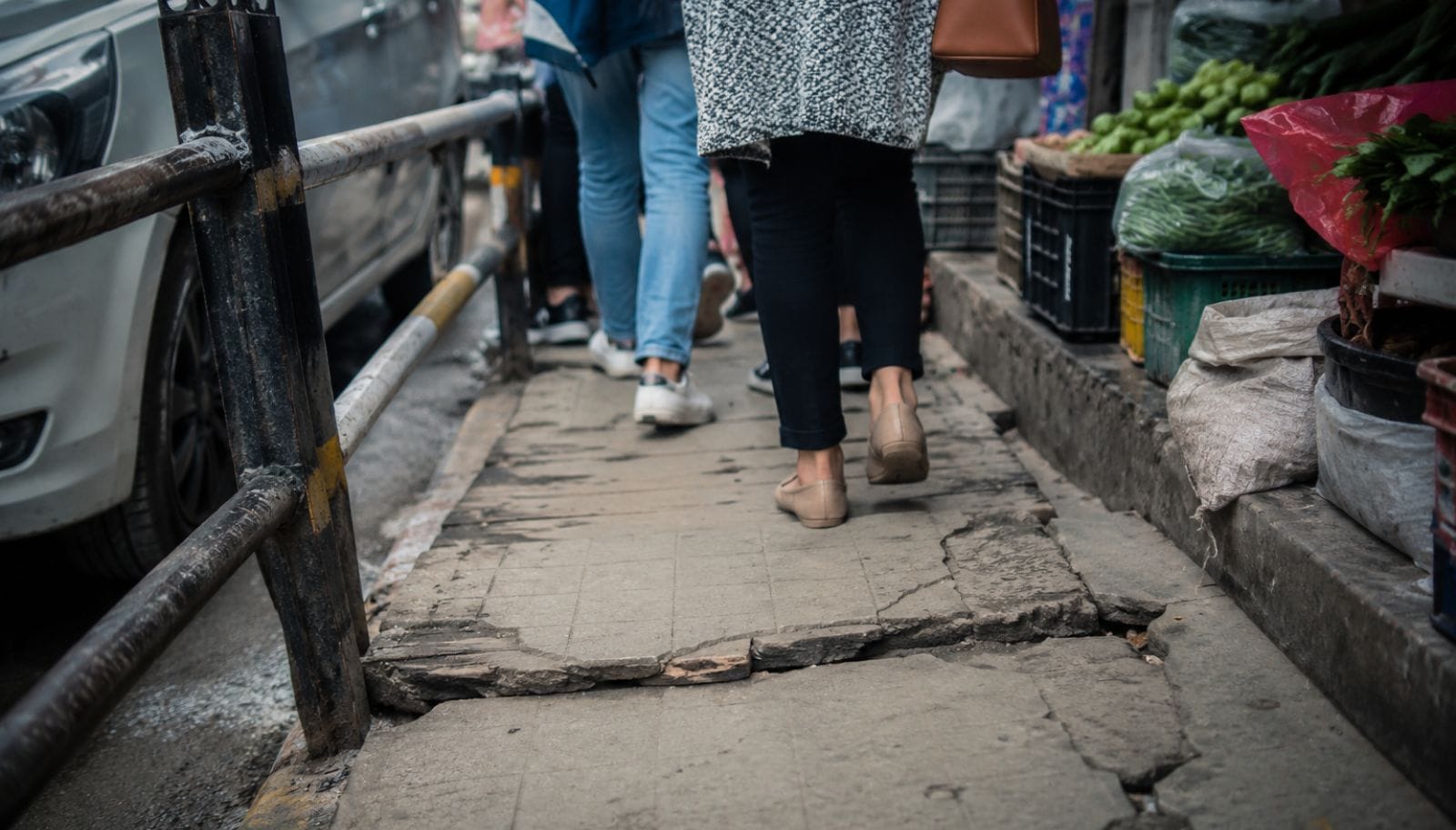
For many residents, walking through parts of Police Bazaar, Laitumkhrah and Iewduh is often less about convenience and more about survival. In several locations, footpaths are either damaged, too narrow, occupied by parked vehicles or used for commercial activity, leaving pedestrians with little choice but to walk on busy roads..
The situation becomes even more challenging during the afternoon and evening hours. In Iewduh and surrounding areas, pedestrian movement increases significantly as vendors arrive to sell vegetables, fruits and cooked food. While these activities support livelihoods and contribute to the local economy, they can also reduce already limited walking space, forcing pedestrians onto congested roads shared with vehicles.
A similar situation can be observed in parts of Police Bazaar and Laitumkhrah, where commercial activity, temporary stalls, signboards and roadside parking often compete with pedestrians for space. During peak hours, navigating these areas can become difficult, particularly for senior citizens, schoolchildren and persons with disabilities. In some places, pedestrians are forced to step onto roads carrying buses, taxis and private vehicles simply because there is nowhere else to walk.
The Supreme Court’s ruling does not mean that authorities will immediately clear every obstruction or redesign the city’s roads. Nor does it automatically invalidate the rights of vendors and small businesses who depend on public spaces to earn a living. However, the judgment strengthens an important principle: footpaths exist primarily for pedestrians and public authorities have a responsibility to ensure they remain safe and accessible.
The court has effectively recognised that walking is not merely a mode of transport but a constitutional right. This places greater emphasis on the duty of urban authorities to provide and maintain pedestrian infrastructure rather than treating it as an afterthought in city planning.
In Shillong, the ruling may add fresh momentum to long-standing concerns about encroachments, illegal parking on footpaths and the overall condition of pedestrian facilities. It could also encourage stronger discussions on how to balance public safety with the livelihood concerns of vendors and small traders. The challenge ahead is unlikely to be simple. Clearing footpaths without providing alternative spaces for vendors could create economic hardship, while allowing unchecked encroachment would continue to compromise pedestrian safety. Any lasting solution will require planning, enforcement and cooperation from all stakeholders.
Yet the broader message from the Supreme Court is difficult to ignore. Roads are not meant exclusively for vehicles. Every day, thousands of people in Shillong walk to schools, colleges, markets, churches, offices and public institutions. Their right to move safely is just as important as the movement of traffic.
The ruling will not create new footpaths overnight. But it does strengthen a question many Shillong residents have been asking for years: if walking is a fundamental right, why are pedestrians still being pushed onto busy roads because footpaths are blocked, occupied or simply unavailable?