The Arrival and Strategy of Thomas Jones
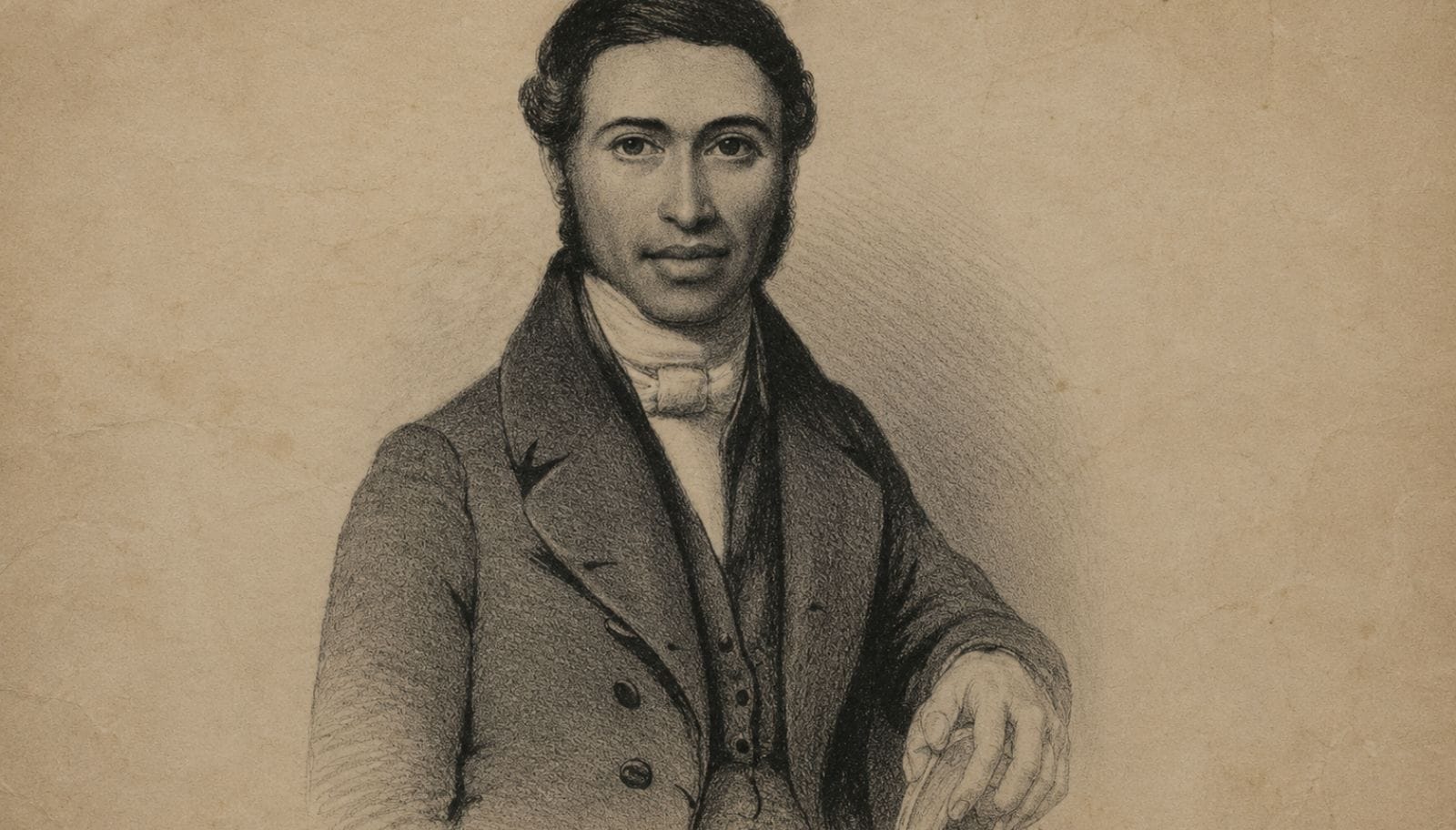
On June 22, 1841, a Welsh missionary named Thomas Jones arrived in Sohra.More than 180 years later, that date continues to be remembered across Meghalaya as Thomas Jones Day. Unlike many historical figures whose influence faded after their deaths, Jones’s legacy remains visible in everyday life.
Every Khasi newspaper, school textbook, government document, social media post and book written in Khasi owes something to the writing system that emerged during and after his time in the Khasi Hills. Yet when Jones arrived, he was not entering a blank slate. Khasi had already been translated into Bengali script. The Serampore Mission had already produced religious texts.
Alexander Burgh Lish had already established schools. U Duwan and other Khasi collaborators had already assisted missionary efforts. The story of written Khasi had begun before Jones.
What made Jones different was what happened next. Thomas Jones came to the Khasi Hills as a missionary of the Welsh Calvinistic Methodist Mission. His primary objective was religious. Like many missionaries of the nineteenth century, he wanted Christian teachings to be available in local languages. To achieve that goal, literacy became essential. People could not read religious texts if they could not read at all. Unlike some earlier efforts, however, Jones quickly recognised that a writing system could not succeed unless it connected with local realities. Instead of continuing with Bengali script, he increasingly embraced Roman letters. This decision would prove historic. At the time, it was not universally accepted.
Some missionaries preferred Bengali script because of its existing literary tradition. Many Khasi people already had economic and social interactions with Bengali-speaking communities in the plains. There was no guarantee that Roman script would succeed. Yet Jones persisted. This is where historians generally agree Jones made his most important contribution.
The evidence suggests that Alexander Burgh Lish may have written Khasi words in Roman script before Jones. But Jones went far beyond individual words or grammatical examples. He developed primers, he translated texts, he produced teaching materials, he printed publications,he created practical tools that ordinary people could use. Most importantly, he helped establish consistency.
A language becomes truly written when readers know how words are expected to be spelled and understood. Jones’s work moved Khasi in that direction. Rather than simply recording Khasi speech, he helped transform it into a language that could be taught, printed and reproduced. That distinction explains why his influence became so enduring. One of the most fascinating questions in Khasi history is not why Thomas Jones became famous. It is why Roman script succeeded where Bengali script struggled.
Several factors likely contributed. First, Roman letters were relatively straightforward to reproduce in missionary printing networks. Second, the growing influence of mission schools helped spread literacy through the new script. Third, the writing system gradually gained acceptance among Khasi communities themselves.
Over time, Roman-script Khasi became associated with education and literacy. As more books appeared, the system strengthened further. Once newspapers, educational institutions and writers adopted Roman script, the process became self-reinforcing. A generation learned it. Then another generation inherited it. Eventually, it became difficult to imagine Khasi written any other way. History often looks inevitable in hindsight. Yet during the 1820s and 1830s, the future was uncertain.Had events unfolded differently, Khasi might have continued in Bengali script or developed along another path entirely.
Standardization, Literature, and the Inscription Debate
Perhaps the strongest argument in favour of Thomas Jones’s legacy lies in what followed his work. The decades after Jones witnessed the growth of Khasi literature.
Writers, scholars and educators built upon the foundations established during the nineteenth century. Figures such as William Pryse, John Roberts, Jeebon Roy, Soso Tham, H. Elias, Homiwell Lyngdoh and Mondon Bareh contributed significantly to the development of Khasi literature and intellectual life. Their achievements were their own. Yet they operated within a literary tradition that had become possible because written Khasi had gained a stable and widely accepted form.
Even K. Mark Swer, one of the strongest advocates for recognising Alexander Burgh Lish’s contribution, acknowledges this point. His argument is not that Thomas Jones was unimportant. Rather, it is that the story did not begin with Jones alone.
Today, the debate surrounding Thomas Jones is less about facts than interpretation. Most scholars agree on several points. They agree that Khasi existed long before missionaries arrived. They agree that the Serampore Mission produced Khasi texts before Jones reached Sohra. They agree that Alexander Burgh Lish used Roman letters to record Khasi words before 1841. They also agree that Thomas Jones played a central role in shaping modern written Khasi. The disagreement emerges when people ask:
Who deserves the title? For some historians, being first is crucial.
If Lish published Khasi words in Roman script before Jones, then he deserves recognition as an overlooked pioneer. For others, influence matters more. A person who briefly experimented with a writing system is not necessarily equivalent to the person who established it. The debate therefore reflects two different ways of understanding history. One focuses on chronology the other focuses on impact. The discussion became even more interesting because of the wording used to commemorate Jones. At his restored grave in Kolkata’s Scottish Cemetery, the inscription describes him as: “The founding father of the Khasi alphabets and literature.” Many people accept the phrase without question. Others have raised concerns.
Some scholars argue that describing Jones as the father of Khasi literature overlooks the rich oral traditions that existed before missionary activity. Folktales, songs, myths, poetry and traditional knowledge formed a literary culture long before they were written down. In this view, Jones helped create written Khasi literature but not Khasi literature itself.
A few commentators have gone further and criticised references describing Jones as the “Father of the Khasi Language.”
That claim is generally rejected by historians because the Khasi language obviously predated Jones by centuries. The debate reveals how historical titles can expand over time. A phrase originally intended to recognise one achievement can gradually acquire broader meanings that historians may find difficult to defend.
In 2018, the Government of Meghalaya formally introduced Thomas Jones Day. The observance recognises his contribution to the development of the Khasi alphabet in Roman script and his role in shaping modern Khasi literacy. The decision reflected a long-standing public appreciation of his work. Interestingly, official recognition arrived many decades after Meghalaya became a state in 1972. By then, Thomas Jones had already become deeply embedded in public memory. Schools taught his story, churches commemorated his arrival. Writers referenced his contributions.
The official observance largely formalised what many Khasi people had already believed. So, was Thomas Jones the father of the Khasi alphabet?
The answer depends on what exactly the phrase means. If it means: Did Thomas Jones invent the Khasi language? The answer is clearly no. The language existed long before his arrival. If it means: Was Thomas Jones the first person ever to write Khasi? The answer also appears to be no.
Evidence points to earlier translations produced by the Serampore Mission.
If it means: Was Thomas Jones the first person to write Khasi in Roman script? That claim is increasingly debated because of Alexander Burgh Lish’s 1838 publication. However, if the phrase means: Was Thomas Jones the person who established, standardised and popularised the Roman-script writing system that became modern written Khasi? Then the evidence strongly points to yes. That is why he remains such a central figure in Khasi history.
Read Also : Was Thomas Jones really the father of the Khasi alphabet? The forgotten history of written Khasi( Part 1)
Rethinking the History of Written Khasi
The history of written Khasi did not begin with Thomas Jones. It began earlier, through the efforts of missionaries, translators, Khasi converts and local collaborators whose names are often forgotten. William Carey and the Serampore Mission produced Khasi texts in Bengali script decades before Jones arrived. Alexander Burgh Lish appears to have recorded Khasi words in Roman script before Jones set foot in Sohra.
Individuals such as U Duwan played important roles in bridging linguistic and cultural gaps. Yet acknowledging these contributions does not diminish Thomas Jones. Instead, it places him within a broader historical story. The evidence suggests that Jones was not the sole creator of written Khasi. But it also suggests that no other individual had a greater impact on transforming Khasi into a practical, widely used written language.
Perhaps the real lesson is that history is rarely the work of one person. The written Khasi language emerged through the contributions of many individuals across several decades. Thomas Jones remains the most influential among them. But he was not alone.
And understanding that larger story allows us to appreciate not only the man whose name is remembered every June 22, but also the forgotten figures who helped shape the written history of the Khasi language long before and alongside him.