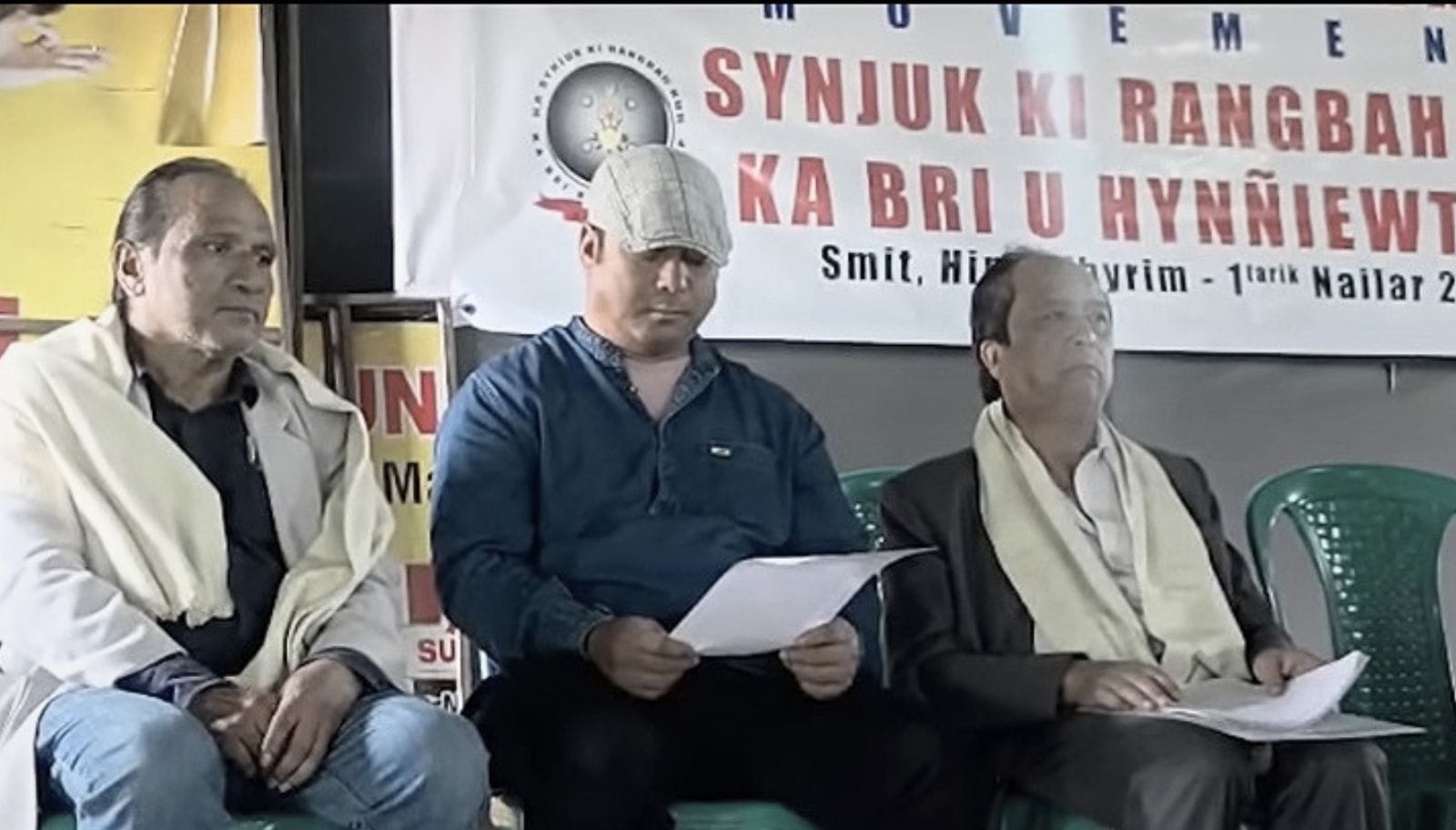
SHILLONG : Strong opposition to any move towards a patriarchal system echoed through Smit on Saturday as hundreds of clan elders, traditional leaders and scholars reaffirmed that the Khasi identity must continue to flow through the mother’s lineage, calling it the foundation of the community’s existence.
The message came during a regional gathering organised under the Tipkur Tipkha Movement, where representatives from Khasi and Jaintia Hills met to discuss growing concerns over customs, land rights and the future of indigenous institutions.
Organisers said the campaign is intended to reconnect Khasi and Jaintia clans with their roots by strengthening Seng Kur and Dorbar Kur, while protecting the three cornerstones of Khasi society land, language and the matrilineal system.
A major concern raised at the meeting was what participants described as increasing attempts to introduce patriarchal ideas into Khasi society. Speakers argued that clan identity has always been inherited through birth from the mother and cannot be altered simply by adopting a surname or changing social practices.
SKRK general secretary Raphael Warjri said the movement was launched to ensure younger generations understand the value of the matrilineal system instead of allowing it to weaken over time. He said the organisation was not promoting one gender over another but defending a social structure that has existed for generations.
“We’re here to protect the matrilineal system so future generations inherit the same identity and traditions that have shaped Khasi society for centuries,” Warjri said.
Warjri explained that fathers and maternal uncles have long played significant roles as guardians and advisers within Khasi society, showing that the traditional system was built on shared responsibilities rather than gender imbalance.
“Our tradition has never been about competition between men and women. The mother carries the lineage, while men continue to play important roles in family, society and traditional institutions,” he said.
The meeting also turned its attention to governance under the Autonomous District Councils. Speakers questioned what they says as a growing acceptance of practices that conflict with customary laws and traditional land ownership.
SKRK spokesperson R.L. Blah and legal adviser Robert June Kharjahrin criticised the present Executive Committee of the Khasi Hills Autonomous District Council, alleging that it had failed to defend the spirit of the Sixth Schedule by allowing policies and practices that weaken indigenous customs and land rights.
The assembly also heard presentations on Khasi history and origins. Dr Marco Mitri, chairman of the Mawlai Town Dorbar, spoke on anthropological studies relating to the Mon-Khmer roots of the Khasi people, while Dr Bakhiamon Rynjah and Khroo L. Pariat shared their views on preserving traditional institutions and strengthening community participation.
As the meeting concluded, organisers described the Tipkur Tipkha Movement as more than a cultural campaign. They said it is a long-term effort to protect the identity, customs and ancestral heritage of the Khasi-Jaintia people at a time when many believe those traditions are facing increasing pressure.