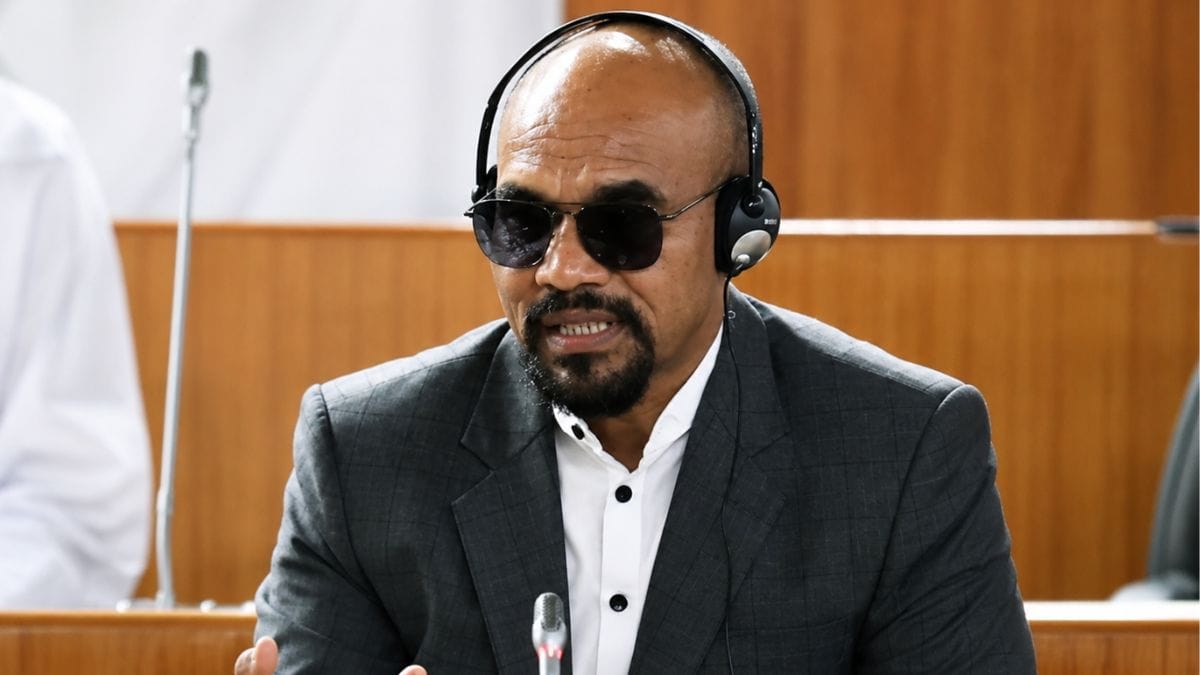
SHILLONG : The Voice of People’s Party(VPP) president and Nongkrem MLA Ardent Miller Basaiawmoit backed Meghalaya’s unanimous resolution against uranium mining on Wednesday but questioned whether the Assembly’s decision would carry enough weight to stop any future attempt by the Centre to extract uranium in the state.
Speaking during the debate, Basaiawmoit recalled the resolution passed by the Meghalaya Assembly in 2019 seeking implementation of the Inner Line Permit (ILP), saying its present status should make legislators question what would happen to the latest resolution.
“I am also reminded about the resolution passed by this August House by the previous government (MDA 1 in 2019), and that resolution is for the implementation of ILP in the state of Meghalaya,” he said.“ And I’m sure that no one is aware about the status of that resolution. My question is: what will be the fate of this resolution?” Basaiawmoit said his opposition to uranium mining became stronger after visiting Jaduguda in Jharkhand, where uranium mining has been taking place for decades.
He said he had initially been reluctant to speak on the issue because he was not an expert, but changed his position after seeing the conditions of people living around the mining areas.
“I was only convinced about the danger of uranium mining only after I made a private visit to Jaduguda,” he said.“ I found by myself that, yes, this is not safe for the state to allow mining of uranium because I have seen how the people suffer different kinds of diseases.”
The VPP Chief also raised questions about the wider policy direction of the Union government, arguing that India’s growing energy requirements could increase pressure to access uranium resources. He referred to the government’s Viksit Bharat 2047 vision and the rapid expansion of artificial intelligence, saying large AI data centres would require a steady supply of electricity.
He argued that solar and wind power alone cannot provide uninterrupted energy for such systems because of their intermittent nature, making nuclear power increasingly important to India’s energy plans.
Basaiawmoit then turned to recent changes in mining legislation, including amendments to the Mines and Minerals (Development and Regulation) Act and the SHANTI Act.
He said these changes raised concerns over the Union government gaining greater control over mineral-bearing areas.
“I see that the Government of India, for the interests of the country, might even go ahead despite the resistance of the people,” he said. The VPP Chief also referred to a Presidential order relating to the Bengal Eastern Frontier Regulation and questioned why the state government had not challenged what he described as an unconstitutional change.
But his strongest warning came towards the end of his speech. Basaiawmoit said merely passing the resolution was not enough and called on legislators to make a personal commitment against uranium mining.
“We can adopt this resolution, we are all for it. But besides sending a clear message to the Government of India through this resolution, we should also make a pledge,” he said. He then made a personal declaration on the Assembly floor.
“Mining of uranium against the wish of the people will be on my dead body,” Basaiawmoit said. He urged every MLA to make a similar commitment regardless of political affiliation.
“Let each one of us, besides the support that we are going to give to this resolution, also make an individual pledge that we will never allow, no matter what, for the Government of India to carry out mining of uranium in the state,” he said.“ We will not allow any force to forcefully extract this mineral from our state.”
The Assembly later adopted the government resolution unanimously, putting the legislature’s opposition to uranium mining and uranium-related activities in Meghalaya on record.