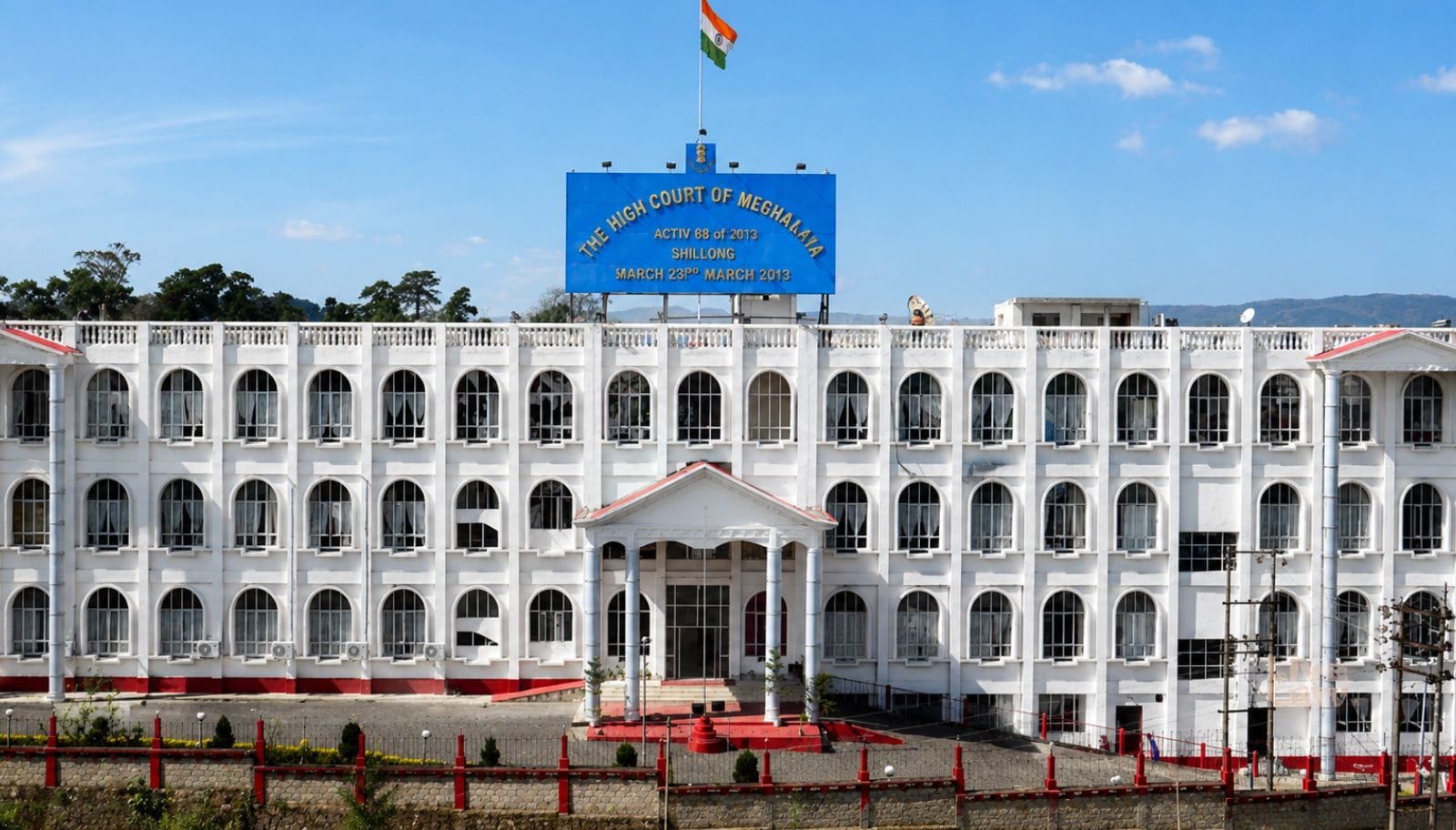
SHILLONG: A rally that should have been shut down the moment its own conditions were broken instead rolled on, and Shillong paid the price for it, the Meghalaya High Court said, questioning why police let the Khasi Students’ Union bike procession continue on August 19 even after participants had allegedly violated the very terms under which it was permitted.
The bench didn’t mince words about what that failure cost. Had the rally been stopped the instant those violations surfaced, the court observed, the attacks on people, the vehicles set upon, the property damaged, all of it might never have happened.
A Division Bench of Chief Justice Revati Mohite Dere and Justice W. Diengdoh made the observations while hearing a suo motu PIL into the August 19 violence. The court was told that participants covered their faces despite the organisers having given a specific undertaking that they wouldn’t, and the bench also took note of allegations that some participants carried sticks, lathis or other dangerous objects, while registration plates on several two-wheelers had reportedly been covered up entirely, a detail the court clearly viewed as evidence the violations weren’t incidental.
Police conduct during the rally itself came under particularly close scrutiny. The bench asked, directly, whether any police officer had actually intervened or attempted to halt the procession once these breaches became apparent, and separately asked whether the entire rally had been videographed right from its starting point, a basic evidentiary safeguard the court seemed to be probing whether authorities had even bothered with.
The judges went further still, asking whether police had followed the Supreme Court’s own directions laid down in Tehseen S. Poonawalla v Union of India, the landmark ruling on preventing and responding to mob violence, effectively asking whether the state had followed its own constitutionally mandated playbook for exactly this kind of situation.
The investigation’s progress so far didn’t escape criticism either. The government informed the court that 22 FIRs have been registered across five police stations, four at Shillong Sadar, nine at Rynjah, seven at Mawlai, and one each at Laitumkhrah and Lumdiengjri.
Four KSU office-bearers have been arrested, two vehicles allegedly connected to the incidents have been seized, and police have pulled Call Detail Records from eight suspected mobile numbers along with CCTV footage from 27 separate locations along the rally route for analysis.
Despite that volume of paperwork, the bench zeroed in on a glaring gap: why had only four individuals been identified when hundreds were allegedly present during the procession and the violence that followed?
The court directed police to identify everyone responsible for specific acts of assault and property damage individually, rather than treating the case as closed once a handful of office-bearers had been named, making explicitly clear that stopping at KSU’s leadership would not be treated as an adequate outcome if rank-and-file participants had also taken part in the violence.
A Special Investigation Team led by Inspector General of Police (Law and Order) Davis N.R. Marak is currently handling the broader probe, and the court has directed that its observations from this hearing be formally brought to the SIT chief’s attention, so that concrete steps can follow to identify the remaining individuals involved.
The violence that erupted after the rally spread across multiple parts of Shillong, with vehicles attacked, members of the public assaulted, and property damaged in the process.
The High Court has now directed the IGP, the East Khasi Hills Superintendent of Police, and the officers-in-charge of both Shillong Sadar and Lumdiengjri police stations to be personally present at the next hearing, and has asked the state government to file a fresh status report detailing the investigation’s progress.
The matter returns to court on September 7.