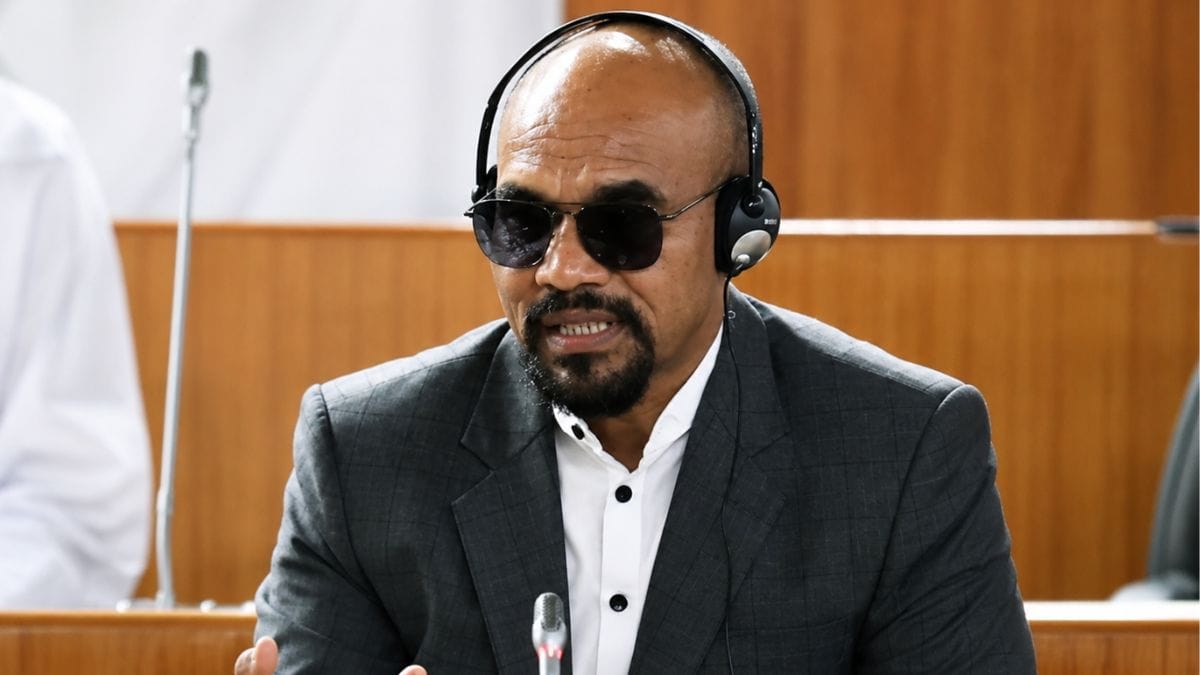
SHILLONG : VPP chief Ardent Miller Basaiawmoit has called for an immediate freeze on new permanent settlements in Langpih and Mawsikar, warning that border residents are bearing the consequences of the prolonged Meghalaya-Assam dispute.
Moving a special motion on the situation of border communities in the Meghalaya Assembly on Tuesday, the VPP chief said people living along the state’s territorial frontiers remain among the most vulnerable, with gaps in roads, healthcare, water supply and security adding to their difficulties.
Basaiawmoit said the problems faced by farmers in Lapangap have become particularly serious, with residents reporting obstruction and harassment while trying to cultivate their fields.
“The border issue is not merely about maps and boundary pillars,” Basaiawmoit said. “It is about whether a farmer can sow paddy and support his family. Agriculture operates by the seasons; it cannot be postponed until boundary talks are concluded.”
He also questioned the implementation of the June 2026 interim understanding between Assam and Meghalaya. While the arrangement permitted cultivation in specified areas, Basaiawmoit alleged that farmers in Lapangap had been pushed towards low-lying foothills while higher ground was being occupied by settlers from Assam. The VPP leader said the government should immediately establish who owns land in vulnerable border areas and determine whether newly constructed houses, roads and other structures have valid documentation or were authorised jointly.
He placed six demands before the government: a joint survey of Mawsikar and Langpih to identify new constructions; time-bound verification of land ownership; a complete halt to permanent construction in disputed areas until a final settlement; permanent security for farmers during sowing and harvesting; compensation for crop and property losses linked to border violence; and a Border Monitoring Mechanism involving district administration, police and traditional institutions. Basaiawmoit said the government must act before changing settlement patterns become difficult to reverse.
He concluded by warning that residents of Mawsikar, Langpih and Lapangap should not lose their ancestral land and livelihoods because of a prolonged boundary dispute.
Also, Mukul seeks protection for farmers along Bangladesh border.
Leader of the Opposition Mukul Sangma separately raised concerns over farmers whose agricultural land falls outside the physical fencing along the Indo-Bangladesh border.Sangma said the international boundary remains at the “Zero Line”, while fencing in several stretches has been erected inside Indian territory, leaving portions of Meghalaya farmland beyond the fence.
“Farmers face immense difficulty accessing their fields, and worse, people from across the border are entering and harvesting Indian produce,” Sangma said.
He called on security personnel deployed along the frontier to provide proactive protection to landowners whose fields have become difficult to cultivate because of the fencing. The TMC leader also raised the issue of delayed compensation for land acquired for the border fence. While recognising that disputes over valuation may have slowed the process, he urged the government to clear the payments without further delay.
Sangma also questioned why sanctioned border haats have yet to become operational despite funds having already been released by the Ministry of Commerce to the state Industries Department.
He named Nadikata in South West Khasi Hills, Shibsbari in South Garo Hills and Ryngku in East Khasi Hills among the proposed border haats facing delays.
“Border haats are not just economic hubs; they are geopolitical and security assets,” Sangma said. He pointed out that Meghalaya’s sales through these markets can exceed the value of goods brought in from Bangladesh, giving the state an economic advantage. He also said regulated border trade could help security agencies gather information and keep illegal activities under check.
Sangma urged the government to move beyond notifications and speed up the revival and expansion of border haats.
Mukul questions frequent transfers of DCs and SPs. Sangma also turned his attention to the frequent transfers of Deputy Commissioners and Superintendents of Police in Meghalaya’s border districts. He said officers working in sensitive areas need sufficient time to understand local communities, terrain and the nature of recurring disputes before they can respond effectively.
He identified North Garo Hills, West Garo Hills, West Khasi Hills, Ri-Bhoi and the Jaintia Hills as districts facing recurring border-related tensions.
“By the time a new Deputy Commissioner or SP becomes familiar with the complexities of a border district, another officer is often brought in,” Sangma said.
Recalling his tenure as Chief Minister, he said some officers had been retained for longer periods because their knowledge of local conditions was important in dealing with sensitive border situations.
He urged the government to ensure that the “right officers are in the right places” and are given adequate tenure to deal with inter-State tensions