ITANAGAR : The All Arunachal Pradesh Students’ Union (AAPSU) has renewed its demand for a “one man, one job” policy in government recruitment, saying multiple government appointments could deny unemployed youths opportunities to enter government service.
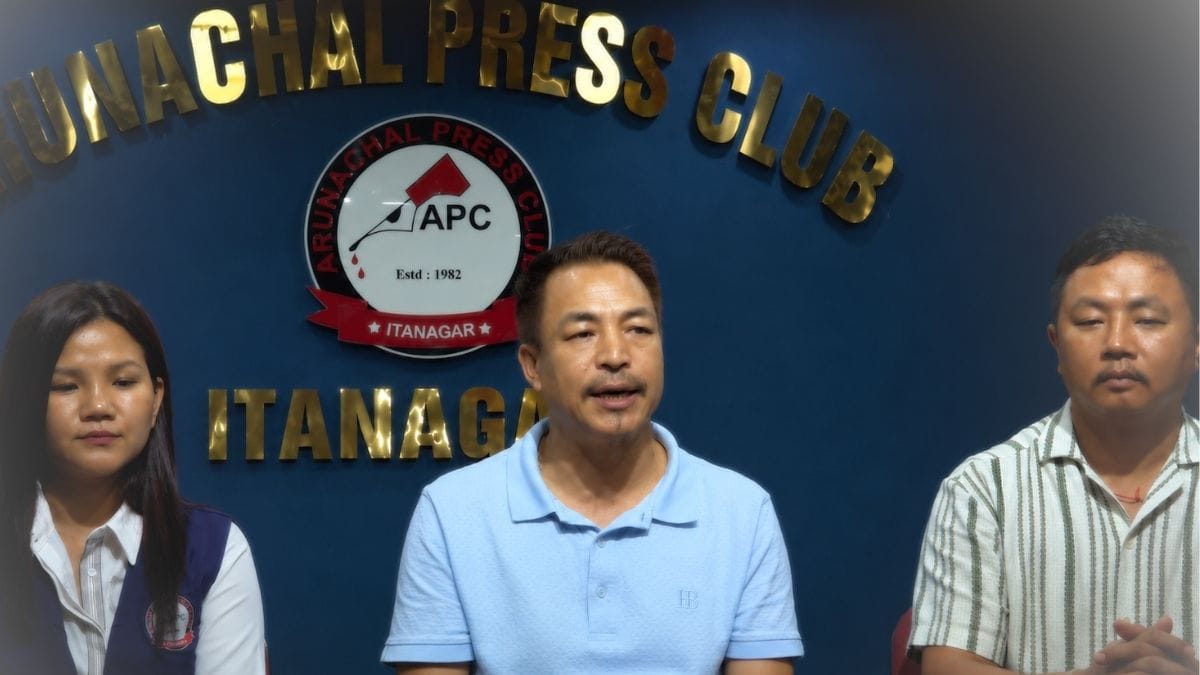
AAPSU president Meje Taku raised the issue at a press conference in Itanagar on Friday, where the union also called for strict implementation of Arunachal Pradesh’s newly notified uniform eligibility criteria for government recruitment.
The union said it had received complaints alleging that some individuals are holding positions in more than one government department. Taku urged those concerned to voluntarily give up additional posts so the vacancies could be made available to other eligible candidates. AAPSU said legal action, including filing FIRs, could be considered if such cases are verified.
The demand comes after Arunachal Pradesh introduced new eligibility rules for direct government recruitment. Candidates must possess a valid Permanent Residence Certificate, an Arunachal Pradesh Scheduled Tribe certificate and working knowledge of an indigenous tribal language. The rules cover Group A, B and C posts under state government departments, public sector undertakings, autonomous bodies and local and urban bodies.
AAPSU has asked the Arunachal Pradesh Public Service Commission and Arunachal Pradesh Staff Selection Board to implement the new conditions strictly, including for recruitment examinations already in the pipeline.
The union also wants government departments to submit updated vacancy details to the recruiting agencies so advertisements can be issued without delay.
“We can’t give you a job, but we can give you an opportunity,” Taku said, stressing the need for fair access to government recruitment. The recruitment issue has been building for months. In June, AAPSU submitted a 13-point memorandum to Chief Minister Pema Khandu seeking the abolition of the existing 80:20 recruitment arrangement and mandatory PRC and APST certification in state competitive examinations.
The government subsequently formed a six-member committee under Industries Minister Nyato Dukam to examine the proposal to scrap the 80:20 arrangement and make PRC and APST certificates mandatory for competitive recruitment. The Cabinet later approved the new uniform eligibility framework, which was formally notified on August 26. The notification also includes knowledge of an indigenous tribal language among the eligibility requirements.
AAPSU has now shifted its focus towards implementation, asking recruitment agencies to follow the new rules and government departments to disclose vacant posts. The union wants recruitment processes to move faster so unemployed candidates have opportunities to apply for government positions.
Taku said AAPSU would continue to monitor recruitment and oppose any process that does not follow the newly prescribed eligibility conditions.
The “one man, one job” demand is part of the union’s wider campaign on government recruitment, including its opposition to the 80:20 arrangement and its push for faster filling of vacant posts.