
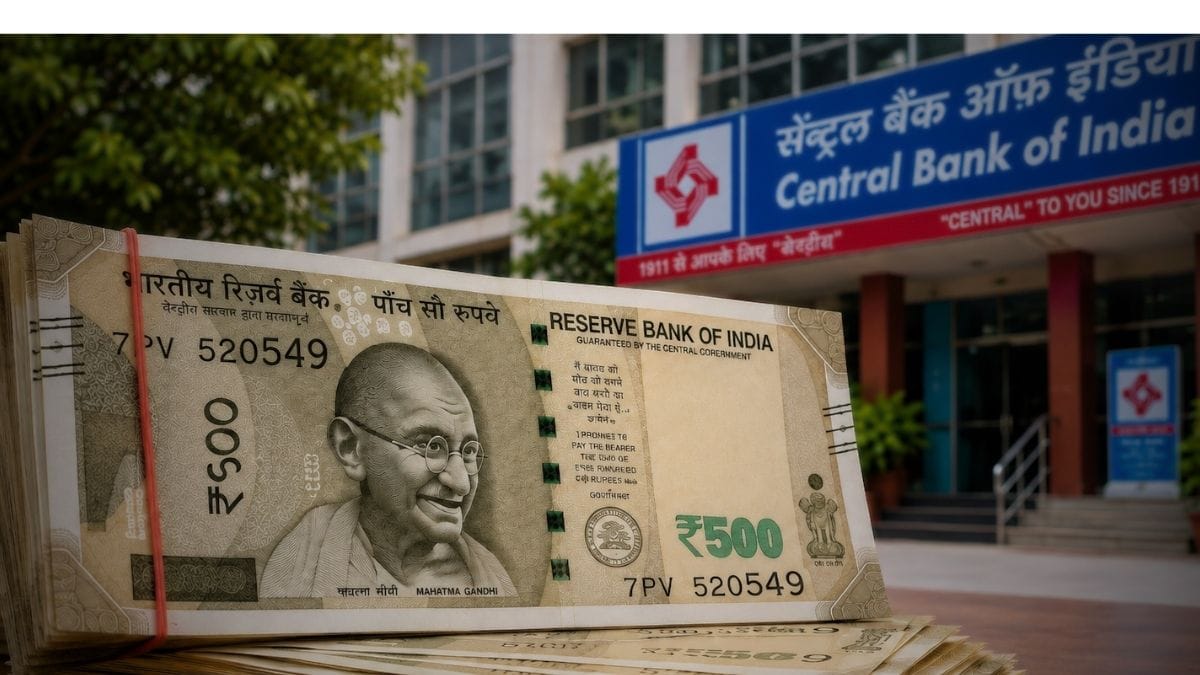
MUMBAI : Central Bank of India wrote off ₹33,475.78 crore in loans over the past decade, but how much of that money actually came back depended enormously on the size of the account, small borrowers paid back nearly three-quarters of what was written off, while the biggest defaulters barely returned one in seven rupees.
Between 2016-17 and 2025-26, the bank wrote off ₹26,701.55 crore from accounts with dues above ₹100 crore, and clawed back just ₹3,874.41 crore from that pile, a recovery rate hovering around 14.5 percent. Flip to the other end of the scale, accounts below ₹1 crore, and the picture looks completely different: ₹6,774.23 crore written off, ₹5,004.28 crore recovered, nearly 74 percent.
Add both categories together and the bank pulled back ₹8,878.69 crore against the full ₹33,475.78 crore written off, roughly 26.5 percent overall.
The recovery gap at a glance:
- Accounts above ₹100 crore: ₹26,701.55 crore written off → ₹3,874.41 crore recovered (~14.5%)
- Accounts below ₹1 crore: ₹6,774.23 crore written off → ₹5,004.28 crore recovered (~74%)
- Combined total: ₹33,475.78 crore written off → ₹8,878.69 crore recovered (~26.5%)
- Share of total write-offs from large accounts: nearly 80%
These figures came out through an RTI filed by Pune-based activist Vivek Velankar and reported by MoneyLife.
The gap shows up sharply in specific years too. In 2018-19, Central Bank wrote off ₹7,002.58 crore from its above-₹100-crore accounts and got back just ₹761.01 crore. By 2024-25, it wrote off a fresh ₹2,255.61 crore in that same bracket and recovered a mere ₹53.42 crore. The smaller-account numbers, oddly, don’t even show up until much later, the bank reported zero write-offs or recoveries below ₹1 crore across the entire stretch from 2016-17 through 2021-22.
Then in 2022-23, it wrote off ₹1,856.87 crore in that category and pulled back ₹1,395.11 crore, and the year after that, ₹3,845.54 crore written off against ₹3,481.32 crore recovered.
None of this means Central Bank simply erased those loans and moved on. A technical write-off is purely an accounting move, the borrower still owes the money, and the bank retains full legal right to keep chasing recovery. RBI actually mandates banks track exactly how much comes back from these technically written-off accounts separately, which is precisely why the bank’s more recent numbers matter.
Recovery from written-off accounts has climbed steadily: ₹1,282.59 crore in 2022-23, ₹1,433.32 crore in 2023-24, and ₹1,716.33 crore in 2024-25. Bank management even flagged, during a July 2025 investor call, a ₹301 crore recovery from a cement-sector account resolved through the insolvency process.
Alongside this, Central Bank’s overall loan book has genuinely gotten healthier. Gross NPA fell from 4.50 percent in March 2024 to 3.18 percent by March 2025, and net NPA dropped from 1.23 percent to 0.55 percent over the same window. Total cash recovery from NPAs and written-off accounts hit ₹3,396 crore in 2024-25 alone.
Where the RTI response goes quiet is on the biggest names involved. Velankar had asked for the identities of borrowers above ₹100 crore whose loans got technically written off, along with the exact amounts tied to each. Central Bank refused, citing third-party information rules. He also pushed for details on loans settled through the National Company Law Tribunal or other insolvency routes where the bank accepted a haircut, again, nothing came back.
A separate part of his request asked for the total value of haircuts accepted between 2017-18 and 2025-26 and what was recovered against them; the bank said the query wasn’t clear enough to answer.
It helps to keep two things straight here: a technical write-off and a compromise settlement aren’t the same animal. In a write-off, the bank pulls the bad loan off its books but keeps chasing the borrower for the full amount. In a compromise settlement, the lender agrees upfront to accept less than what’s owed just to close the account. That’s exactly why the ₹33,475.78 crore figure shouldn’t be read as money permanently gone forever, some of it genuinely trickles back years after the write-off happened.
Central Bank’s recent NPA improvement genuinely shows its current loan book is in far better shape than the decade’s accumulated numbers might suggest. But this RTI data shines a light on a separate, older question entirely, what actually happens to big written-off loans years down the line, and how much of that ₹26,701.55 crore from the largest defaulters can still realistically be clawed back, versus how much has quietly already been settled at a steep discount somewhere behind the scenes. The bank has shared the headline recovery numbers.
The names behind the biggest write-offs, and the haircuts that came with them, stay outside what the RTI actually pried loose.