SHILLONG — A legal gap around Khasi customary marriages and live-in relationships has pushed the Khasi Hills Autonomous District Council (KHADC) towards a new marriage law, with the council also seeking mechanisms to check bigamy and polygamy.
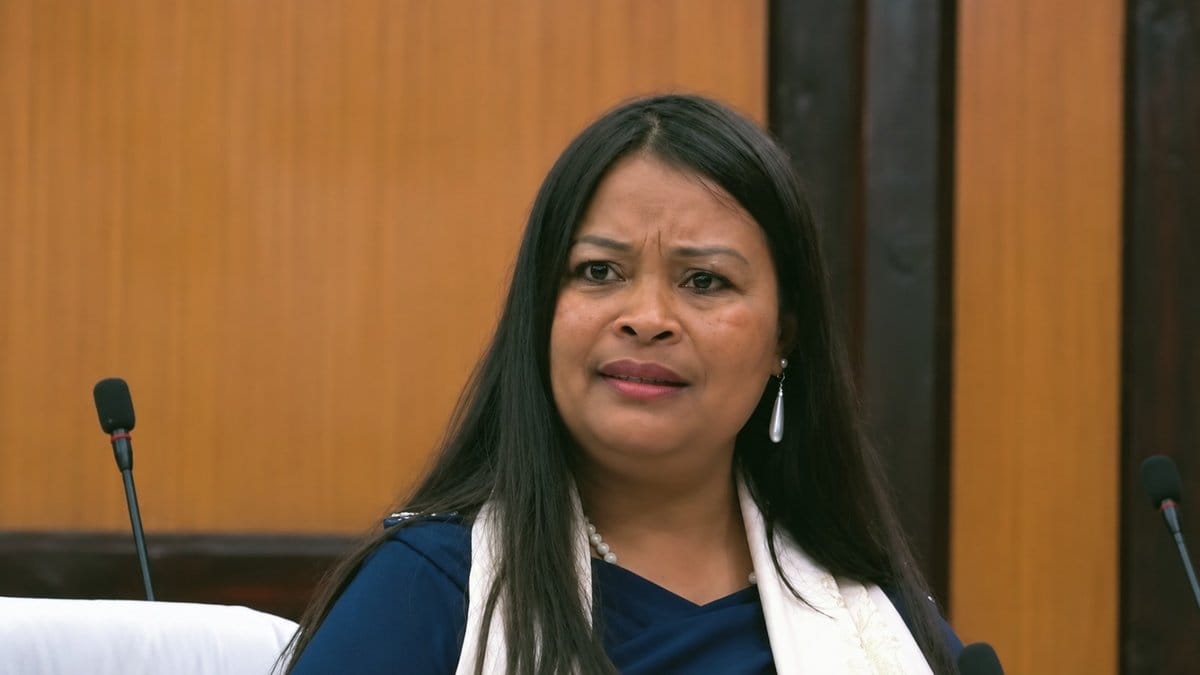
The proposed legislation, to be introduced as the Khasi Hills Autonomous District Regulation and Registration of Marriages, 2026, will seek to bring customary marriages and relationships within a formal registration framework, KHADC Executive Member in charge of Law and Legal Matters Deity H. Majaw said.
Majaw made the announcement during a consultation on the implementation of the Meghalaya Compulsory Registration of Marriage Act, 2012, organised by the Meghalaya State Commission for Women at the State Convention Centre.
“In the coming months, we intend to introduce a new Bill called the Khasi Hills Autonomous District Regulation and Registration of Marriages, 2026 which will seek to regulate and register marriages in the Khasi Hills,” Majaw said.
She said the council had consulted judges and legal experts after identifying the absence of a specific legal framework covering indigenous customary marriages and their dissolution.
The KHADC already has the United Khasi-Jaintia Hills District Christian Marriage Act, 1954, providing a statutory framework for Christian marriages and related divorce matters. Majaw said there is no comparable framework governing customary unions. The proposed Bill would also bring live-in relationships under a formal regulatory mechanism. Majaw said this was particularly important in cases where relationships break down and one partner subsequently enters another marriage.
“One of the important components of the proposed Bill will be to regulate live-in relationships. At present, there is no specific authority or mechanism to properly address issues arising from such relationships,” she said.
The legislation is also intended to establish legal safeguards against bigamy and polygamy, while providing a clearer system for registering customary marriages.
Majaw proposed giving Rangbah Shnong a formal role in recording customary marriages, arguing that traditional institutions could help ensure such unions are properly documented.
She also highlighted weak awareness and implementation of the Meghalaya Compulsory Registration of Marriage Act, particularly in rural areas.
Drawing on her experience with the Meghalaya State Commission for Women, Majaw said women had approached the Commission seeking maintenance after marital relationships ended, with some unaware of the legal provisions available to them.
The consultation brought together legal practitioners, marriage registrars, social activists and representatives of traditional and religious institutions. Discussions covered marriage registration, maintenance, women’s safeguards, customary practices, digital access, child protection and enforcement in inter-faith and inter-community marriages.
Majaw said the KHADC hopes to advance the proposed legislation under the leadership of Chief Executive Member Winston Tony Lyngdoh in the coming months.