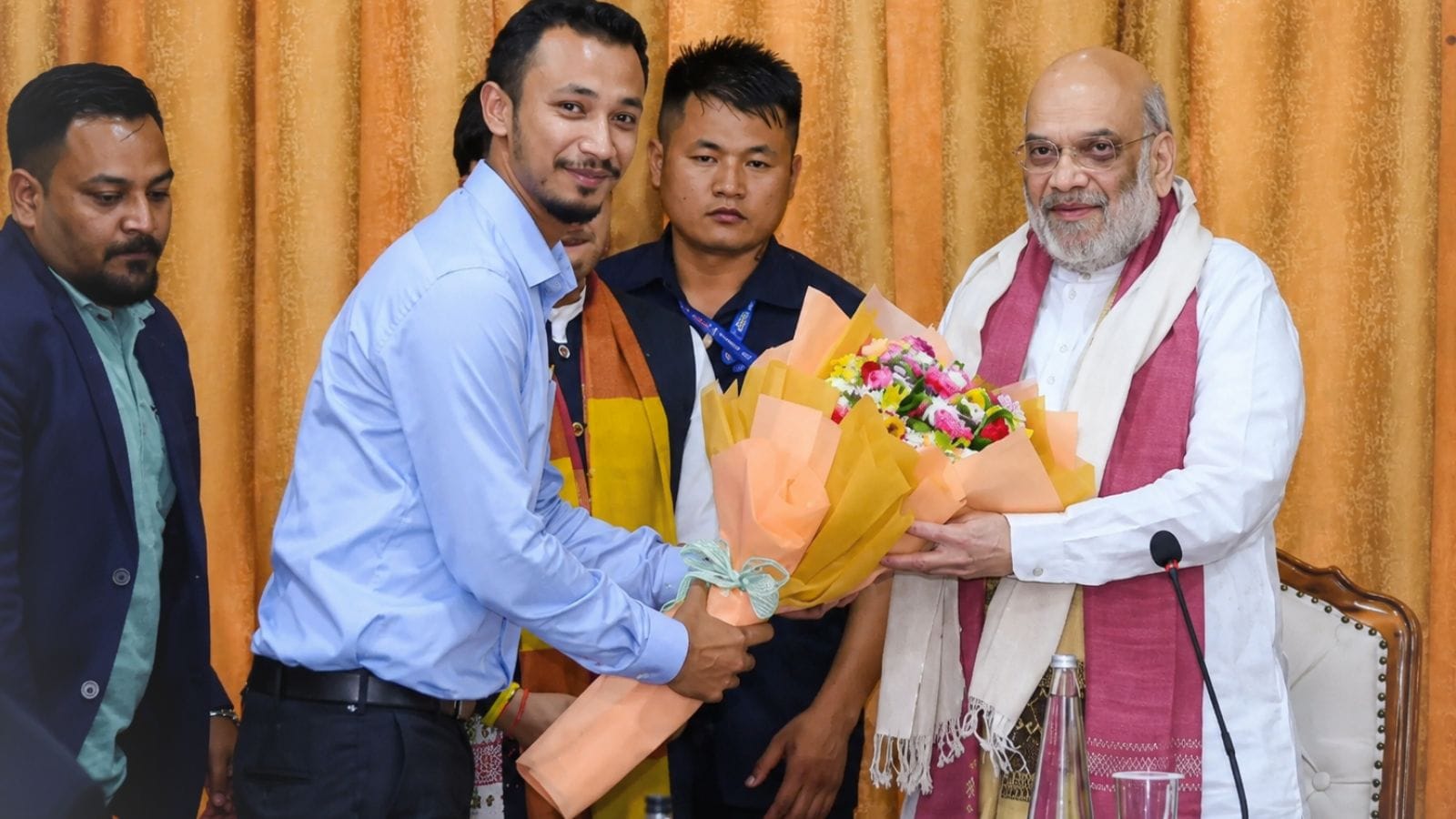
SHILLONG : When Union Home Minister Amit Shah arrived in Shillong for the 73rd Plenary Session of the North Eastern Council (NEC), the Khasi Students’ Union (KSU) used the opportunity to place three issues before the Centre that have remained unresolved for years — the implementation of the Inner Line Permit (ILP), constitutional recognition for the Khasi language and the Meghalaya-Assam border dispute, particularly concerns relating to Lapangap.
While the meeting itself was a routine engagement between a pressure group and a senior Union leader, the issues raised were anything but new.
In many ways, the memorandum reflected some of Meghalaya’s longest-standing political and public demands. Among the key concerns raised was the implementation of the ILP, a demand that gained momentum in Meghalaya following the passage of the Citizenship Amendment Act (CAA) in 2019. That same year, the Meghalaya Legislative Assembly unanimously adopted a resolution seeking the implementation of ILP in the state.
Nearly six years later, however, the demand remains pending. During Shah’s visit, KSU members displayed banners and placards across Shillong, reiterating their stand on the issue. Some banners read, “ILP is the only solution to stop illegal immigration” and “ILP is our right to protect ourselves.”
The union stated, ILP remains essential for safeguarding the interests of indigenous communities in Meghalaya.
The second issue raised before the Union Home Minister was the demand for inclusion of the Khasi language in the Eighth Schedule of the Constitution. The demand is not new and has been championed for years by language bodies, social organisations, political parties and community groups. Citizens argue that inclusion in the Eighth Schedule would provide greater constitutional recognition and help strengthen efforts to preserve and promote the language.
Speaking after the meeting, KSU General Secretary Reuben Anderson Najiar said the issue was discussed with Shah, who reportedly informed the delegation that the matter remains under consideration. According to Najiar, the Union Home Minister also indicated that the Centre may consider constituting a committee to examine demands from languages seeking inclusion in the Eighth Schedule.
The third issue raised by KSU concerned the Meghalaya-Assam border dispute, including developments in the disputed area of Lapangap. Although Meghalaya and Assam have made progress in resolving six of the twelve areas of difference identified along the interstate boundary, Lapangap remains among the unresolved sectors..
The issue continues to generate concern among local organisations and residents whenever reports emerge of activities taking place in areas claimed by Meghalaya. KSU said, the matter goes beyond a boundary line.
The organisation has repeatedly argued that unresolved border issues affect land rights, traditional ownership and the interests of local communities living near disputed areas.
“Our concerns regarding the border issue were also placed before the Union Home Minister,” Najiar said while speaking to reporters after the meeting. Taken together, the three demands raised before Shah reflect broader concerns relating to identity, land and cultural recognition in Meghalaya.
While ILP is viewed by many as a mechanism to regulate entry into the state, the Khasi language demand centres on constitutional recognition and cultural preservation. The border dispute, meanwhile, remains closely tied to questions of territory and community rights.
The meeting did not produce any immediate announcements or policy decisions.
But, for KSU , the interaction provided an opportunity to directly place these long-pending concerns before one of the country’s most senior decision-makers.
Whether the latest engagement leads to tangible progress remains uncertain.What is clear, is that years after resolutions were passed, memorandums submitted and assurances given, ILP, Khasi language recognition and the border dispute continue to occupy a central place in Meghalaya’s public discourse.