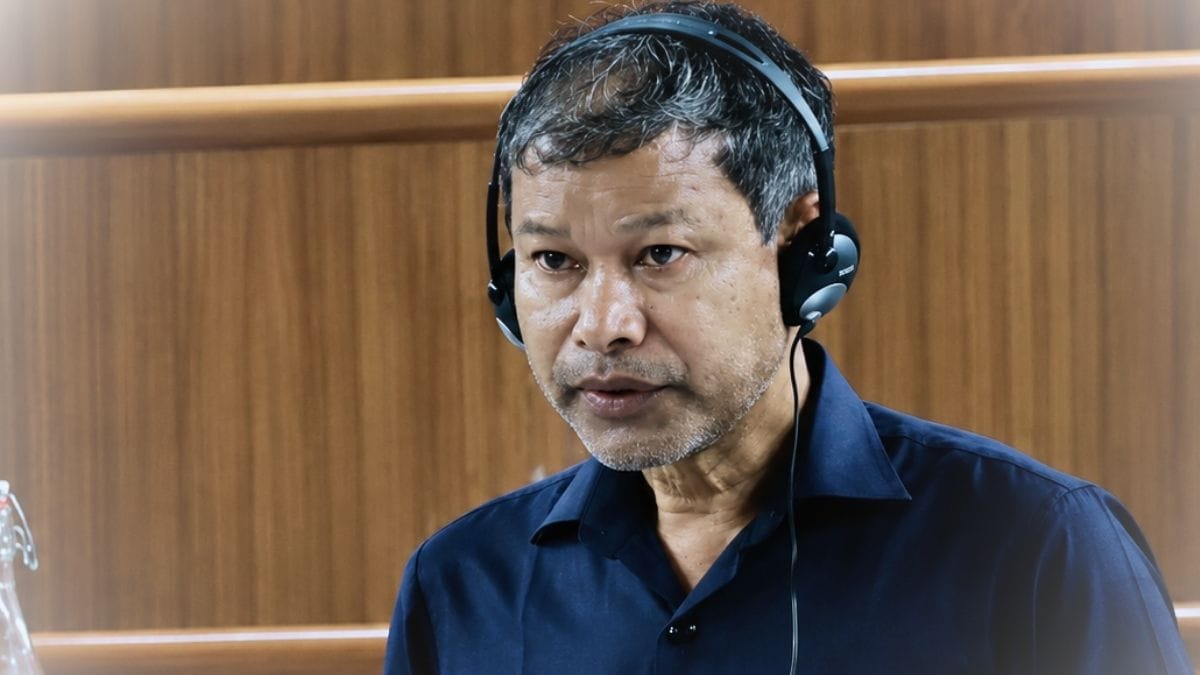
SHILLONG : Education Minister Lahkmen Rymbui has described Meghalaya’s education sector as “vibrant” while admitting that the government has not yet reached its desired goal, saying several reforms are still underway across schools, colleges and higher education.
Rymbui was responding to the concerns raised during the Short Duration Discussion on the current state of education in the Meghalaya Legislative Assembly on Thursday.
“In one word, I will just reply that the current state of education is very vibrant in the sense that so many initiatives, so many interventions are being taken by the government,” Rymbui said.
He acknowledged that the work is far from complete. “Since 2018, we are putting education as our top priority… Have we reached that goal? No, it is a work in progress. And is the work in progress in the right direction? Yes, it is in the right direction,” he said.
At a Glance
- Meghalaya’s PGI score has improved, but Rymbui said the score alone cannot define the education system.
- The government has identified 206 schools with zero enrolment for action.More than 23,000 teachers are covered under a new structured pay framework.
- Nineteen People’s Colleges have been sanctioned across the state.Government colleges have increased from six to 12 since 2018.
- The government has established the Meghalaya Teachers Training Academy.
- More than 9,000 people have registered as private SSLC candidates.
- More than 1,000 computer-based examination nodes are planned across Meghalaya.
- The government is moving towards floating teacher posts based on student enrolment.
206 schools have zero enrolment
One of the clearest responses from the minister came on the issue of schools with little or no enrolment.
The figure of 206 zero-enrolment schools had been raised during the discussion, with members questioning whether maintaining such institutions remains practical when public resources are limited. Rymbui acknowledged the problem and said the government has already started acting.
“As the honorable members mentioned, 206 schools have zero enrollment. We have taken action, we will take action it is a work in progress,” he said.
He linked the exercise to the wider question of how government resources are used. “Every penny invested by the government should reach the intended goal, which is to educate the child,” Rymbui said.
The minister also explained why teacher rationalisation is being considered despite Meghalaya having a teacher-student ratio of around 1:23.
He cited a government lower primary school in Shillong West with 30 students and 14 sanctioned teachers, while other schools have only one sanctioned teacher. The government is now looking at converting sanctioned positions into floating posts, allowing teachers to be placed where student enrolment requires them.
“We are making sanctioned posts floating posts based on student enrollment, ensuring resources go where students actually need them,” Rymbui said.‘ Why do you feel sad when the student passes?’
Rymbui also strongly pushed back against criticism of the CM-IMPACT programme and the sharp rise in pass percentages. The programme has faced questions over whether higher pass rates necessarily reflect stronger learning outcomes.
Rymbui questioned the criticism itself. “Everybody raised a hue over CM Impact why from 50% to 96%? Why do you feel sad when the student passes that exam? What grudge do you have against them? Do you like them to fail?” he asked.
The minister connected examination failure with school dropouts, particularly among poorer students. “Why for the poor and marginalized should we not give them the opportunity? If they fail one year, they will drop out of school,” he said. He also pointed to the decline in Meghalaya’s dropout rate to 6.2 per cent, saying the focus should remain on keeping children in education.
“Let us be very fran keep that divisive mindset of ‘have and have-nots’ aside,” Rymbui said.‘
We should not be ashamed’ of PGI position
On Meghalaya’s position in the Performance Grading Index, Rymbui did not dispute that the state has been placed near the bottom. Instead, he said the ranking should be used to identify weaknesses.
“Everywhere people talk only about the PGI score that Meghalaya is at the bottom of the ranking. We should not be ashamed or sorry to know where we stand, recognize where we stand, and have the resolve and the ability to progress,” he said.
Meghalaya’s PGI score has risen from 448.0 in 2024–25 to 525.7 in 2025–26. Rymbui also highlighted the launch of a Meghalaya State PGI index, saying it would allow individual institutions to see where they are performing well and where improvements are required.
“Improving of PGI score is one aspect, but not the only one. We have also to see the accessibility; we have also to see the quality,” he said.
More colleges, wider access
Rymbui pointed to the expansion of higher education as another area where the government has tried to improve access. He highlighted 19 People’s Colleges sanctioned across Meghalaya and the increase in government colleges from six before 2018 to 12. The objective, he said, is to ensure students outside Shillong and other urban centres have access to higher education closer to home.
“Where will these students go for college?” Rymbui asked while explaining the need for the expansion. He also cited government spending on deficit colleges, putting last year’s investment at more than ₹143 crore, with another ₹21.48 crore going to sanctioned colleges. But the minister acknowledged disparities in salaries and funding between institutions.
“In the same college, there are some teachers who earn high salaries, while others do not even earn ₹5 lakh,” he said.
Teacher training gets a separate push
Rymbui also stressed that academic qualifications alone are not enough to ensure effective teaching. “No teachers could be appointed if they don’t meet the criteria set up by the recruiting authority,” he said.“ But we know that education is not mere qualification. Progressive development is needed, training is needed from time to time to empower them.”
He pointed to the establishment of the Meghalaya Teachers Training Academy, saying better-trained teachers would ultimately benefit students.
Government defends examination changes
The minister also responded to questions surrounding examination reforms, including supplementary examinations, NCERT textbooks and the timing of SSLC examinations. Rymbui said NCERT textbooks were adopted because many competitive examinations use the same curriculum framework. He also defended supplementary examinations as a way of preventing students from losing an entire academic year because of failure in a small number of subjects.
On examination schedules, he said changes were made after consultation with stakeholders so students could complete their examinations earlier and have more time to prepare for CUET, JEE and NEET.
The government has also expanded examination infrastructure. Rymbui said 450 computer-based examination nodes had already been established in places including Tura, Sohra, Mairang, Jowai, Resubelpara and Shillong Polytechnic, with more than 1,000 nodes being prepared.
Digital intox’ gets a response
The minister also spoke about the growing use of mobile phones among children.nHe referred to the newly launched Read & Rise programme, which aims to improve reading ability and encourage children to develop a stronger reading habit.
“Just yesterday, we launched a Read & Rise program. We want every child to have the ability to read and love reading,” he said. Rymbui used the growing dependence on mobile phones to underline the challenge facing parents and schools. “Before, parents were happy with the first word ‘ma’ or ‘pa’. Now they are happy if the kid knows how to open a mobile,” he said.
23,000 teachers and structured pay
Another major issue raised by Rymbui was the service security of teachers. He said more than 23,000 teachers previously faced uncertainty over their service conditions and pay, with teachers having to resort to strikes or dharnas for salary increases. The government has now introduced a structured pay framework.
We have introduced a structured pay framework. It is a massive exercise,” Rymbui said. He also said recruitment orders had been issued under the new framework.‘ Government schools had become like orphans’ Rymbui called for greater involvement from parents and communities in government schools.“Government schools had become like orphans nobody took care,” he said.
The government has now mandated parent-teacher meetings and wants communities to take greater ownership of schools.
“I call on all parents and community leaders: let us have a sense of ownership, let us adopt a school to oversee that we reach that destination,” he said.
Scholarships and private candidates
Rymbui also highlighted changes to scholarship support. Post-matric scholarship rates were increased in 2019, with the rate for Group 1 courses such as PhD, MPhil, MBBS, BTech, MTech and MBA rising from ₹10,735 to ₹40,500. The Chief Minister’s Scholarship Scheme, providing ₹6,000 without an income criterion, has benefited nearly 90,000 students, according to the minister.
He also highlighted the removal of age restrictions for private SSLC candidates. More than 9,000 candidates have registered, with the oldest being 59. “Age is not the limit to learn; age is just a number to gain more knowledge,” Rymbui said.
Skills, not only degrees
Rymbui also linked education with employment, saying only around 21 per cent of graduates are able to gain employment directly through their degree.
“Where are the 79%? Skill, vocational, and entrepreneurship training,” he asked. The government is therefore pushing community-integrated skill learning, including practical skills that students can use if they return to their villages.
Rymbui asks Centre to consider Meghalaya’s reality
The minister also raised concerns over some central education policies. He referred to the requirement for 75 per cent parents and teachers in School Management Committees, saying Meghalaya’s missionary institutions have a different structure and states need flexibility. He also questioned the four-year undergraduate degree requirement where institutions would have to provide additional infrastructure and faculty without corresponding central financial support.
On SSA teachers, Rymbui said Meghalaya had already paid its state share for May and June and urged the Centre to release its portion of the salary funding on time.
“We will not hide our deficiencies’ Rymbui ended his response by acknowledging that Meghalaya still has weaknesses in education but rejected the suggestion that the government was ignoring them.
“Education in our state is the most vibrant in spite of all challenges and difficulties,” he said.“ We will not hide our deficiencies; we want to know them so we can improve through collective responsibility.”