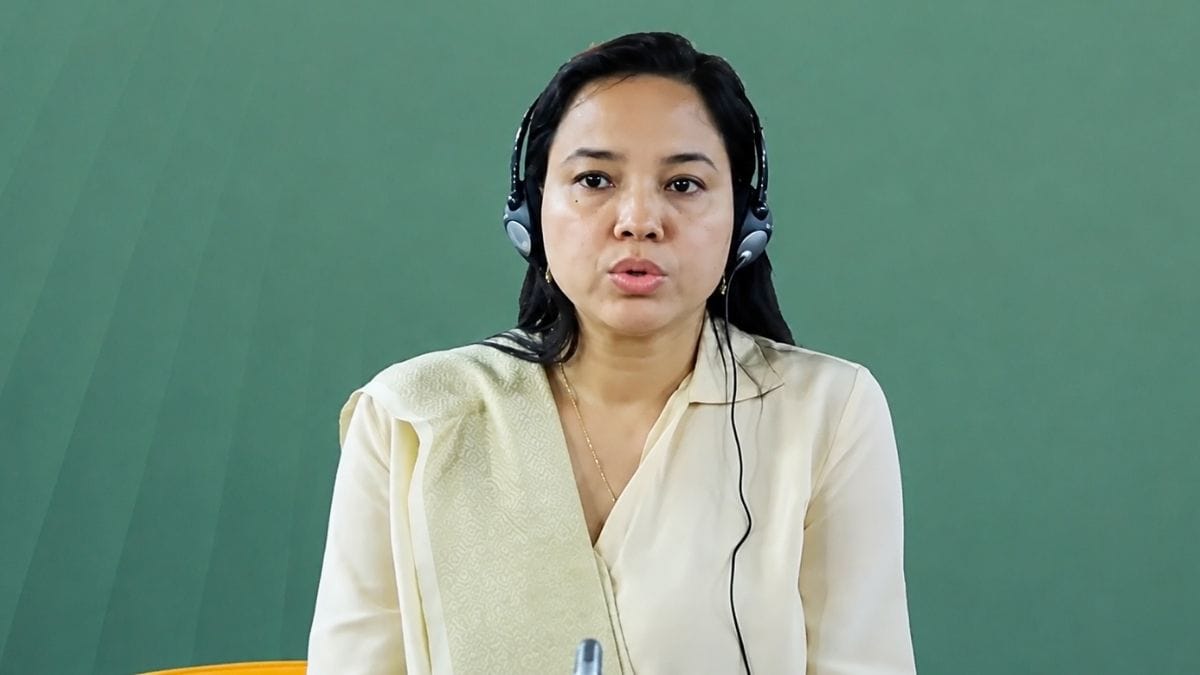
SHILLONG : NPP MLA from Gambegre, Dr Mehtab Chandee A Sangma, called for a closer look at learning outcomes and better distribution of higher secondary schools across Meghalaya during a discussion on the state’s education system.
Participating in the short-duration discussion on the current state of education in the Meghalaya Legislative Assembly, Mehtab pointed to improvements in SSLC results and lower dropout rates under the CM Impact programme.
She said the SSLC pass percentage increased from 54.8% to 57.26% this year, while the dropout rate fell from 17.4% to 6.7%.
“The recent programme, that is the CM Impact, has been showing great results,” Methab said, while urging the government not to judge the programme only through examination results.
She stressed the need to measure whether students were actually gaining stronger academic skills, including critical thinking and better understanding of subjects.
“While these results are very promising we really need to also consider the total learning outcomes,” she said.
Mehtab also raised concern over the uneven distribution of Higher Secondary School Leaving Certificate (HSSLC) schools across the state. She pointed out that many HSSLC schools are concentrated around Shillong and Tura, leaving several rural areas without adequate access.
In my constituency , she said, students in some areas still have to travel two to three hours to reach their examination centres because of the limited availability of HSSLC schools. She urged the Education Department to conduct a district-wise assessment to determine whether schools are adequately and equitably distributed.
Mehtab further called for more vocational and skill-development institutes in rural Meghalaya, with courses designed around local economic needs.
With Meghalaya having a largely agrarian economy, she proposed agriculture-focused training centres that could give rural students practical skills while keeping open the option of further professional education.
“The government should contemplate on having more skilling centres or vocational training institutes,” she said, adding that courses could be tailor-made for the needs of young people in rural areas.
She said stronger vocational and agricultural training would give students alternatives beyond conventional academic routes and create opportunities suited to the local economy.