MUMBAI : Indian equities clawed back some ground on Friday, though the recovery leaned almost entirely on technology stocks rather than any broad-based rally across the market.
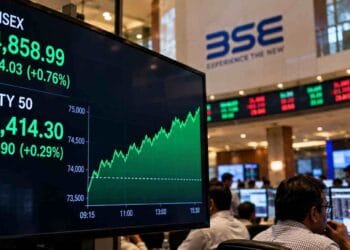
The Sensex closed at 77,264.51, up 330.92 points or 0.43 percent, while the Nifty 50 settled at 24,175.65, gaining 84.80 points or 0.35 percent, snapping a two-session losing run for both benchmarks.
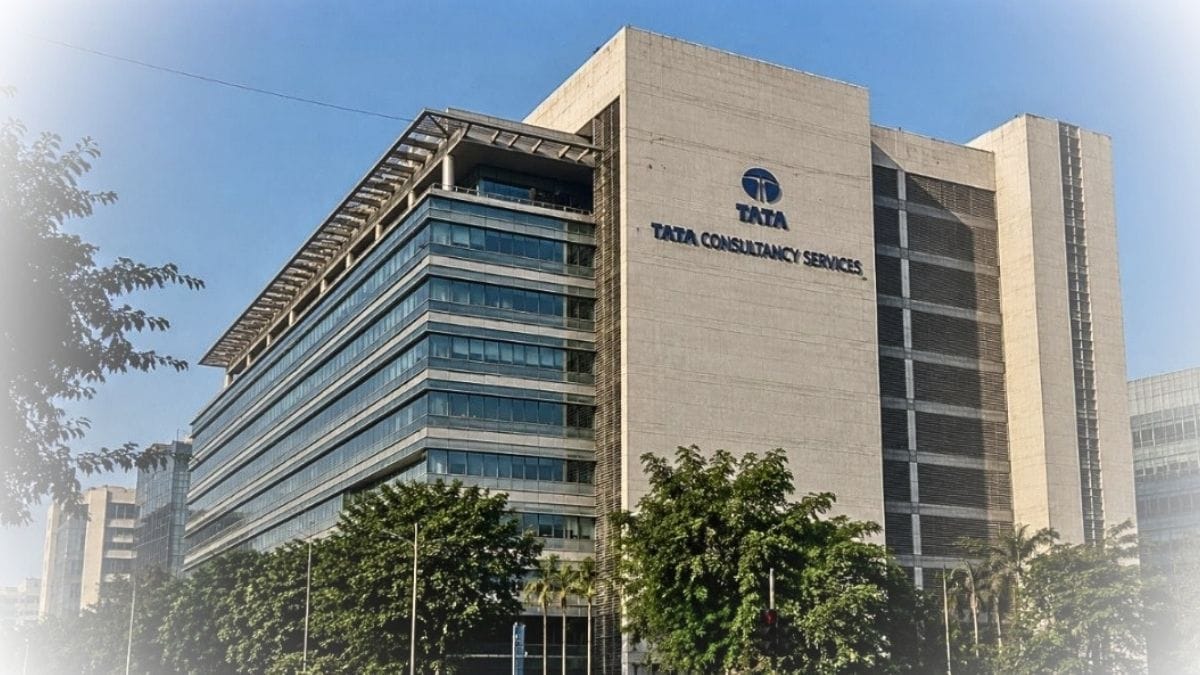
Information technology stocks did most of the heavy lifting. The Nifty IT index jumped 3.51 percent, easily the day’s strongest sector, with TCS leading Nifty gainers outright, climbing 4.16 percent to ₹2,342.
Tech Mahindra, Infosys and HCL Technologies rode the same wave, up 3.18 percent, 3.34 percent and 2.66 percent respectively, pulling the Nifty back above 24,150 after Thursday’s close had slipped below 24,100.
The trigger came from overnight action in the US. Nvidia surged 8.7 percent after posting stronger-than-expected results and an upbeat outlook, reigniting investor appetite for AI and data-centre spending worldwide. That pushed the Nasdaq up 1.6 percent, and given how heavily Indian IT firms depend on global tech budgets, the ripple effect landed straight on Dalal Street.
Not every corner of the market joined the party though. The Nifty FMCG index dropped 0.46 percent, the weakest major sector of the day, while consumer durables slipped too, and both private banking and broader financial services stayed noticeably soft. The Nifty Bank barely moved, ending nearly flat at 57,496.30. ICICI Bank dragged hardest among heavyweights, falling 1.40 percent to ₹1,422.80, a drop that capped how far the overall market could climb despite tech’s strong showing.
Crude oil offered a quiet tailwind. Brent stayed below $90 a barrel through Friday’s session after easing earlier in the day, a genuine relief for India given how much lower oil prices ease pressure on the country’s hefty import bill. The rupee firmed up alongside it, closing at ₹95.3775 against the dollar, up roughly 0.2 percent from Thursday.
Reuters attributed part of that strength to increased dollar liquidity ahead of the RBI’s special non-resident dollar deposit window closing, plus anticipated inflows tied to the upcoming MSCI index rebalancing.
Beyond the day’s numbers, investors kept one eye on Washington. Federal Reserve Chair Kevin Warsh was scheduled to speak at the Jackson Hole symposium, and markets were bracing for any signal on where US inflation and monetary policy head next. A hawkish tone there could push US bond yields higher and squeeze emerging-market stocks and currencies, including India.
There’s also a domestic wrinkle still playing out: the new Closing Auction Session mechanism. Thursday marked the first monthly derivatives expiry under this system, and the final stretch of trading saw unusually sharp price swings.
The mechanism exists to nail down official closing prices for futures-eligible stocks, but traders have flagged real concerns about volatility clustering around expiry days.
SEBI Chairman Tuhin Kanta Pandey has said no regulatory changes are planned for now, though the system faces another real test soon: an MSCI rebalancing lands on August 31, likely bringing a wave of large institutional orders, and market watchers will be paying close attention to whether the new mechanism handles that load without repeating Thursday’s jagged closing swings.
On the flows side, foreign investors have eased off their selling considerably. After four straight months of pulling money out, foreign portfolio investors turned net buyers in July and have largely stayed in that mode through August. Domestic institutions have kept buying steadily too, cushioning the market whenever foreign appetite wavers.
On the most recent session, August 27, foreign investors were net sellers to the tune of ₹298.26 crore, while domestic institutions bought a net ₹4,977.17 crore, more than enough to absorb that foreign selling pressure.
Even with Friday’s bounce, the week as a whole told a weaker story. The Sensex lost about 0.4 percent over the week and the Nifty dropped roughly 0.3 percent, marking a third straight weekly decline for both indices, the longest losing streak Indian equities have seen in five months, according to Reuters.