Mumbai : The Reserve Bank of India’s Monetary Policy Committee kept the benchmark repo rate unchanged at 5.25 percent on Wednesday, marking the third consecutive policy review without a change, as the central bank weighed persistent uncertainty stemming from the ongoing conflict in West Asia and its effect on global energy prices.
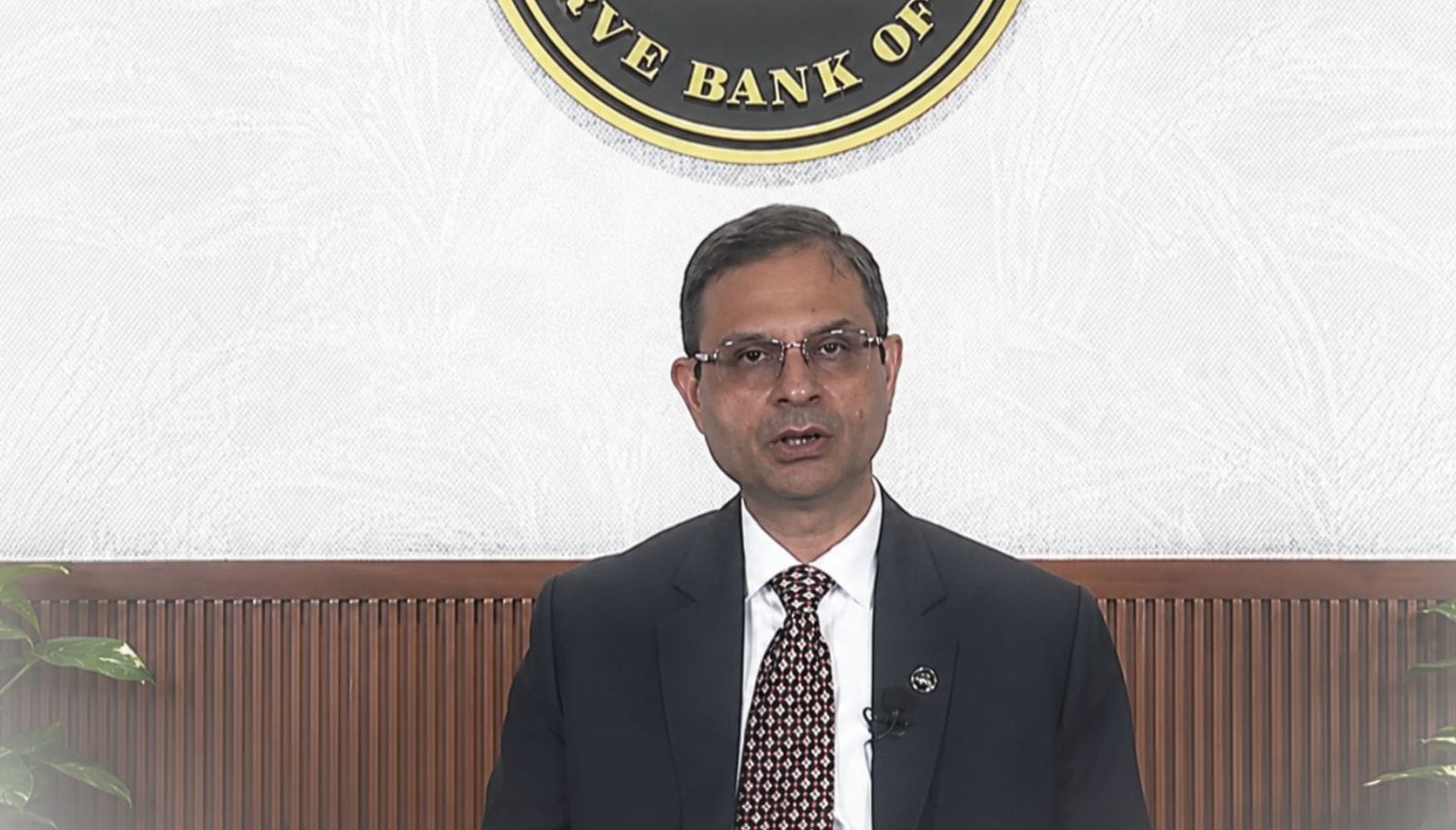
Announcing the outcome of the August policy review, held between August 3 and 5, RBI Governor Sanjay Malhotra said the six-member committee voted unanimously to hold rates steady while retaining a “neutral” policy stance. Alongside the repo rate, the Standing Deposit Facility rate stays at 5 percent, while the Marginal Standing Facility rate and the bank rate remain at 5.5 percent.
The rate pause comes even as retail inflation, measured by the Consumer Price Index, edged past the RBI’s medium-term target of 4 percent to reach 4.38 percent in June. Malhotra said headline inflation is expected to climb further in the near term, likely peaking in the third quarter of FY27 on the back of higher food and fuel prices, before easing thereafter.
Despite that inflationary pressure, the RBI struck a notably more upbeat tone on growth. The committee raised its FY27 real GDP growth forecast to 6.7 percent, up from 6.6 percent projected in June, while simultaneously trimming its inflation projection for the year to 5 percent from the earlier estimate of 5.1 percent.
Malhotra credited the upgrade partly to strong domestic demand, noting that private consumption had been driven by buoyant discretionary spending and that the Indian economy had performed better than expected in the first quarter.
Read Also : Government approves RBI’s plan to trial ₹10 and ₹20 polymer notes across five cities
At the same time, the Governor flagged that renewed escalation of the West Asia conflict since early July has driven fresh volatility in energy prices, and cautioned that growth is expected to moderate later in the financial year as a result. He described the broader outlook as “hazy” given continuing uncertainty around global trade policy, adding that greater clarity is still needed, particularly on how inflation evolves from here.
Speaking at the post-policy press conference, Malhotra said the RBI’s approach remains “neither dovish nor hawkish,” with future decisions to be guided by how growth and inflation data unfold rather than a fixed rate path.
He also announced that the central bank will soon issue draft guidelines to restart licensing for urban cooperative banks, incorporating feedback gathered from an earlier discussion paper, alongside draft directions following a review of the credit monitoring framework for rural cooperative banks.
Industry reaction to the pause was largely positive. George Alexander Muthoot, Managing Director of Muthoot Finance, called the decision a “prudent and forward-looking assessment” of the current macroeconomic environment, adding that stable borrowing costs give NBFCs clearer visibility on funding costs and support sustained credit disbursement.
The RBI’s next monetary policy review is scheduled for October 5-7, 2026.