Twenty-five years later, the date still arrives with the same weight.
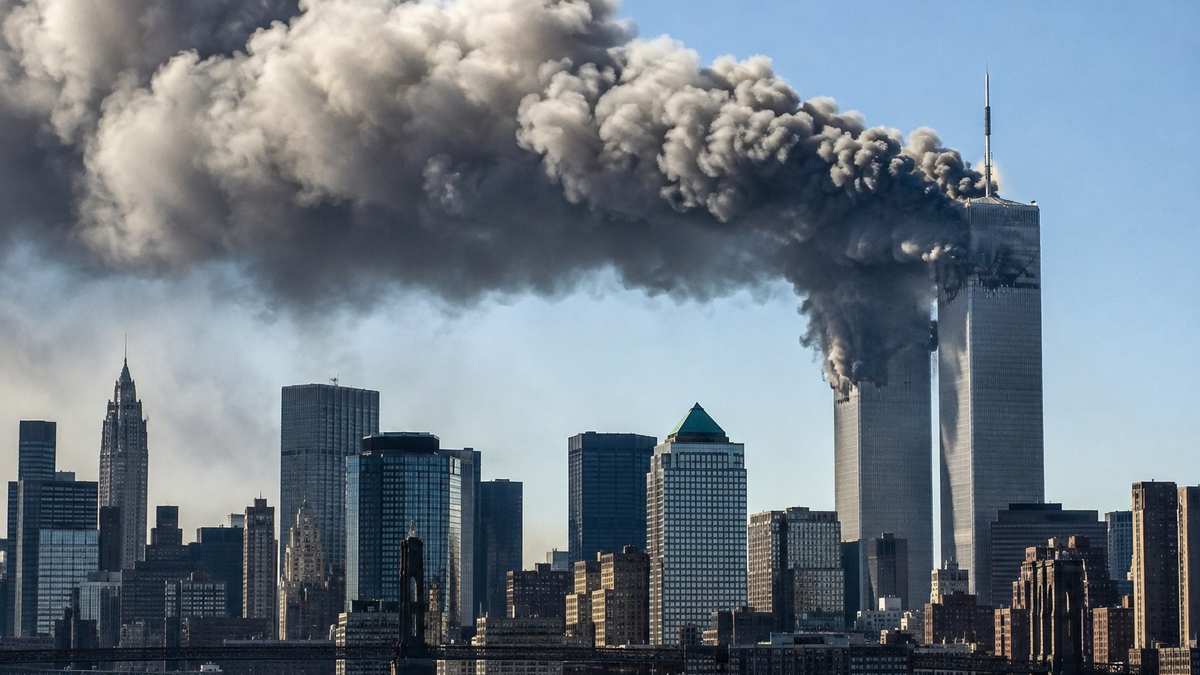
On the morning of 11 September 2001, nineteen men hijacked four passenger aircraft. Two were flown into the World Trade Center. One struck the Pentagon. The fourth crashed in a Pennsylvania field after passengers fought back. Nearly three thousand people were killed before noon.
The images fixed themselves permanently. The consequences lasted far longer. America went to war.
Afghanistan was invaded within weeks. Iraq followed two years later on a different set of claims that never held. The wars consumed twenty years, thousands of American lives, and hundreds of thousands of lives across the region. Bin Laden was killed in 2011. The last American troops left Afghanistan in 2021. The political arguments never left.
At home the country rebuilt its security architecture. Airport screening became permanent. Intelligence agencies received wider powers. The Department of Homeland Security was created. Surveillance expanded on a scale that would have been politically impossible before the attacks. The question of how much privacy a democracy should trade for safety has never been settled. It has only grown quieter.
Muslim communities in the United States and elsewhere absorbed the suspicion that followed. Unity after the attacks proved temporary. The arguments that replaced it over war, immigration, religion, civil liberties, are still with us.
Other controversies refused to die. Unusual trading in airline put options in the days before the attacks was investigated by the 9/11 Commission and the SEC. Official findings attributed the activity to ordinary market positions. Academic research later found the pattern statistically abnormal. The gap between those two conclusions continues to attract attention. Unusual is not the same as proven knowledge. It is also not nothing.
Larry Silverstein’s group had taken a 99-year lease on the World Trade Center weeks before the attacks. The insurance dispute that followed turned on whether the two aircraft strikes counted as one occurrence or two. Years of litigation produced a recovery of roughly $4.55 billion. The timing of the lease made Silverstein a permanent figure in conspiracy narratives. The documented record shows a businessman who bought required insurance and then fought insurers over the meaning of the policies after an unprecedented loss.
World Trade Center 7, which was not hit by an aircraft, collapsed later that afternoon after burning for hours. NIST concluded that uncontrolled fires caused progressive structural failure. The building remains central to alternative accounts. The evidence, not the volume of assertion, has to decide.
The least visible legacy is medical. Firefighters, police officers, construction workers and residents spent months in the dust. The World Trade Center Health Program still monitors and treats tens of thousands of people. More than ten thousand FDNY members alone are certified with 9/11-related conditions. The smoke cleared. The illnesses did not.