NEW DELHI — US sanctions bill has placed India’s Russian oil trade under the shadow of a possible 100% tariff. The House of Representatives passed the legislation 262–159 on Wednesday and sent it to President Donald Trump for signature.
The measure gives Washington the authority to impose tariffs of up to 100% on the largest buyers of Russian oil or natural gas. India and China are the principal countries in view.
India has not been hit with the tariff. The law creates the power to impose one. How the administration uses that power will decide the cost.
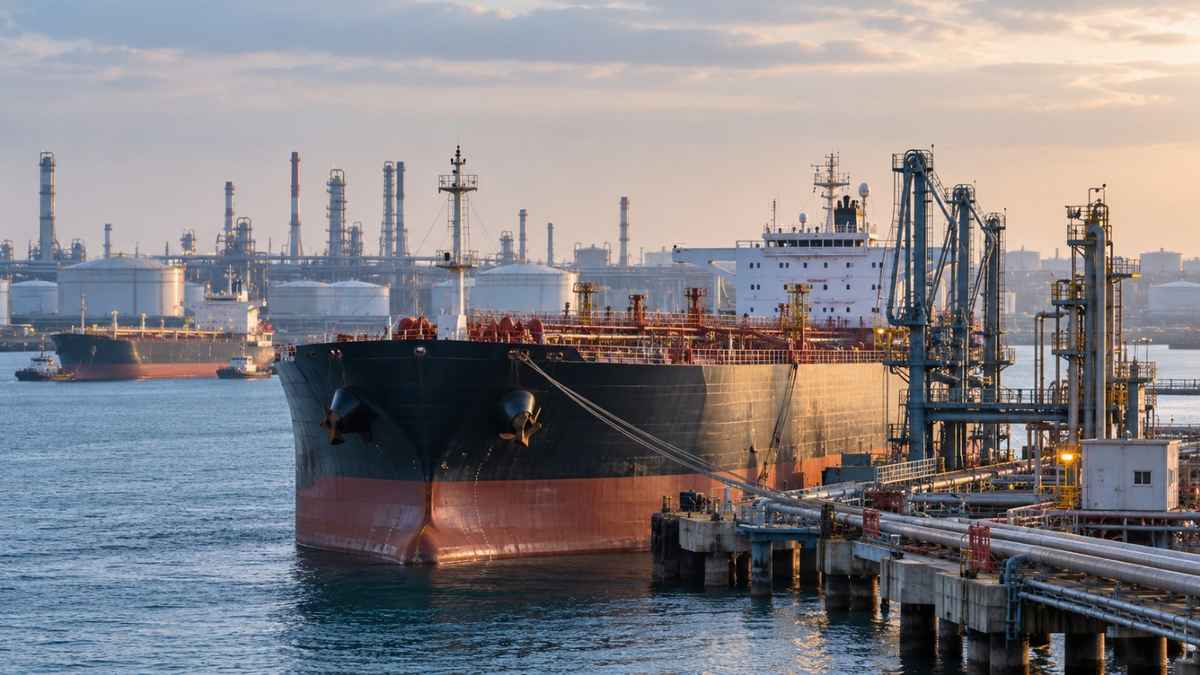
The exposure is large. Russia supplied 30.3% of India’s crude imports in FY2025-26, worth about $40.8 billion, according to data cited by the Global Trade Research Initiative. In July 2026 the Russian share of India’s crude imports rose as high as 51%. Those barrels arrived at a discount, giving refiners cheaper feedstock and helping manage an energy import bill that remains among the country’s heaviest external costs.
Replacing the volume is possible. Matching the price is not guaranteed. Brent was trading around $103 a barrel on Thursday even after a 2% decline, with Middle East disruptions still constraining global supply. Indian refiners have already warned that cutting Russian crude would raise costs and compress margins. Some are seeking exemptions or time-bound quotas to complete existing transactions rather than face an abrupt stop.
The risk runs both ways. The United States is India’s largest export market. Goods shipments to the US reached $42.79 billion in April–August, up from $40.39 billion a year earlier. A tariff aimed at Russian oil buyers could therefore land on a trade relationship that India is still trying to expand through a broader bilateral agreement.
The External Affairs Ministry said India remains committed to energy security and to sourcing supplies from diverse sellers according to market conditions. It added that New Delhi would take measures to protect its trade and economic interests.
India now faces a single instrument that can raise the cost of its cheapest major crude source and, at the same time, threaten access to its largest export market.
The authority exists. The decision has not yet been taken.