
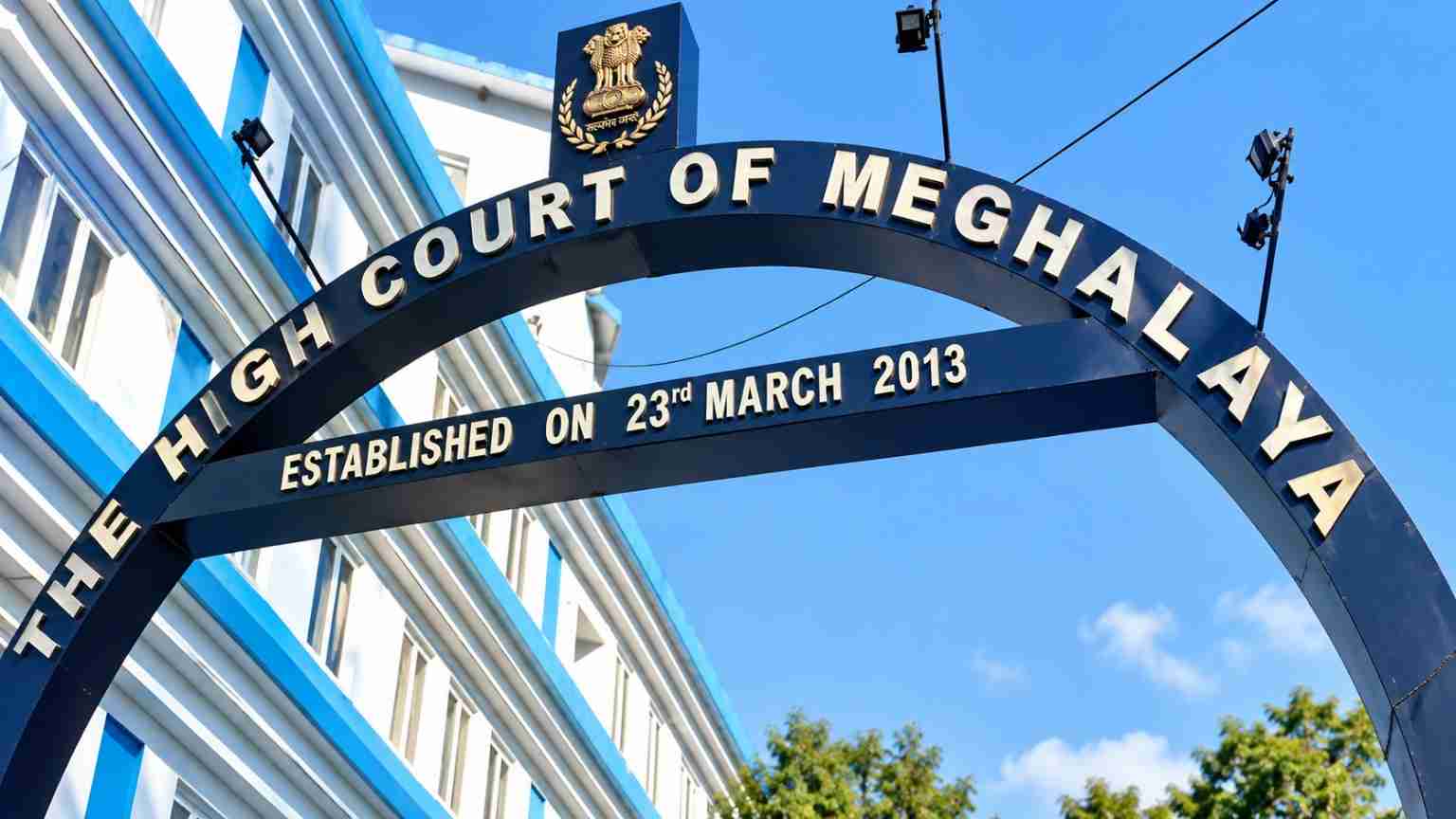
SHILLONG — Eleven years after a 12-year-old girl was sexually assaulted in her own home, the Meghalaya High Court has upheld the conviction and left the three-year prison sentence intact. The only adjustment was the fine, cut from ₹5,000 to ₹1,000.
A bench headed by Chief Justice Revati Mohite Dere delivered the judgment on Wednesday in the appeal filed by Lam Shylla against his conviction by the Special Judge (POCSO), East Khasi Hills, on 7 December 2023. Shylla had been found guilty under Section 8 of the Protection of Children from Sexual Offences Act and sentenced to three years’ rigorous imprisonment with a ₹5,000 fine.
The High Court held that three years is the minimum punishment prescribed under that section and therefore could not be reduced. The fine was lowered to ₹1,000 and the default imprisonment attached to non-payment was cut to seven days.
The offence occurred on 20 June 2015. The prosecution case was that Shylla went to the girl’s house while her mother was outside washing clothes and sexually assaulted her. An FIR was registered at Madanrting Police Station three days later, on 23 June. Police filed a charge sheet alleging offences under Section 5(m) read with Section 6 of the POCSO Act and Section 450 of the Indian Penal Code.
The defence attacked the case on multiple fronts: the absence of independent corroboration of the survivor’s testimony, the presence of what it called hearsay from some witnesses, the three-day delay in lodging the FIR, and the appellant’s age of 48 at the time of the offence, offered as a plea for leniency. The State replied that sexual offences against children commonly occur beyond public view and cannot ordinarily be expected to produce eyewitnesses, and that the survivor’s evidence was sufficient.
The High Court accepted the survivor’s testimony as credible and noted that there had been no effective cross-examination challenging the material allegations. It found supporting evidence from her mother and younger brother.
The brother told the court he had seen Shylla and the survivor sitting close together inside the house and that Shylla immediately removed his hand when the boy entered the room. The three-day delay in reporting did not trouble the court; the family had first taken the matter to the Rangbah Shnong, the customary village authority, before being advised to approach the police. The survivor’s age was established through a birth certificate issued by the Diengpasoh Primary Health Centre and was never challenged during the trial.
With the conviction sustained, the three-year sentence remains. Shylla will be entitled to the benefit of the Remission Policy, 2026, if it applies to him.
The judgment alters the financial penalty. It does not alter the finding of guilt or the length of the custodial term.