GUWAHATI : A firing incident along the Assam-Arunachal Pradesh border in Dhemaji district has brought a decades-old boundary dispute back into focus, triggering protests, an economic blockade and fresh clashes between people from the two states.
The immediate tension has eased after the Takam Mising Porin Kebang (TMPK) temporarily suspended its blockade, but the dispute remains sensitive as both sides continue to face questions over land, jurisdiction and the implementation of earlier agreements.
The latest incident took place on August 10 near Bodoti village under Mingmang Gaon Panchayat in Dhemaji district, where people from Assam were allegedly fired upon during a confrontation linked to a dispute over land encroachment along the inter-state boundary.
Initial reports gave different figures for the number of people injured, with some reports saying 18 villagers were hurt, while later reports and the Assam government’s assistance announcement referred to 11 injured persons. The state government has announced ₹2 lakh each for the 11 injured.
The incident quickly moved beyond the village and became a wider border issue. TMPK and other local organisations launched an economic blockade against Arunachal Pradesh on August 12, disrupting the movement of vehicles entering and leaving the neighbouring state through several points.
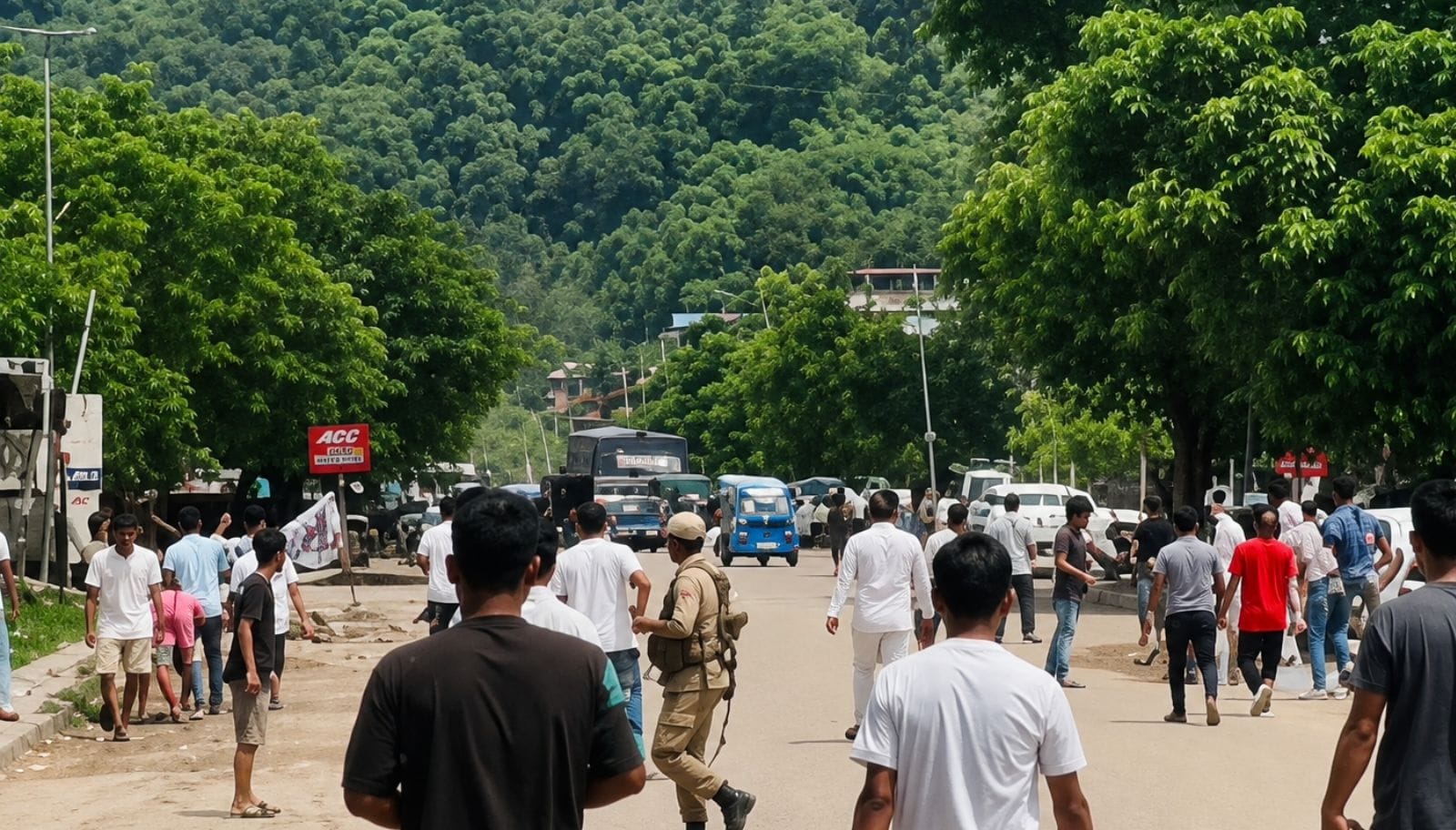
Tension increased further on August 13 when protesters from the two sides clashed near the Likabali entry point in Dhemaji. Stone-pelting was reported and Arunachal Pradesh Police fired into the air to disperse the crowd as the confrontation escalated.
The blockade was later suspended following talks between TMPK representatives, Assam ministers and representatives from Arunachal Pradesh. However, TMPK gave the Assam government 48 hours to arrest four people it says were named in the FIR over the August 10 firing, warning that the protest could resume if action was not taken.
The present confrontation is not simply a dispute between two villages.
Assam and Arunachal Pradesh share an inter-state boundary of about 804 kilometres, and disagreements over parts of that boundary have continued for decades.
The roots of the dispute go back to the administrative arrangements of the colonial period and the later creation of Arunachal Pradesh from areas that had earlier been administered as part of Assam. Arunachal Pradesh has historically contested the transfer of several forest areas to Assam, arguing that traditional claims of communities in the hills were not adequately reflected.
The dispute eventually reached the Supreme Court. Assam’s Border Protection and Development Directorate says an Original Suit filed in 1989 remains at the trial stage, showing how long the two sides have struggled to reach a final settlement.
A major effort to reduce the dispute came in 2022, when Assam and Arunachal Pradesh agreed to limit the issue to 123 villages that had been claimed by Arunachal Pradesh before the Local Commission.
The two states signed the Namsai Declaration in July 2022, after which the number of disputed villages was reduced from 123 to 86 following an understanding over 37 villages. The process continued in 2023, when the two governments signed a memorandum of understanding in Nqew Delhi.
According to Assam government records, disputes involving 71 of the 123 villages had been resolved, while the remaining areas were left for further discussions and boundary finalisation. The progress was significant because the two governments had moved from a broad and decades-old disagreement towards identifying specific areas that could be settled through negotiations. But political agreements do not automatically remove disputes over land on the ground.
Assam Chief Minister Himanta Biswa Sarma said on August 12 that most of the boundary dispute had been resolved, with five areas covering 52 villages still awaiting a final settlement. He also appealed to Arunachal Pradesh Chief Minister Pema Khandu for an inquiry into the firing and action against those responsible.
Communities living along the border, the issue is more immediate than an agreement signed between two governments. Villagers deal directly with questions over where one state’s administrative authority ends, where another begins and whether land being used or claimed by one community is recognised by the other side.
Now, the two sides have stepped back from a wider confrontation. Assam has begun the process of providing financial assistance to those injured, while TMPK has suspended the blockade after talks but kept its demand for arrests within a 48-hour deadline.