
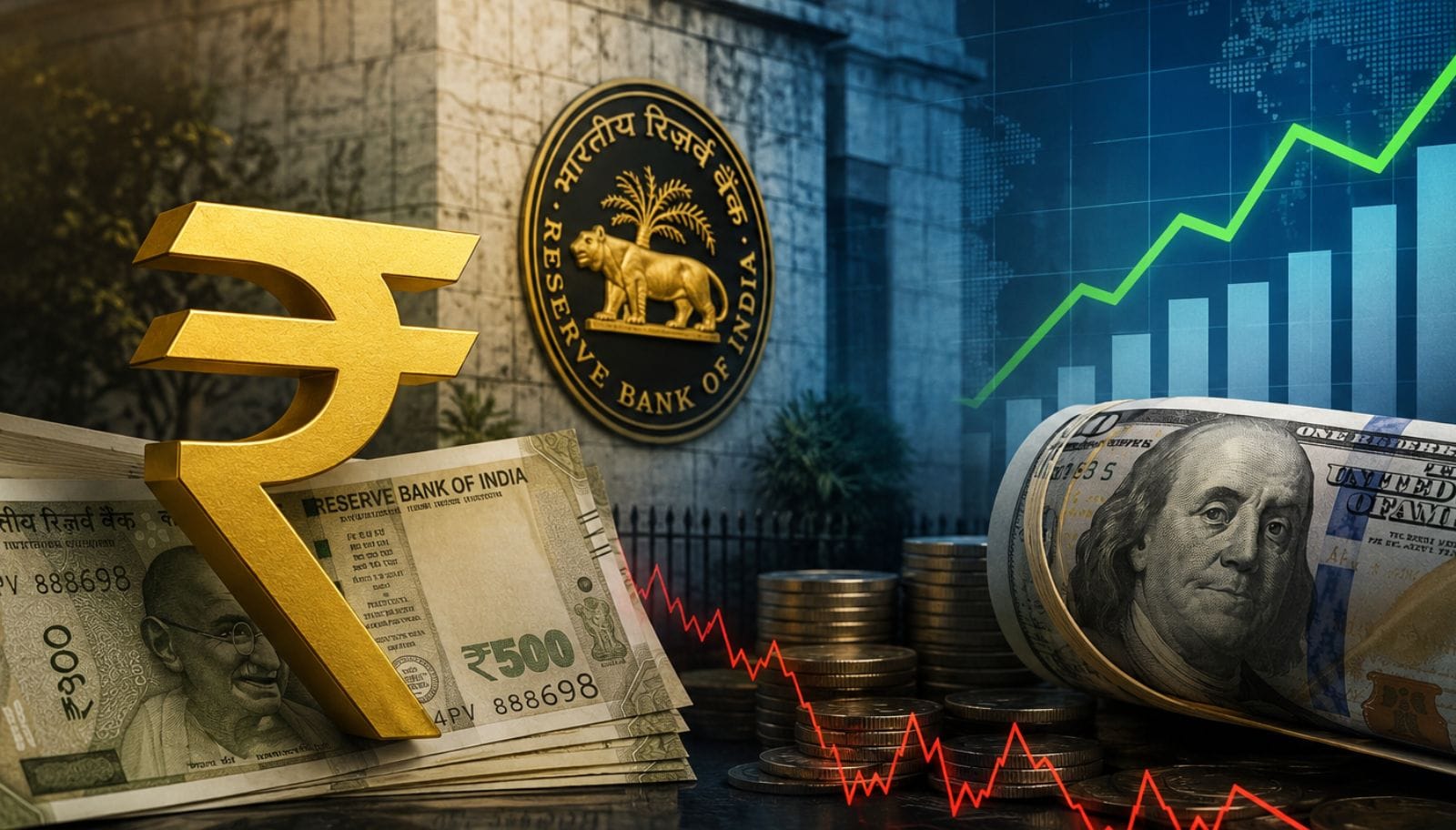
MUMBAI : India’s foreign exchange reserves rose by $14.136 billion in the week ended August 7, taking the total to $707.002 billion as strong foreign-currency inflows continued to build the country’s external buffer. The increase was the biggest weekly rise since January and pushed reserves to a four-month high. The latest figures also show how quickly India’s foreign exchange position has strengthened after several months of pressure on the rupee and the balance of payments.
The rise was led by foreign currency assets, the largest part of India’s reserves. They increased by $9.946 billion during the week to $574.625 billion.
Gold reserves added another $3.995 billion to reach $108.738 billion. Special Drawing Rights with the International Monetary Fund rose slightly to about $18.7 billion, while India’s reserve position with the IMF stood at around $4.9 billion. That puts the overall reserve position at more than $707 billion, although it is still below India’s record of about $728.5 billion reached in February 2026. The bigger change has happened over the past six weeks.
India’s reserves have increased by roughly $40 billion during that period. A large part of the increase has come from policy measures introduced by the Reserve Bank of India to bring more foreign currency into the country.
The central bank introduced a special swap facility in June to encourage banks to raise fresh three-to-five-year FCNR(B) deposits from non-resident Indians. It also offered concessional foreign-exchange swaps for certain overseas borrowings. The response was much stronger than expected. By August 13, banks had mobilised $52.3 billion through FCNR(B) deposits alone. Other foreign-currency borrowing channels added several billion dollars more.
The RBI has since decided to close the special FCNR(B) deposit window on August 31, a month earlier than originally planned. Foreign investors have also been adding dollars to India’s financial system. Verify reports says foreign investors bought around $2.5 billion of Indian government bonds through the fully accessible route after tax changes made such investments more attractive. The rise in reserves gives India a larger cushion against external shocks. It can help the country meet import payments, manage periods of heavy dollar demand and reduce the risk of a sudden shortage of foreign currency.
But the size of the reserve pile does not automatically translate into a stronger rupee.
The rupee ended the latest trading week at around ₹95.43 per US dollar, down about 0.2% for the week. The currency remained under pressure from demand for dollars from importers, higher crude oil prices and geopolitical uncertainty in the Middle East.
India is particularly exposed to higher oil prices because it imports about 90% of its crude oil requirement. When crude becomes more expensive, Indian importers need more dollars to pay for the same quantity of oil. That increases demand for the US currency and can put pressure on the rupee. The RBI has also been intervening in the foreign exchange market to limit sharp movements in the rupee. Traders have reported dollar sales through state-run banks, widely understood to be intervention on behalf of the central bank. The intervention has helped keep the currency within a relatively narrow range despite pressure from oil prices and capital flows.
This creates an important distinction between India’s reserves and the rupee’s day-to-day value.
Foreign exchange reserves are a stock of assets held by the central bank. The rupee, meanwhile, is priced continuously in the foreign exchange market, where demand for dollars comes from imports, overseas payments, investors, companies and other transactions.
A country can therefore have a large reserve cushion while its currency remains under pressure. The current numbers show both sides of India’s external position. The country has rebuilt a substantial foreign-currency buffer, but it is still dealing with strong demand for dollars and uncertainty over oil and global capital flows.
The recent increase is also partly policy-driven rather than simply the result of a sudden improvement in exports or a large rise in trade earnings. The FCNR(B) mobilisation and other foreign-currency measures have brought dollars into the banking system, while foreign investment has added to the inflow.
The immediate benefit is a stronger external safety cushion for India. The next test will be whether those inflows remain strong after the special RBI facilities begin to close, and whether the pressure from crude oil, overseas investment flows and demand for dollars eases.
At $707 billion, India has a much larger reserve buffer than it had only a few months ago. But the rupee’s performance shows that reserves can provide protection against external shocks without removing the underlying pressures that determine the currency’s value.