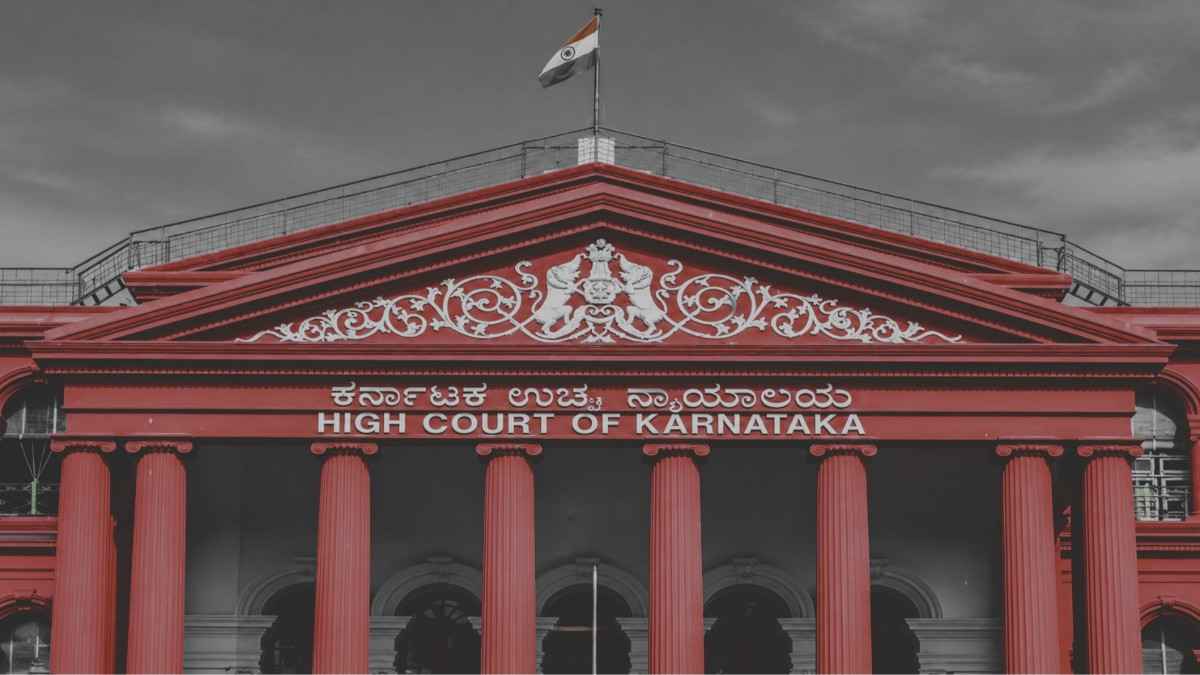
BENGALURU — The Karnataka High Court on October 12 struck down key provisions of a 2022 state law that had raised reservation for Scheduled Castes and Scheduled Tribes, ruling that the enhanced quotas breached the 50% ceiling on overall reservation.
A division bench of Chief Justice Vibhu Bakhru and Justice K.S. Hemalekha held that the state could not increase total reservation beyond the established limit without establishing exceptional circumstances, as required under the Supreme Court’s 1992 ruling in Indra Sawhney v. Union of India.The 2022 law had raised SC reservation from 15% to 17% and ST reservation from 3% to 7%. Combined with the existing 32% OBC quota, the total reservation in Karnataka had risen to 56%.
The bench struck down Section 3 of the Karnataka Scheduled Castes and Scheduled Tribes (Reservation of Seats in Educational Institutions and of Appointments or Posts in the Services under the State) Act, 2022, which covered educational institutions and state appointments, along with Section 4, which provided for the enhanced quota in state government services.
The court held that the Indra Sawhney judgment’s 50% ceiling could be crossed only in exceptional circumstances, and that a state’s own assessment of inadequate representation does not by itself meet that threshold. Evidence of population growth or under-representation, the bench said, does not automatically qualify as the extraordinary circumstances required to exceed the limit.
The Karnataka government had defended the quota increase by citing findings linked to the Justice H.N. Nagamohan Das Commission and other committee reports on the representation and social conditions of SC and ST communities. It also argued that SCs, STs and OBCs together made up more than 90% of the state’s population, and that reservation levels should reflect that demographic share.
The court rejected population share as sufficient justification on its own, and observed that unequal distribution of reservation benefits among sub-groups could support a case for internal reservation, rather than justify raising the overall quota.
The judgment also examined whether the state had consulted the National Commission for Scheduled Castes and the National Commission for Scheduled Tribes before introducing the law, as required under Articles 338(9) and 338A(9) of the Constitution. The state pointed to correspondence sent to both commissions in December 2025 and January 2026. The bench noted that this communication came nearly three years after the law was enacted and only after its validity had been challenged in court, and held that it could not substitute for consultation required before the legislation was passed.
The ruling came on petitions challenging the 2022 law, including one filed by Mahendra Kumar Mitra and another by a group of civil engineering graduates who had applied for assistant engineer posts at the Bruhat Bengaluru Mahanagara Palike. The petitioners had argued that the 56% reservation violated constitutional equality guarantees and the 50% limit set out in Indra Sawhney.
The court’s order strikes down the specific provisions that allowed reservation to exceed 50% in Karnataka, and does not affect reservation as a constitutional principle. The impact on ongoing recruitment and admission processes conducted under the now-invalidated provisions will depend on further directions from the court.