MUMBAI : State Bank of India, the country’s largest lender, reported a 10.23 percent year-on-year rise in net profit for the April-June quarter, posting ₹21,121 crore against ₹19,160 crore in the same period last year, driven by strong credit growth and a sharp improvement in asset quality that pushed the bank’s bad-loan ratios to their lowest level in more than two decades.
Net Interest Income, the gap between what the bank earns on loans and pays out on deposits, rose 14.88 percent year-on-year to ₹46,992 crore, while operating profit climbed 9.77 percent to ₹33,529 crore. On a sequential basis, net profit was also up 7.30 percent from the ₹19,684 crore reported in the previous quarter, itself a period that had absorbed unusually high overheads.
The strongest signal in Friday’s results came from asset quality. SBI’s gross non-performing asset ratio fell to 1.47 percent, down 36 basis points from 1.83 percent a year earlier, a level the bank said was its lowest in over 20 years. The net NPA ratio improved to 0.38 percent from 0.47 percent, while bad loan provisions were cut by roughly a third to ₹3,359 crore from ₹4,934 crore in the year-ago quarter.
Credit cost, a measure of how much the bank sets aside against potential loan losses, improved to 0.27 percent from 0.47 percent, and the slippage ratio, tracking loans turning bad during the quarter, eased to 0.57 percent from 0.75 percent.
Lending momentum stayed strong across the board. Gross advances grew 18.63 percent to cross ₹50 lakh crore for the first time, with domestic advances up 18.15 percent and overseas lending rising even faster at 21.38 percent in rupee terms.
Deposits grew 9.73 percent to ₹60.06 lakh crore, pushing the bank’s total business past ₹110 lakh crore for the quarter. CASA deposits, the low-cost current and savings account funds that help banks keep borrowing costs down, grew 9.30 percent, with the CASA ratio holding at 39.24 percent.
Domestic net interest margin, a key measure of lending profitability, improved 7 basis points sequentially to 3.00 percent, even as the whole-bank NIM moderated slightly to 2.86 percent from 2.89 percent a year earlier, reflecting the cost pressure of funding an expanding loan book. The bank’s capital position remained comfortable, with an overall capital adequacy ratio of 15.67 percent, including a core buffer of 12.89 percent.
SBI Chairman C.S. Setty attributed the performance to the bank’s “Digital First, Customer First and Nation Always” strategy, pointing to the continued rollout of its SARAL process re-engineering initiative aimed at simplifying customer banking journeys.
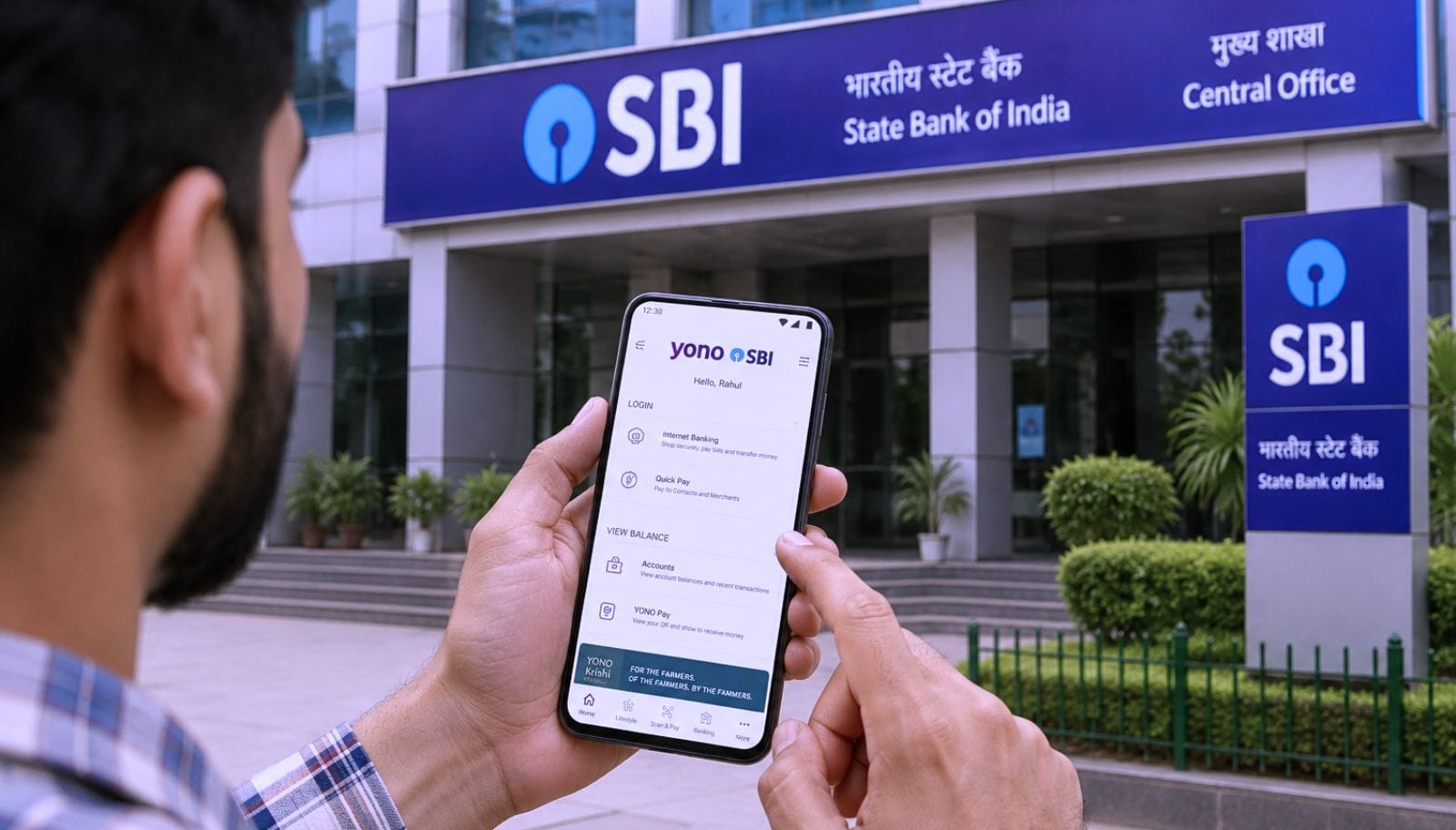
The bank said more than 64 percent of new savings accounts were opened digitally through its YONO platform during the quarter, with alternate digital channels now accounting for nearly 98.8 percent of all transactions, underscoring how much of the bank’s day-to-day business has shifted away from physical branches.
Shares of SBI rose as much as 3.5 to 4 percent following the results, reflecting investor confidence in both the profit growth and, more significantly, the sharp improvement in asset quality at a time when several private lenders have faced more mixed earnings this season.