A 896-metre cable car meant to carry tourists to Shillong Peak in under four minutes has turned into the biggest infrastructure fight the city has seen in years. Here is what the project involves, who is objecting and why, and what the numbers — from Meghalaya and from similar projects elsewhere in India — show about what could happen next.
The Shillong Peak project, by the numbers
The ropeway will run 13 eight-seater cabins between Riat Laban and Shillong Peak on French POMA technology, built by a KEC International-Tantia Construction joint venture. Cost has climbed from an original Rs 108 crore to Rs 151 crore, funded through the New Development Bank (Rs 80.89 crore) and the PM-DevINE scheme (Rs 70.11 crore).
Construction started in October 2023, the President laid the foundation stone in January 2024, and the system is designed to carry 600 passengers an hour once operational.
The project sits within a larger national push the Union government’s 2025-26 Budget allocated $420 million to the National Ropeways Development Programme, targeting more than 50 Himalayan corridors, so Shillong’s fight is part of a much bigger rollout across hill India.
What the government says, with figures
At a site walkthrough on August 8, Tourism Commissioner and Secretary R.M. Kurbah said the alignment does not pass through the Patakhana or Wahingdoh water sources, which sit closer to Lawsohtun, away from the ropeway’s path. The original design had cable towers at 25 metres, which would have required a wider forest clearing; this was revised to 35-40 metres so gondolas pass above the canopy.
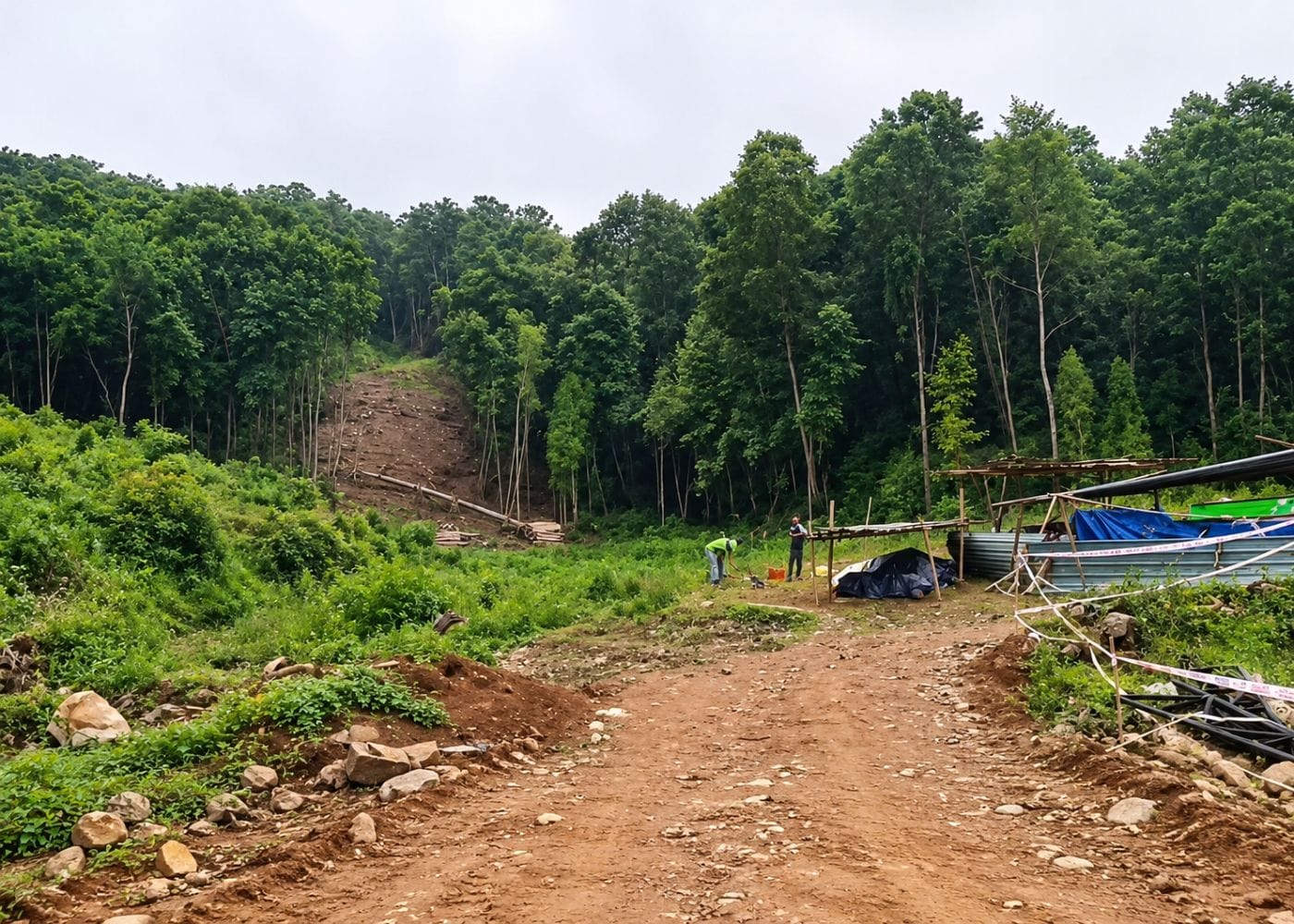
A total of 545 trees have been felled for tower bases, against a compensatory afforestation plan of over 5,400 saplings — a 1:10 ratio though that planting is happening on acquired land in West Khasi Hills, not within the Lum Shyllong catchment itself. The design has been reviewed by IIT Delhi, and the Riat Laban Dorbar reportedly expressed satisfaction after the walkthrough.
What the objectors say, with figures
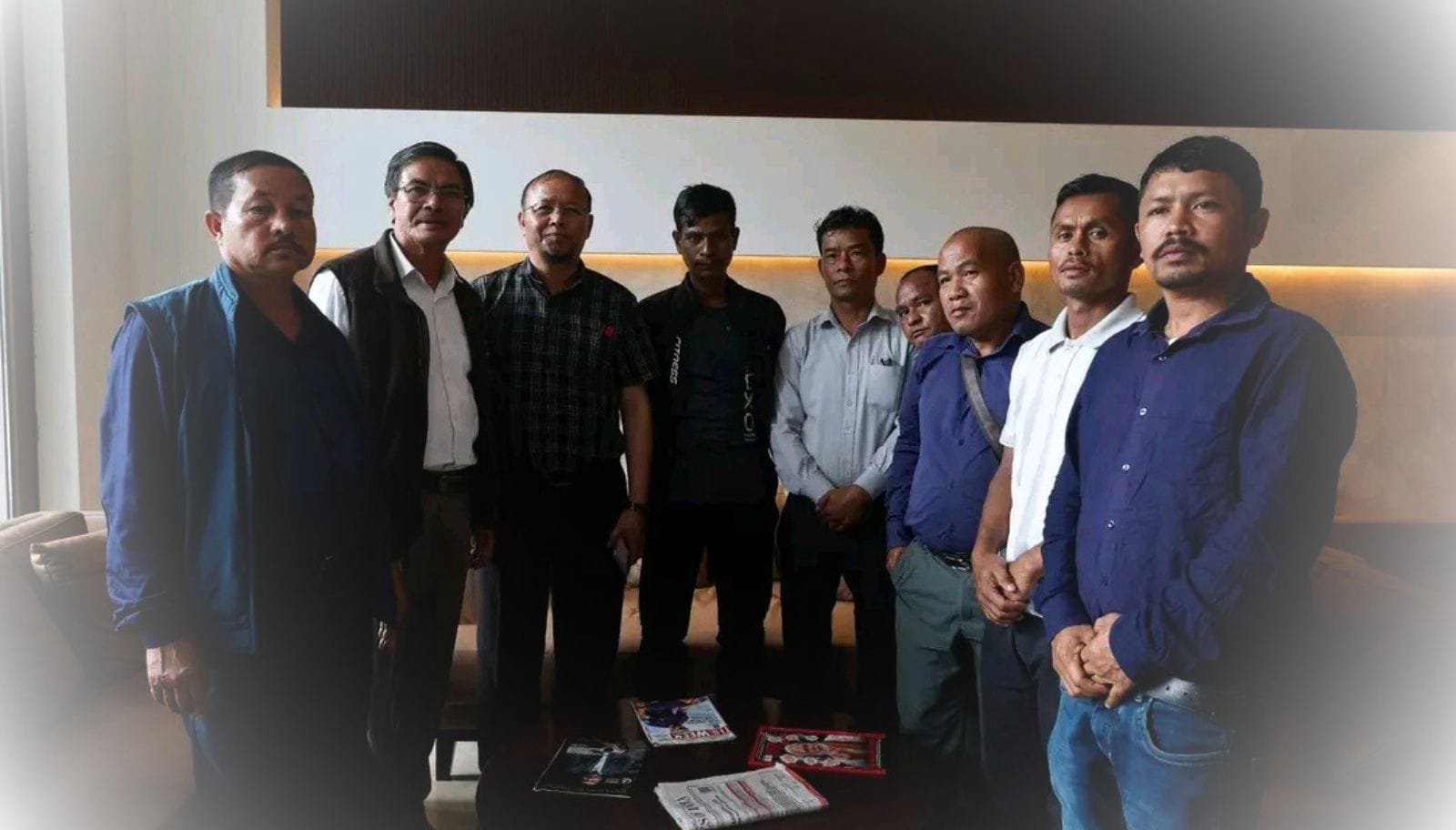
The Joint Action Committee (JAC), representing the Riat Laban Dorbar Pyllun, wrote to the Khasi Hills Autonomous District Council (KHADC) in early August alleging the executing firm lacks required permissions. KHADC responded with a seven-day ultimatum for the joint venture to prove its legal right to operate in Council jurisdiction.
Also , the Office of the Acting Syiem of Hima Mylliem has withheld a No Objection Certificate, demanding consent from the ’11 Kur’ the clans of Raid Mylliem before considering a trading licence.
Thma U Rangli-Juki (TUR) leader Angela Rangad, in an August 9 statement, put the felled-tree count at 545 as well, and argued that afforestation done outside the catchment cannot restore local aquifers.
What Shillong’s own environmental data shows
Two independent data points give this dispute its local weight. First, water: a March 2025 study by the state’s Soil & Water Conservation Department mapped over 55,000 of Meghalaya’s roughly 70,000 identified springsheds and found 792 water sources in critical condition, several dried up completely. A separate 2026 study on Shillong’s water governance found more than 50 percent of the city’s piped water is lost as “unaccounted-for water” before it reaches households.
Second, air: Shillong’s annual average AQI has risen from 56 in 2020 to 93 in 2026 — a 28.3 percent deterioration over that period — with current PM2.5 readings at roughly 2.5 times the WHO’s annual guideline.
Read Also | Nagaland cracks down on roadside dhabas along National Highways: Explained
Sabarimala: what a full redesign to save trees actually looks like
Kerala’s Sabarimala ropeway offers the clearest comparison for what “minimising tree loss” can mean when pushed further than Meghalaya has gone.
The 2.7-km project, connecting Pampa Hilltop to a terminal near Police Barrack, was relocated closer to the existing trekking path specifically to reduce the number of trees felled — bringing the count down to just 80 trees, a fraction of Shillong’s 545. That redesign followed a High Court-directed resurvey, and the revised plan still required fresh applications to the Ministry of Environment and Forests and the National Tiger Conservation Authority before proceeding, since the route passes through the Periyar Tiger Reserve.
The comparison isn’t exact — different terrain, different forest sensitivity — but it establishes that Indian ropeway design has gone considerably further than Shillong’s canopy-height fix when the political and judicial pressure to minimise felling was strong enough.
Kedarnath and Hemkund Sahib: what ropeway economics look like at full national scale
In November 2024, the Union Cabinet approved two Himalayan ropeway projects at a combined cost of Rs 6,811 crore — roughly 45 times Shillong’s budget. The Kedarnath ropeway, a 12.9-km line from Sonprayag, is sanctioned at Rs 4,081 crore and will use tri-cable “3S” gondola technology capable of carrying 1,800 passengers per hour per direction, serving up to 18,000 passengers daily. It is meant to cut the current 8-9 hour trek to 36 minutes for a shrine visited by roughly 20 lakh pilgrims a year.
The Hemkund Sahib ropeway, a 12.4-km line from Govindghat costing Rs 2,730 crore, will cut a gruelling 21-km uphill trek — currently walked or covered by pony or palanquin — to the same 36 minutes. Both are being built on a public-private partnership model and are projected to generate year-round jobs in hospitality, travel and food and beverage services, not just during construction.
These figures matter for Shillong mainly as scale context: at Rs 151 crore, Shillong’s ropeway is a small fraction of what India is now willing to spend on pilgrimage and tourism ropeways elsewhere — meaning it is being built with comparatively modest capital, but also with far less room for cost or scope revision if problems emerge later.
Karnataka’s Nandi Hills ropeway is a useful caution on timelines. The project requires just 0.86 hectares of forest land — far smaller than Shillong’s felling — and the state Forest Department recommended it to the Centre, noting the corridor does not cross a national park or wildlife sanctuary. Despite that, the Union Ministry of Environment, Forest and Climate Change held up final clearance, specifically requesting a Wildlife Mitigation Report months after state-level approval was already in hand.
As of early August 2026, the project remained under construction while still awaiting that final Central sign-off — evidence that state-level clearance, even for a modest forest footprint, does not guarantee a fast final approval.
What this national data suggests for Shillong
Taken together, these cases show a consistent pattern: government-stated compliance at the state level has rarely been the final word on a ropeway project in India in recent years.
Design can be pushed further to cut tree loss, as Sabarimala shows. Central-level review can add months even to small-footprint projects, as Nandi Hills shows.
And even fully-funded, cabinet-approved projects at many times Shillong’s scale, like Kedarnath and Hemkund Sahib, are built around detailed passenger-capacity and cost figures that Shillong’s own project documents have not yet made public in comparable detail.