NEW DELHI : India’s economy expanded 7.8 percent in the April-June quarter, comfortably clearing the Reserve Bank of India’s 7 percent forecast and economists’ own estimates, as investment, manufacturing and domestic consumption kept output moving despite global headwinds.
Real GDP at constant prices came in at ₹81.36 lakh crore for the first quarter of 2026-27, up from ₹75.46 lakh crore a year earlier. The pace slowed from the revised 8.6 percent recorded in January-March, but stayed well above the 6.9 percent growth logged in the same quarter last year.
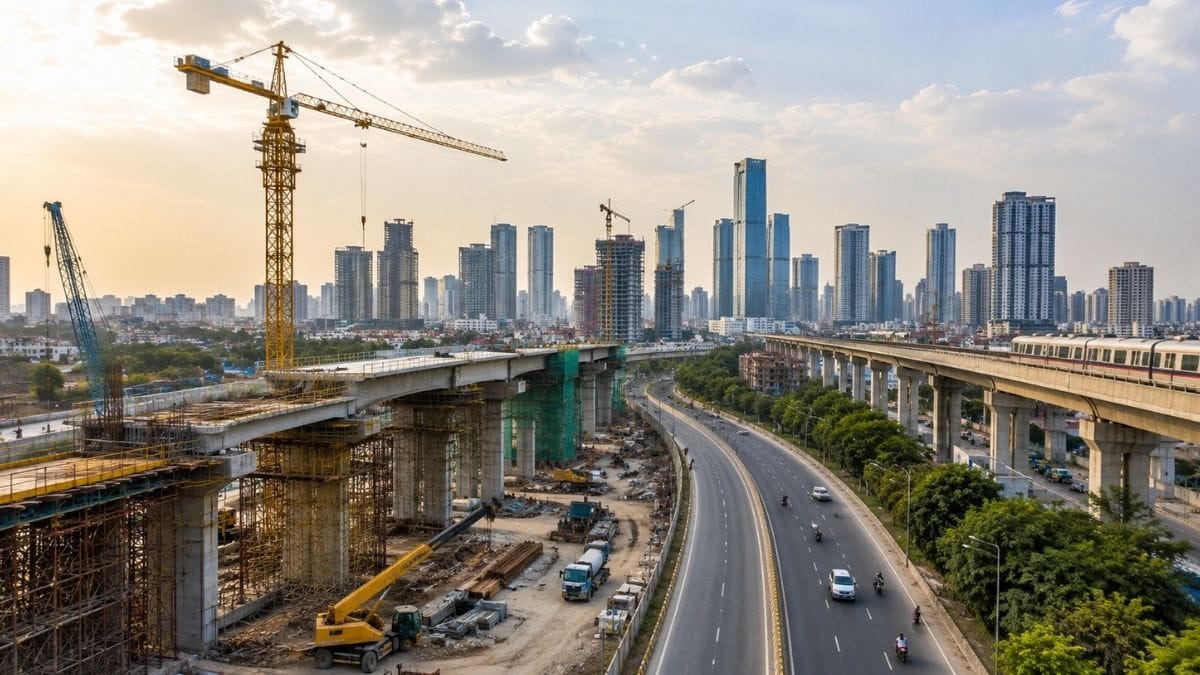
Investment carried much of the quarter’s momentum. Gross fixed capital formation grew 11.9 percent, against 5.8 percent a year earlier, pushing its share of nominal GDP up to 34.3 percent. Private consumption expenditure rose 7.1 percent, while government final consumption expenditure added 4.3 percent.
Manufacturing picked up pace too, with value added in the sector climbing 9.2 percent, ahead of 8.3 percent in the same quarter last year. Construction grew 7.7 percent, and electricity, gas, water supply and other utilities expanded 8.9 percent.
Services remained the biggest driver overall, growing 10 percent for the quarter. Financial, real estate, IT and professional services led that charge at 12.1 percent, up sharply from 8.8 percent a year earlier.
Trade, hotels, transport, communication and broadcasting services rose 8.5 percent, while public administration and other services grew 7.5 percent. Agriculture, forestry and fishing added 3.6 percent, though mining and quarrying went the other way, contracting 2.4 percent.
Gross value added, which strips out net taxes and subsidies to track production directly across sectors, grew 8.2 percent for the quarter, down slightly from 8.7 percent the previous quarter. Nominal GVA rose 11.5 percent to ₹80.53 lakh crore, while nominal GDP, which factors in price changes, climbed 10.3 percent to ₹88.27 lakh crore from ₹80 lakh crore a year earlier.
The stronger-than-expected reading comes even as India contends with higher energy costs and disruptions tied to the West Asia conflict. Economists flagged the investment jump as particularly significant, pointing to private-sector spending flowing into data centres, power and metals.
The RBI had projected 7 percent growth for the quarter, a Reuters poll of economists had put the median estimate at 7.1 percent, and a Moneycontrol poll placed expectations around 7.3 percent, all comfortably beaten by the actual 7.8 percent print.