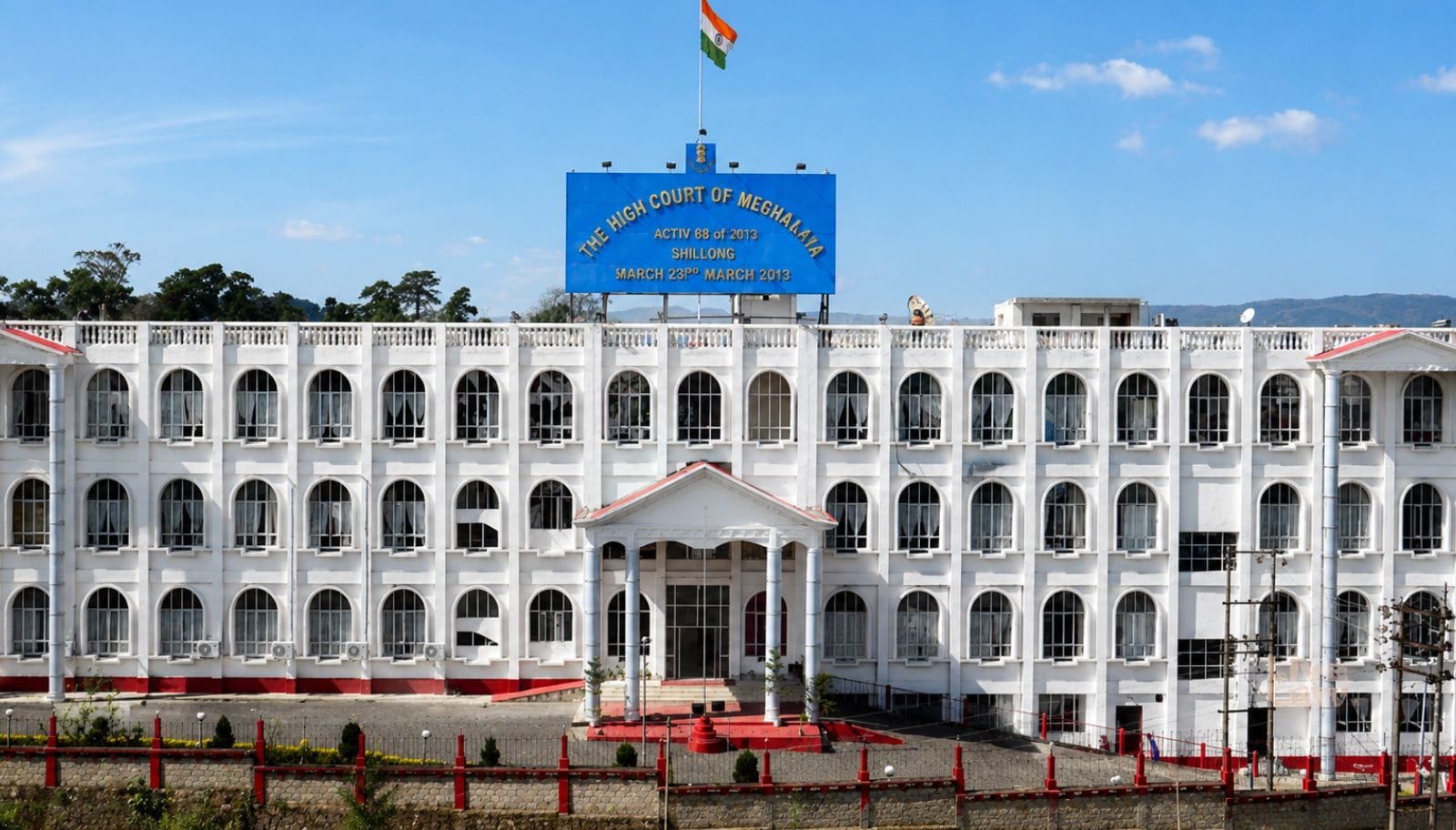
SHILLONG : In a significant ruling on the limits of administrative action and statutory rights, the Meghalaya High Court has ordered the reopening of a licensed Indian Made Foreign Liquor (IMFL) retail outlet in West Garo Hills, holding that moral objections raised by church leaders and local organisations cannot, by themselves, justify shutting down a business that has been granted a valid licence under the law.
The judgment was delivered by Justice H.S. Thangkhiew while hearing a petition filed by Smti. Legitha D. Sangma, the proprietor of the liquor outlet, who challenged the closure of her relocated shop at Danakgre despite obtaining all necessary approvals from the Excise Department.
The dispute began in January 2025, when the Excise Department permitted the petitioner to shift her IMFL retail outlet from Jengjal Market to Danakgre.
Before the relocation, she had secured a No Objection Certificate (NOC) from the local Nokma, fulfilling the required procedures under the Meghalaya Excise Rules. However, after the shop started operating at its new location, objections were raised by church elders and members of the Village Development Committee. They opposed the liquor outlet on moral and social grounds and urged the authorities to intervene.
Following the complaints, the Superintendent of Excise directed the petitioner to stop operating the outlet, prompting her to approach the Meghalaya High Court for relief.
During the proceedings, the court examined reports submitted by the district administration and the Excise Department. The reports confirmed that the relocated outlet complied with the provisions of the Meghalaya Excise Act and Rules.
Authorities also found that the shop was situated beyond the mandatory 200-metre distance from churches, educational institutions and hospitals, meaning it did not violate the statutory conditions governing liquor licences.
While delivering the judgment, Justice Thangkhiew observed that although there is no fundamental right to trade in liquor, a licence granted in accordance with the law creates a legal right that cannot be taken away through arbitrary administrative action. The court further held that the objections placed before the authorities were based primarily on moral considerations rather than any violation of law.
It ruled that such objections, in the absence of legal grounds, were insufficient to justify the suspension or cancellation of a validly issued licence.
The High Court also took note of another licensed restaurant-cum-bar operating approximately 105 metres from the petitioner’s outlet. The existence of another legally permitted establishment in the same locality, the court observed, weakened the basis of the objections raised against the relocated shop.
Justice Thangkhiew further remarked that permitting a regulated and licensed liquor outlet to function could help discourage the illegal sale of liquor, an issue that had reportedly become a concern in the area. The court indicated that lawful businesses operating under the regulatory framework should not be treated differently without valid legal justification.
After considering the facts and applicable law, the High Court concluded that the administrative decision to close the outlet could not be sustained. It directed the concerned authorities to immediately allow the petitioner to resume operations at the relocated site.
With the petition allowed, the High Court directed the concerned authorities to permit the immediate operation of the IMFL retail outlet at Danakgre, bringing an end to a dispute that began after local objections were raised following its relocation from Jengjal Market.