• About
  • Get Jnews
  • Contcat Us
Thursday, October 1, 2026
The Shillong Daily
No Result
View All Result
  • Login
  • News

    Trending Tags

    • Commentary
    • Featured
    • Event
    • Editorial
  • National
  • News

    Trending Tags

    • Commentary
    • Featured
    • Event
    • Editorial
  • National
No Result
View All Result
Morning News
No Result
View All Result
Home Explained

Why UPI merchant charges are back in discussion after six years of zero MDR

The Shillong Daily by The Shillong Daily
September 15, 2026
in Explained
Reading Time: 3 mins read
0
UPI charges explained: Will customers have to pay after Lok Sabha passed the new Bill?

The possibility of charges returning on some UPI payments has triggered widespread discussion after the Union government introduced amendments to the Payment and Settlement Systems Act in Parliament. The proposed changes have led many users to believe that UPI transactions will soon become chargeable. That, however, is not what the amendment does.

The Bill does not impose any fee on UPI payments. Instead, it creates the legal framework that would allow the government to introduce a Merchant Discount Rate (MDR) in the future if it decides to do so. Any decision on whether to levy MDR, the rate to be charged and the categories of merchants covered would come only after a separate policy decision.

READ ALSO

Disha Salian death case: CBI begins probe into murder, gang rape allegations

UPI charges explained: 0.4% MDR on payments above ₹2,000, ₹300 cap and exemptions

The proposal currently being discussed is limited in scope. Reports suggest the government is considering an MDR of around 0.3% to 0.5% on merchant UPI transactions above ₹2,000, mainly for businesses with an annual turnover exceeding ₹1.5 crore. There is no proposal to charge customers making UPI payments or to impose MDR on small merchants.

Because MDR is a fee paid by the merchant to banks and payment service providers for processing digital payments. Consumers would continue to pay the amount displayed at checkout. However, some analysts note that businesses could eventually factor the additional cost into their pricing if such a policy is introduced.

Why is MDR back in the discussion?
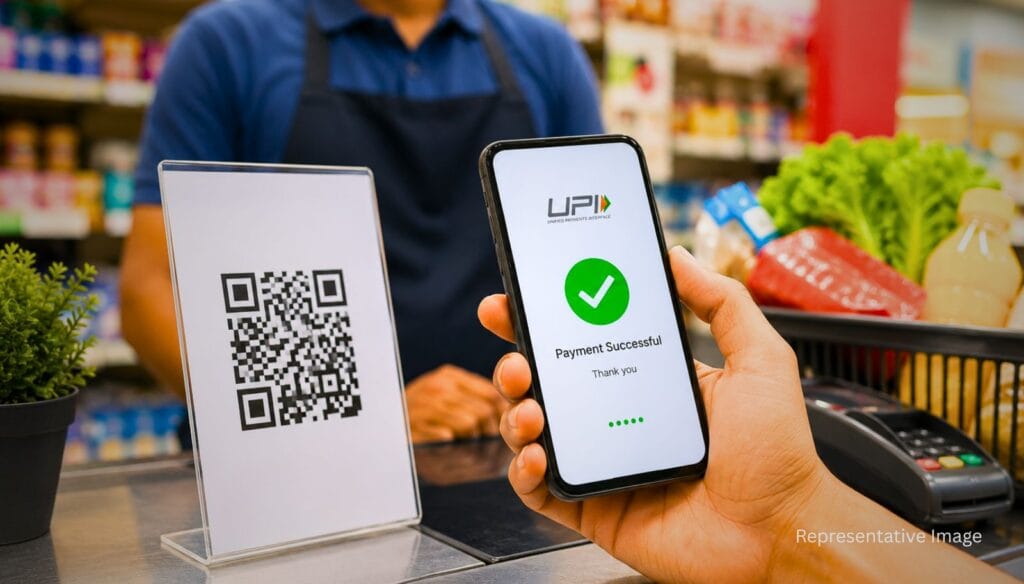
When the government abolished MDR on UPI and RuPay debit card transactions in January 2020, the objective was clear: encourage digital payments, reduce dependence on cash and help small businesses adopt QR code payments without worrying about transaction charges.The policy succeeded beyond expectations.

According to the latest data released by the National Payments Corporation of India (NPCI), 23.6 billion UPI transactions were processed in July 2026, the highest monthly figure recorded so far. The total value of those transactions reached ₹29.9 lakh crore, while nearly 720 banks are now connected to the UPI network.

With UPI becoming one of the world’s largest real-time payment systems, banks and payment companies argue that the current zero-MDR model is becoming difficult to sustain. Maintaining payment infrastructure involves costs related to servers, cybersecurity, fraud detection, customer support, settlement systems and continuous technology upgrades.

Industry players say those expenses have grown sharply even as they earn little direct revenue from merchant UPI transactions.Investment firm Jefferies estimates that bringing back MDR in a limited form could generate an annual revenue pool of ₹5,000 crore to ₹10,000 crore for banks and payment companies.

Why are large merchants being targeted?

One of the reasons being discussed is the transaction pattern on UPI.Industry data shows that 86% of merchant UPI payments are below ₹500, while another 10% fall between ₹501 and ₹2,000. Transactions above ₹2,000 account for only about 4% of the total number of merchant payments.

Yet those same transactions contribute nearly 67% of the total transaction value. That means policymakers could potentially cover a large share of the payment value while affecting only a small portion of overall transactions. The proposal also seeks to keep neighbourhood shops, street vendors and other small businesses outside the MDR framework by limiting any future charges to larger merchants. For now, nothing changes for UPI users or merchants.

The amendment before Parliament only removes the legal barrier that has prevented the government from reintroducing MDR since 2020. Whether any fee is eventually imposed, how much it would be, and who would pay it are questions that remain unanswered.

Until the government announces a final policy, UPI payments continue under the existing zero-MDR system, with customers and merchants paying no additional charges for eligible transactions.

Tags: Digital PaymentsMDRMerchant Discount RateMinistry of FinanceNPCIPayment and Settlement Systems ActRBIUPI
Previous Post

Meghalaya unveils Mission Clouded Leopard to safeguard state’s official animal

Next Post

Meghalaya HC calls for statewide ban on press briefings inside police stations

Related Posts

Disha Salian death case: CBI begins probe into murder, gang rape allegations
Explained

Disha Salian death case: CBI begins probe into murder, gang rape allegations

September 19, 2026
UPI charges explained: 0.4% MDR on payments above ₹2,000, ₹300 cap and exemptions
Explained

UPI charges explained: 0.4% MDR on payments above ₹2,000, ₹300 cap and exemptions

September 15, 2026
Bankers’ Books Evidence Act 2026: What the new law means for bank records
Explained

Bankers’ Books Evidence Act 2026: What the new law means for bank records

September 15, 2026
RBI repo rate and home loan EMI: How interest rate cuts affect borrowers
Explained

RBI repo rate and home loan EMI: How interest rate cuts affect borrowers

September 14, 2026
Nepal flash flood explained: How ice, rock and a blocked river created a deadly surge
Explained

Why Nepal’s devastating flood came so fast and vanished almost as quickly

August 28, 2026
Vande Mataram controversy explained: MHA order, six stanzas and Northeast objections
Explained

Vande Mataram row in Northeast: Why Meghalaya, Mizoram and Nagaland object to full version

September 15, 2026
Next Post
Meghalaya High court demands answers as onrally violence probe

Meghalaya HC calls for statewide ban on press briefings inside police stations

FCRA Amendment Bill 2026 sparks church-led opposition in Meghalaya, Mizoram

FCRA Amendment Bill 2026: Why it has triggered concern across the Northeast

South West Garo Hills holds third Birth-Death registration, Aadhaar camp at Garobadha PHC

South West Garo Hills holds third Birth-Death registration, Aadhaar camp at Garobadha PHC

Meghalaya SIR 2026 draft roll out, over 4 lakh electors face further scrutiny

Meghalaya publishes draft electoral roll under SIR 2026; over 4 lakh voters flagged for further checks

RBI to test polymer ₹10, ₹20 notes in Kochi, Jaipur, Shimla, Mysore, Bhubaneswar

Government approves RBI's plan to trial ₹10 and ₹20 polymer notes across five cities

POPULAR NEWS

Meghalaya’s new SPF teacher appointments explained amid ‘availability of funds’ clause

Meghalaya teacher appointments under SPF raise questions over ‘availability of funds’

September 2, 2026
KSU announces five-day agitation across Khasi-Jaintia Hills, Khliehriat meeting on August 11

KSU calls off public bike rally in Shillong, CEC members to sit in at Khyndailad

August 19, 2026
VPP demands Vijay Kumar Mantri’s removal over education policies

VPP demands Vijay Kumar Mantri’s removal over education policies

September 16, 2026
Assam 8.5-Magnitude Earthquake Claim Goes Viral: What Science Says About The Warning

Assam Earthquake alert: Viral 8.5-magnitude claim raises questions over late August warning

August 27, 2026
Meghalaya withdraws STING energy drink ban after inquiry finds no causal link

Meghalaya imposes statewide freeze on Sting energy drink pending lab tests

August 16, 2026

About

The Shillong Daily is an independent news site out of Meghalaya. We cover the stories shaping Meghalaya and the Northeast, alongside business, economy and market news that matters to readers here. We’re not chasing every headline first — we’d rather dig through the numbers, check the details and tell you what actually happened. Journalism for a region that deserves more than a footnote.

Follow us

Recent Posts

  • KSU alleges Meghalaya Police collecting ₹200–₹500 from trucks at Mawkhanu, Thangshalai
  • Scientists reconstruct face of 315,000-year-old Homo sapiens from Moroccan fossil
  • Meghalaya notifies new GHADC rules for ST voters and candidates
  • Selsella NGOs offer free NEET coaching to 50 students from two Garo Hills districts

Categories

  • Analysis
  • Business
  • Crime
  • Economy
  • Editorial
  • Education
  • Entertainment
  • Explained
  • Faith
  • Governance
  • Guest Column
  • Health
  • International
  • Letters to the Editor
  • Meghalaya
  • Music
  • National
  • National
  • Northeast
  • Politics
  • Satire
  • Shillong
  • Sports
  • Stock Market
  • Top Stories
  • About Us
  • EDITORIAL POLICY
  • TERMS OF USE
  • DISCLAIMER
  • PRIVACY POLICY
  • CORRECTIONS POLICY
  • CONTACT

2026 The Shillong Daily. All rights reserved.

Welcome Back!

Login to your account below

Forgotten Password?

Retrieve your password

Please enter your username or email address to reset your password.

Log In
error:
No Result
View All Result
  • Home
  • Meghalaya
  • Business
  • Economy
  • Stock Market
  • Explained
  • Northeast
  • Analysis
  • Politics
  • Satire
  • Top Stories

2026 The Shillong Daily. All rights reserved.