NEW DELHI : India has fallen to sixth place among the world’s largest economies in nominal GDP terms, slipping behind both the United Kingdom and Japan, even as it continues to post the fastest growth rate of any major economy globally, according to the IMF’s latest World Economic Outlook.
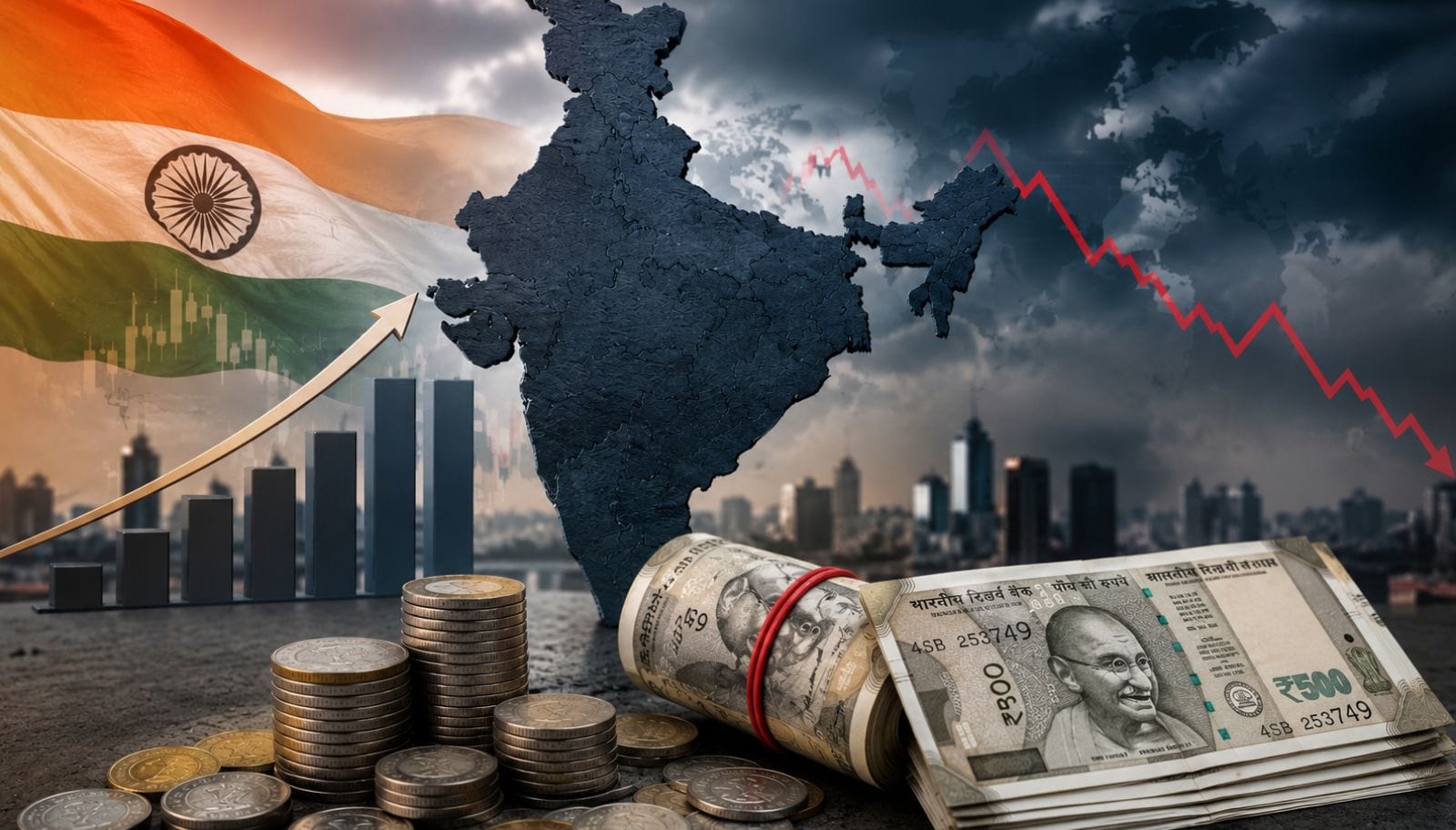
India’s nominal GDP now stands at roughly $4.15 trillion, placing it behind the United States ($32.38 trillion), China ($20.85 trillion), Germany, Japan ($4.38 trillion), and the United Kingdom ($4.26 trillion). The slip is notable because it comes despite genuinely strong underlying performance, India grew nearly 9 percent in rupee terms, and remains projected to expand at 6.48 percent in 2026, comfortably ahead of every other major economy on the list.
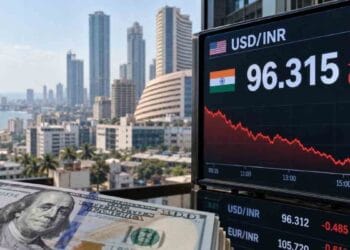
The disconnect between strong real growth and a falling global rank comes down to how international rankings are actually calculated. The IMF ranks economies by converting local GDP figures into US dollars at current exchange rates, rather than measuring domestic output in local currency terms. Over the past year, the Indian rupee has depreciated by roughly 11 percent against the dollar, which mechanically shrinks India’s GDP once translated into dollar terms, even though nothing has changed about the actual scale of economic activity happening within the country.
A separate revision to India’s own GDP calculation methodology, updating the base year to 2022-23, further trimmed the official figure, bringing FY26 nominal GDP down from an earlier estimate of ₹357 lakh crore to ₹345 lakh crore, a correction of 3 to 4 percent.
The shift marks a reversal from recent years, when India had briefly overtaken the UK to claim fifth place globally. With the top six economies now clustered relatively close together, exchange-rate movements alone are proving enough to shuffle rankings between India, the UK, and Japan from one year to the next.
Economists tracking the numbers note the picture looks considerably different once purchasing power parity is factored in, a method that adjusts for cost-of-living differences across countries rather than relying purely on exchange rates. On a PPP basis, India remains the third-largest economy in the world, trailing only China and the United States, a measure many economists consider a more accurate reflection of an emerging economy’s real domestic scale.
India’s underlying growth story continues to rest on familiar pillars: a maturing IT services sector anchored by firms like TCS, Infosys, and Wipro, a large and expanding domestic consumer base, and a manufacturing sector increasingly picking up share as global supply chains diversify away from China.
The country’s demographic profile remains its biggest long-term asset, a median age under 30 and a working-age population that isn’t expected to peak until the 2050s, standing in sharp contrast to the ageing populations of China, Japan, and much of Europe. The challenge, economists note, isn’t the demographic advantage itself but converting it into productive employment, at scale, year after year.
India’s GDP per capita, at roughly $2,813, remains low by global standards, underscoring how far the development gap still runs even after decades of strong headline growth. Government debt, at 83.4 percent of GDP, is considered manageable by emerging-market standards, while inflation has stayed broadly within the RBI’s target range.