
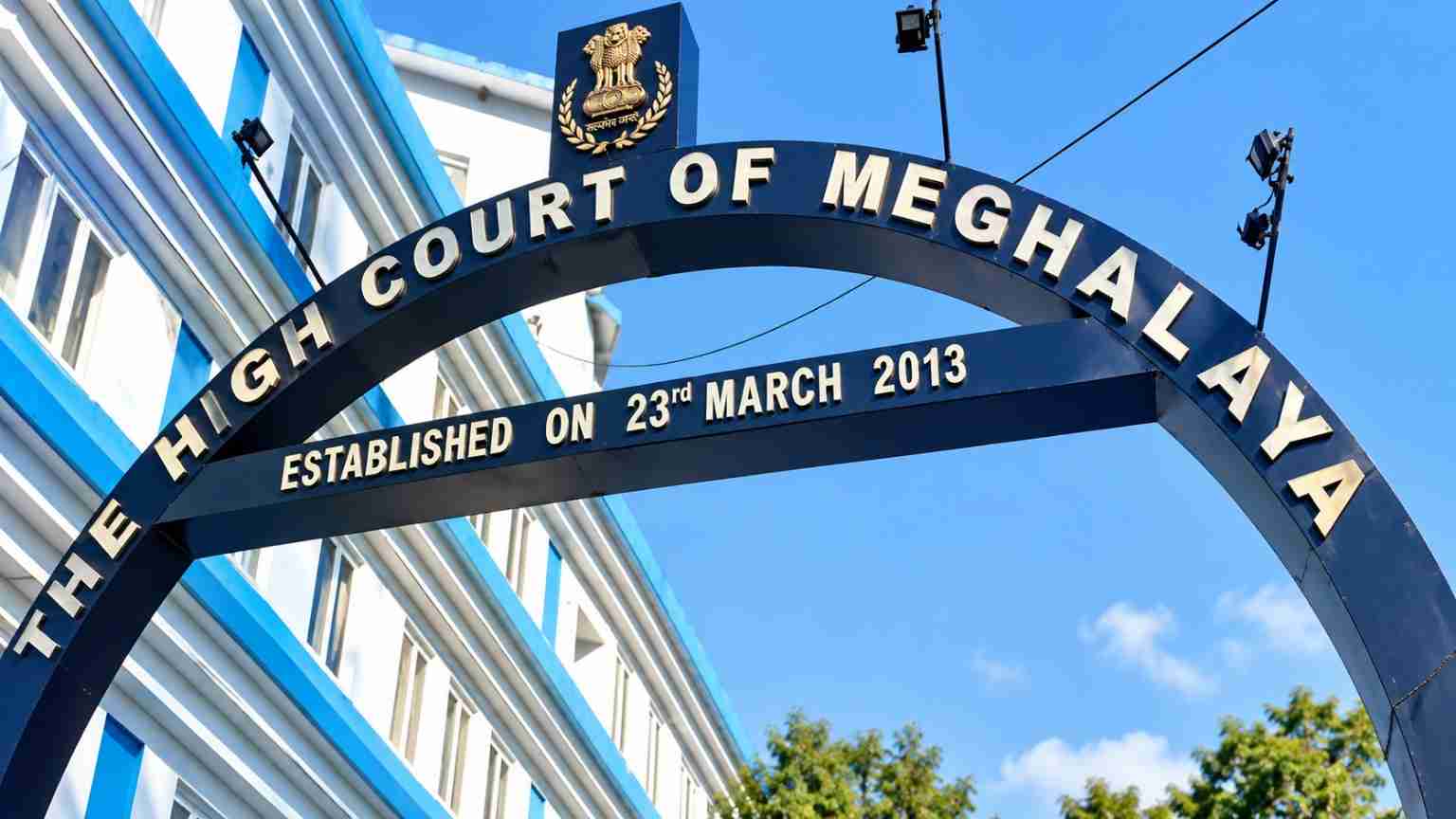
SHILLONG – A seven-year legal battle over provident fund protection for teachers in Meghalaya’s deficit grant-in-aid colleges has ended in the High Court, but the court has not ruled on whether the state’s 2026 scheme is legally sound in all its disputed details.
The Division Bench of Justice H.S. Thangkhiew and Justice B. Bhattacharjee disposed of the writ petition filed by the Meghalaya College Teachers’ Association (MCTA) and Prashanta Sarkhel after finding that the state had substantially complied with the Supreme Court’s directions to implement the Meghalaya Non-Government School and College Employees’ Centralised Provident Fund Act, 1969.
The dispute began in 2017. The High Court had initially disposed of the petition in November 2018 and issued directions to state authorities, including the Director of Higher and Technical Education and the Regional Provident Fund Commissioner-II.
The state challenged that order before the Supreme Court. In August 2022, the Supreme Court partially allowed the appeals and sent the matter back to the High Court, specifically requiring consideration of the grievance over the non-implementation of the 1969 Act and the Provident Fund Scheme framed under it.
That limitation became central to Thursday’s order. After the case returned to the High Court, the state created a trust and prepared a draft scheme. The court subsequently issued directions in September 2025, December 2025 and March 2026, culminating in the government notifying the Meghalaya Non-Government School and College Employees’ Centralised Provident Fund Scheme, 2026, on March 18.
The petitioners then challenged the new scheme itself. Their objection was not simply that the scheme had failed to appear. They argued that its structure departed from the statutory framework of the 1969 Act and differed from the draft scheme prepared in 2023. Among their principal objections was the introduction of an NPS-based defined contribution structure and the merging of employees who entered service before April 1, 2010, with those who joined on or after that date.
The state maintained that the statutory machinery was now in place. It told the court that the Centralised Provident Fund had been created and operationalised, the Board of Trustees constituted and reconstituted, its bye-laws approved and registered, a Portfolio Manager appointed and the 2026 scheme formally notified.
The High Court accepted that the government had met the issue actually placed before it by the Supreme Court. The court noted that Section 4 of the 1969 Act gives the state government power to frame a scheme to be administered by a Board of Trustees, but does not prescribe a particular model for the scheme’s architecture, investment or operational mechanism.
The court held that the petitioners’ objections to those features did not demonstrate that the 1969 Act itself remained unimplemented. The court also found no previous direction requiring the state government to adopt a specific mechanism for framing the provident fund scheme.
As a result, the March 18 notification was sufficient to establish substantial compliance with the Supreme Court’s remand order, leaving no further issue within the present proceedings for adjudication.
But the judgment stopped short of giving the 2026 scheme a blanket judicial clearance. The High Court expressly clarified that it had not examined the merits of the petitioners’ objections concerning the scheme’s architecture, investment and operational mechanism. It gave the petitioners liberty to challenge those aspects through appropriate proceedings.
The case is therefore closed on the question the Supreme Court sent back to the High Court: whether Meghalaya had implemented the 1969 Act and put the provident fund machinery into operation.
The disputed design of the 2026 scheme remains a separate legal question.