On the day India celebrated freedom, Mahatma Gandhi was nowhere near the grand celebrations in Delhi. He was in Calcutta, fasting and meeting people as communal tensions threatened to erupt again. Why did the man who had fought for independence choose to spend August 15 this way?
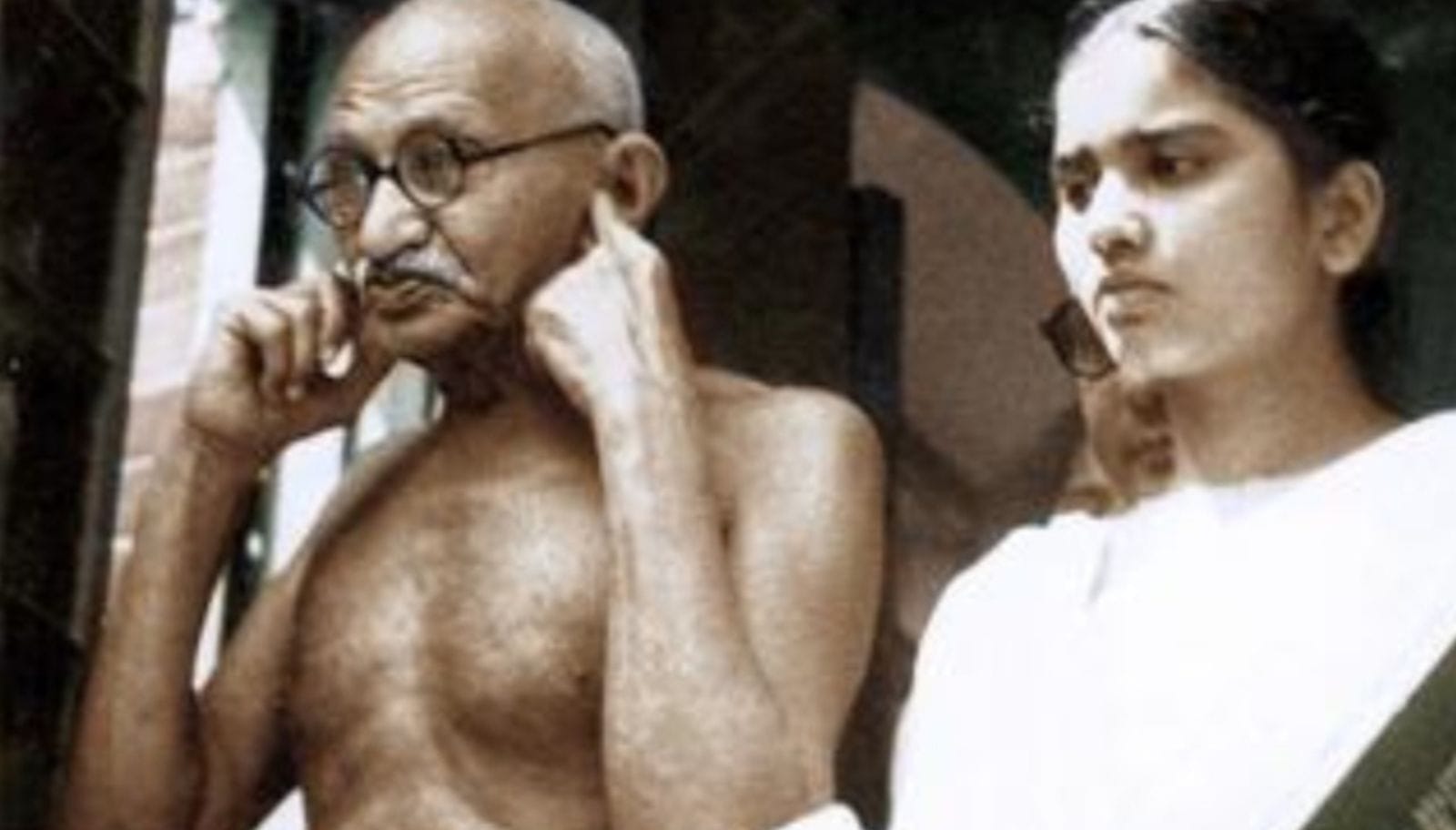
In Delhi, Jawaharlal Nehru addressed the Constituent Assembly as the country entered a new political era after nearly two centuries of British rule. But Mahatma Gandhi was hundreds of kilometres away in Calcutta, where he was trying to prevent Hindus and Muslims from returning to the violence that had torn the city apart.
Gandhi had chosen not to join the celebrations in Delhi. On August 14, he told people at a prayer meeting in Calcutta that India would become free from British rule while Hindustan would simultaneously be divided into two countries. He described the following day as one that would carry both rejoicing and mourning. On August 15, he observed a long fast and spent the day receiving visitors and discussing the situation around him.
Decision has become one of the most striking images of India’s independence. While political leaders prepared to celebrate the birth of a sovereign nation, Gandhi remained in a city where communal peace was still uncertain. His concern was not whether India had achieved freedom from Britain. That had happened.
The harder question was what Indians would do with that freedom.
The contrast between Delhi and Calcutta captures the complicated reality of August 15, 1947. The country had gained political independence, but Partition had already produced fear, displacement and violence on a scale that would shape the lives of millions. The celebrations were real, but so was the suffering surrounding them.
The violence had begun well before the transfer of power. Calcutta had witnessed major communal killings in August 1946, followed by further violence in Bengal, Bihar, Punjab and elsewhere. By the summer of 1947, the decision to divide British India had turned political uncertainty into a humanitarian crisis.
Partition did not simply create a border between India and Pakistan. It forced millions of people to decide whether they could remain where their families had lived for generations. Homes, businesses, farms and neighbourhoods were suddenly connected to questions of religion and political allegiance that had become matters of life and death.
Historians differ over the exact number killed during Partition, but there is little dispute about the scale of the disaster.
Yasmin Khan, in The Great Partition: The Making of India and Pakistan, describes a process that brought mass displacement, death, sexual violence and the destruction of communities, while arguing that the consequences of the division were far more extensive than many political leaders had anticipated.
Gyanesh Kudaisya and Tan Tai Yong’s Freedom and Partition looks closely at the four days from August 14 to 17, 1947. Drawing on archival records, newspapers, oral histories and private papers, the book moves beyond official ceremonies to examine how ordinary people experienced the approach of independence. It also places Gandhi’s peace mission in Calcutta alongside the celebrations in Delhi and Karachi.
Nehru’s speech, the national flag, the end of British rule and the emergence of a new country are rightly remembered. But the people experiencing that moment did not all see it in the same way.
Nehru himself acknowledged this contradiction. In his Independence Day message on August 15, he said India rejoiced in freedom even though “clouds surround us” and many people were sorrow-stricken by the difficult circumstances. He described the work ahead as ending poverty, ignorance and disease while building a democratic nation based on justice and a fuller life for its citizens.
His message is worth remembering because it shows that independence was never presented by India’s first leadership as a finished achievement. The British had gone, but the responsibilities of running a country had only begun. Political freedom created the opportunity to build institutions, but it did not automatically create equality, prosperity, social peace or dignity.
Gandhi’s position was even more difficult to separate from the human consequences of Partition. His presence in Calcutta was part of a wider attempt to restore confidence among communities after months of violence. The Gandhi Heritage Portal records his movements, meetings, fast and prayer during those crucial days and notes that he continued to regard the situation as fragile even after the immediate violence subsided.
On August 16, Governor C. Rajagopalachari visited Gandhi and congratulated him over what had happened in Calcutta. Gandhi, however, did not regard the improvement as permanently secure. The optimism was temporary because communal tension remained capable of returning, which it eventually did. His later fast in Calcutta again brought community leaders and people involved in the violence to him as efforts were made to stop further bloodshed.
This makes Gandhi’s absence from Delhi more than an interesting historical detail. It reflects the difference between two forms of freedom. One was the freedom of a nation from colonial authority. The other was the freedom of its people from fear, hatred and violence. The first could be declared on a particular date. The second could not.
India’s political independence also left behind a complicated task of nation-building. British India had consisted of directly ruled provinces as well as princely states, and the new leadership had to integrate territories while simultaneously creating institutions capable of governing an enormous and deeply diverse population.
There were questions about religion, language, caste, land, citizenship, economic inequality and political representation. The Constitution would eventually provide the main framework for negotiating many of these differences. Independence therefore became the beginning of an argument about what kind of country India would actually become. That argument is particularly important when viewed from the Northeast.
The India that became independent in 1947 did not contain the present-day political map of the Northeast. Meghalaya did not exist as a separate state.
The Khasi-Jaintia and Garo hill areas were part of Assam, and the question of how communities with distinct social systems, customary institutions and identities would fit into the new Union remained part of the wider nation-building process. The constitutional response was not to treat every part of India in exactly the same way.
The Sixth Schedule provided autonomous arrangements for several tribal areas of the Northeast, including the areas that later formed Meghalaya. These institutions recognised the importance of local administration and customary interests within the Indian constitutional framework.
Meghalaya’s own political journey continued after independence. The Khasi-Jaintia Hills and Garo Hills became part of an autonomous State of Meghalaya within Assam in 1970, before Meghalaya became a full state on January 21, 1972. The historical account of the Meghalaya High Court records this transition and the role of the Sixth Schedule in the region’s constitutional development.
This history adds another dimension to the meaning of independence. For many communities in the Northeast, belonging to India was never simply a question of replacing British authority with a government in Delhi. Questions of identity, customary law, land, political representation and local autonomy remained central to the relationship between the region and the Union.
The story did not end with statehood either.
The Northeast continued to experience movements around autonomy, language, ethnicity and political rights. Some demands were resolved through new states and autonomous councils, while others produced prolonged conflict. India’s unity therefore developed through negotiation as much as through political integration. This is why Independence Day can mean different things depending on where it is viewed from.
In Delhi in 1947, it represented the end of colonial rule. In Punjab and Bengal, it was inseparable from the trauma of Partition. In the Northeast, independence was followed by a long process of working out how diverse communities would protect their identities while remaining within the Indian Union.
None of these experiences cancels the importance of August 15. They make the date more complicated and, perhaps, more meaningful. The freedom struggle itself had never been a single campaign with one interpretation.
The demand for complete independence had formally taken shape with the Congress declaration of Purna Swaraj in 1930. The movement that followed contained different political ideas, social programmes and visions of the country that would emerge after British rule.
Gandhi’s own understanding of swaraj went beyond simply changing the people who occupied government offices.
Political independence was important, but it had to be connected with social responsibility and the improvement of ordinary lives. Nehru’s first Independence Day message reflected a similar recognition when he said the country still had to fight poverty, ignorance and disease and create institutions that would provide justice and opportunity. That unfinished work is what makes the historical meaning of Independence Day relevant today.
India is no longer the country of 1947. It has built one of the world’s largest democratic systems, expanded its economy, developed major scientific and technological capabilities and transformed its infrastructure. Millions have moved into better living conditions, while education and healthcare have reached parts of the country that had very little access to them at independence.
But the basic question remains whether political freedom has translated into a meaningful sense of freedom for ordinary citizens.
Freedom can mean the right to vote, but it can also mean having enough education to make informed choices. It can mean constitutional rights, but those rights matter differently to someone who lacks economic security. It can mean national sovereignty, but also the ability of communities to protect their language, culture and traditional institutions.
The history of 1947 therefore resists a simple celebration-versus-criticism argument. India achieved something extraordinary by ending colonial rule, but independence immediately created responsibilities that could not be solved through ceremonies or speeches. The new country had to hold together people whose histories, religions, languages and political expectations were often very different.
The most revealing part of Gandhi’s Independence Day may therefore be that he was not standing against the idea of a free India. He was standing in the middle of one of its deepest problems. The country had achieved sovereignty, but its people still had to learn how to live with one another after a period of devastating communal violence.
On August 15, 1947, India had every reason to celebrate the end of British rule. Gandhi also knew that freedom could not be measured only by who controlled the government. If neighbours could not trust one another, if families were being driven from their homes and if religious identity could determine whether someone was safe, then political independence had not answered every question.
Nearly eight decades later, that distinction remains useful. Independence Day is a celebration of what Indians achieved in 1947. But it is also a reminder that the country inherited a responsibility that no generation can declare complete.
Freedom has to be protected through institutions, disagreement, equality, social peace and the ability of very different communities to live together.
Perhaps that is the harder lesson in Gandhi’s absence from Delhi.